

Audio By Carbonatix
Children worldwide are more likely to experience poverty than adults, according to UNICEF. Child poverty is multidimensional, encompassing deprivation in areas such as shelter, nutrition, water, education, financial stability, and healthcare.
Since children lack the capacity to provide for themselves, UNICEF attributes child poverty largely to the circumstances of their parents, which are impacted by widening inequalities and rising global challenges such as security and environmental issues.
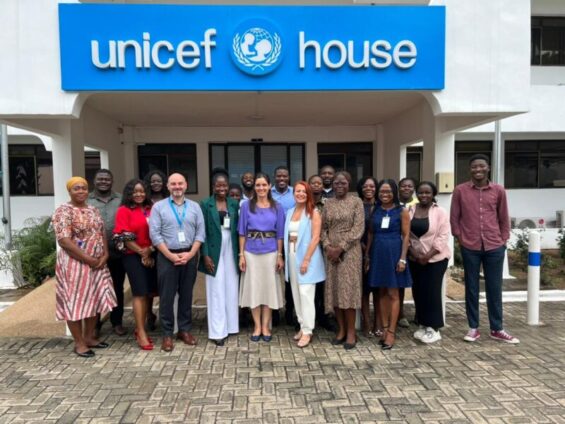
At a recent Media Café event marking International Day for the Eradication of Poverty, UNICEF Ghana's Chief of Social Policy and Inclusion, Paulina Mulhovo, revealed that around "28% of Ghanaian children are considered monetarily poor. Also, nearly three out of four children (73.4%) face multiple forms of deprivation simultaneously, while only a small fraction (2.5%) experience no deprivation at all."

These statistics underscore the depth of child poverty in Ghana and its far-reaching effects.
In an effort to address child poverty, UNICEF through its Social Policy and Inclusion Program partners is working with the Ghanaian government, including the Ministry of Finance, Ministry of Gender, Children and Social Protection, and other entities like CSOs, academia, CHRAJ, and Parliament.

On a global scale, countries like Brazil have led the way in G20 initiatives to eliminate poverty and hunger, supported by their strategic partnership with UNICEF.
Mariana Madeira, Brazil's Ambassador to Ghana, graced the media café to demonstrate her country’s commitment to tackling child poverty.
Madam Madeira emphasised Ghana's opportunity to achieve the goals of the Global Alliance Against Hunger and Poverty.

UNICEF believes that the severe consequences of child poverty can be mitigated if governments prioritize relevant policies and programs.
With policy measures such as cash transfers, health insurance, and other social protections, every child could have an equal chance at a better future.
Ending child poverty is, in UNICEF’s words, “a policy choice” that requires comprehensive, multidimensional action.
Latest Stories
-
Ghana housing finance conference adopts communiqué to improve affordable housing access
3 hours -
Special Initiatives Minister urges Wa Technical Institute to enrol more girls as EU-backed solar training lab opens
3 hours -
In the matter of my first year at the Bar
3 hours -
ActionAid Ghana calls for an end to child marriage, greater investment in girls’ rights
4 hours -
Newsfile to tackle World Cup visa scandal, beach demolitions, education strikes, BRICS bid
4 hours -
UK-Ghana Trade & Investment Summit: Trade Resource Centre to help businesses maximise UK-Ghana trade opportunities
4 hours -
Embassy of Denmark celebrates World Maritime Day
4 hours -
Linking LEAP to productive inclusion could cut extreme poverty by 2030 – UNICEF
5 hours -
Trade Ministry backs use of creative arts to rehabilitate prison inmates
6 hours -
Negotiations with government to continue despite strike suspension – GNAT
6 hours -
‘Ghana cannot afford to waste public resources; every cedi has a job’ – Ato Forson
6 hours -
Ghana expects economic boost as World Assemblies of God Congress brings 10,000 delegates to Accra
6 hours -
Joy in Nayilifong as Farouk Aliu Mahama donates 100kVA transformer to improve power supply
6 hours -
Chief Justice urges employers to tackle mental health stigma in workplaces
7 hours -
Analysis: Ghana’s yellow fever numbers reveal a gap between vaccination and protection
7 hours