

Audio By Carbonatix
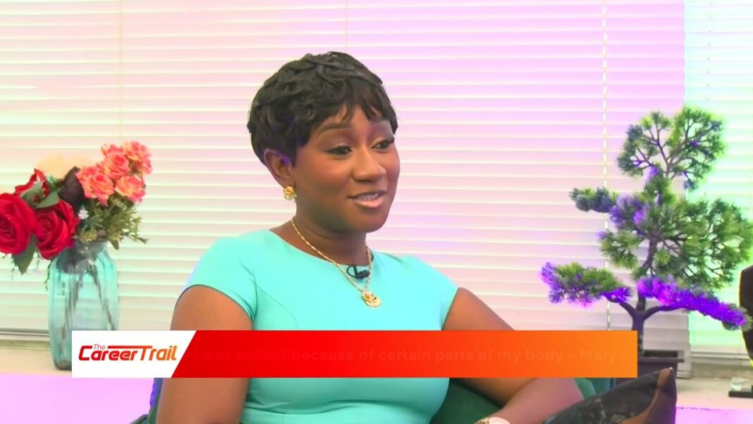
Chief Executive Officer of Brain Hill International School, Mary Anane Awuku, has shared insights into the school’s approach to discipline, stressing that understanding a child’s environment is key to shaping behaviour.
Speaking on The Career Trail programme aired on Joy Learning TV and Joy News, she explained that the school does not rely on corporal punishment but instead uses alternative methods to guide students.
“We don’t use the cane. We use different forms of punishment. You can restrain or take something away from a child,” she said.
“If there is break time or a co-curricular period, instead of the child participating, you can take the child away from the group,” she added.
“We also have a wellness and counselling unit, so sometimes it is not just a one-off punishment but constant counselling and guidance,” she noted.
According to her, a child’s behaviour is often influenced by their environment rather than being entirely innate.
“Psychology will tell you that a child’s behaviour is not just innate, but sometimes the environment they grow in affects how they behave,” she explained.
She cited an example of a child whose aggressive behaviour in school was linked to exposure to action movies at home.
“There was a child who was always kicking others. When we engaged the parents, we realised the father watched a lot of action movies with the child, and he picked up those behaviours,” she recounted.
The CEO explained that such situations require collaboration with parents to address the root cause of behavioural challenges.
“Sometimes we bring in the parents to understand the environment the child is coming from so we can solve the problem from there,” she said.
She further noted that children often mirror what they see at home, including conflicts between parents.
“Sometimes it is just a quarrel between a mother and father. The child watches and begins to imitate those actions,” she added.
Mary therefore urged parents to take a more active role in their children’s development, stressing that education is a shared responsibility.
“It takes a village to raise a child. Parents must not leave everything to the school,” she said.
She also expressed concern that some parents fail to engage with their children’s academic and behavioural progress.
“You give homework and some parents don’t even look at it. You invite them for meetings and they don’t show up,” she noted.
Mary encouraged parents to pay closer attention to their children, adding that issues at home can directly affect performance in school.
“If parents show more concern and observe their children more, it will help their development a lot,” she concluded.
Latest Stories
-
Communities affected by construction of Akosombo Dam urge government to speed up compensation process
15 minutes -
World Cup visa scandal: Sports Ministry not shielding anyone – Sports Minister’s special aide
36 minutes -
World Cup visa scandal: Over 30 people misrepresented as GTA board members to US Embassy – Vincent Assafuah alleges
37 minutes -
Fire destroys wooden structure near Yesu Mo Villa at Bush Road
38 minutes -
NDC threatens sanctions over oversized campaign posters, gives aspirants 5 days to comply
2 hours -
Star Oil paid GH¢2.7bn in taxes, levies in nine months of 2026
2 hours -
Samson’s Take: The rule of law is cheaper before the bulldozer
2 hours -
GRA blames system failure for delay in issuing receipt over passenger’s customs duty
2 hours -
Livestream: Newsfile discusses World Cup visa scandal, beach demolitions, education strikes, BRICS bid
2 hours -
NC-PTAs welcomes end of teachers’ strike, urges parents to prepare children for Monday
2 hours -
Government procures over 2,000 transformers as Ghana’s electricity access hits 89.13% – Energy Minister
3 hours -
UTAG-UG threatens strike on October 19 over unpaid allowance
3 hours -
Let The Constitution direct Chieftaincy to deliver “All Development Is Local”
4 hours -
John Jinapor outlines renewable energy, nuclear power priorities for 2027
5 hours -
Ghana explores centre of excellence for hearing, communication and cochlear implant care
6 hours