

Audio By Carbonatix
When China first announced a new visa targeting foreign professionals in science and technology in August it largely went unnoticed.
But the K visa, which went into effect on Wednesday, was thrust into the public spotlight last week, when an Indian outlet referred to it as "China's H-1B" - a reference to the US visa for skilled workers, which was, last month, targeted by an executive order by Donald Trump. Indians dominate the H-1B programme, making up more than 70% of the recipients in recent years.
The Indian media report was picked up widely in China, stoking concern - and even fears - amongst the public over whether benefits extended to foreigners would increase competition in a sluggish job market - and in a country that has traditionally not been a major immigration destination for foreign professionals.
And although it is still unclear whether the visa will actually allow foreigners to work in China or whether it just allows them easier access into the country, it didn't stop tens of thousands of users on Chinese social media from criticising the programme.
"We have so many bachelor's degree holders, not to mention even more with master's and doctoral degrees. We already have a surplus of domestic talent - and now you're bringing in foreign college graduates?" read one comment.
“There have been so many new programmes pushing our university students to compete with each other, but in the end, nothing beats a foreign passport,” another Weibo user wrote.
Others talked about whether authorities could bring in a high standard of talent, and questioned whether foreigners would be able to adapt to life on the mainland, citing language barriers and China's tightly controlled political system.
Also among the comments were a wave of xenophobic and racist remarks - many of them targeted specifically at Indian nationals.
The backlash has been so intense that state media outlets have stepped in to try to calm the waters.
On Monday, the Global Times published a commentary advocating the scheme as an opportunity "for the world to see a more open and confident China in its new era".
And on Tuesday, the People's Daily published a commentary titled "Misrepresenting the K visa will only mislead the public".
"As China steps onto the global stage, it is hungrier for talent than ever before," the article adds.
What is the K visa?
It is not yet clear what the programme fully entails, but the Chinese government has said it applies to individuals working in STEM fields - science, technology, engineering and mathematics.
Authorities have described it as a visa for "exchanges related to education, science and technology, culture, as well as entrepreneurship and business activities".
In a government media release in August, it said that applicants for the K visa should be those "who have graduated from well-known universities or research institutions in China or abroad with a bachelor's or higher degree in a STEM field, or who teach or conduct research work at those institutions".
It did not provide further details on age requirements or which universities would qualify for the scheme.
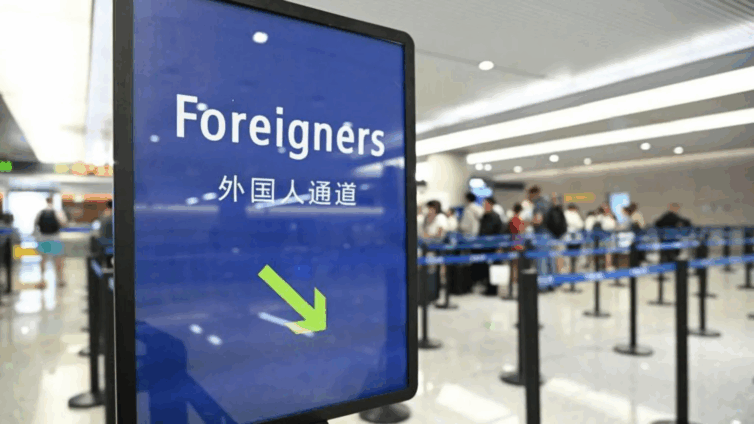
Notably, foreign professionals will not need backing from a local employer to be granted the visa - and will enjoy more flexibility in terms of the number of entries, validity period and duration of stay.
And state media, while attempting to address public anxiety, have stopped short of clarifying the exact scope of activities the visa covers, failing to answer the real question that is undoubtedly on the minds of many - will it allow qualified foreigners to work in China?
In its article earlier this week, the Global Times pointed out that the K visa would not be the same as an H-1B, stating that it was "not a simple work permit".
The People's Daily also weighed in, saying that the visa would "provide convenience for young foreign science and technology professionals to work and live in China" - but stressed that it "should not be equated with immigration".
The Chinese foreign ministry has said that more details about the visa will be released by Chinese embassies and consulates abroad, without specifying a timeline.
China's ambitions and limits
What is clear is China is seizing the momentum as the US pulls back from its position as a top destination for international talent and visitors.
The official launch of the K visa - though the timing was set two months ago - coincides with the Trump administration's sharp increase in application fees for the H-1B programme, a move that has sparked uproar in countries like India and China - two of the largest sources of skilled workers to the US.
This is just the latest step in China's broader effort to attract foreigners to the country - whether for tourism, research or business.
As of July, China had visa exemption agreements with 75 countries to make visiting the country easier for foreign tourists. Its push to attract top academics has already led some high-profile scholars to leave US institutions and join Chinese universities.
"At a time when some countries are turning inward and excluding international talent, China has keenly seized this important opportunity and promptly introduced relevant policies," the People's Daily commentary reads.
But the initiative is not without its limitations, experts say.
The online backlash reflects a pattern of public scrutiny and criticism in China over what is perceived as preferential treatment for foreigners, according to Giulia Interesse, an editor at business intelligence platform Asia Briefing.
While discourse on social media may not fully represent public sentiment at large, the controversy highlights that "implementation is not only a matter of regulatory design, but also of public communication and domestic consensus-building," she says.
Language is another barrier. Many researchers and academics who have left the US for China in recent years are ethnic Chinese and fluent in Mandarin.
But for foreign talent more broadly, communication with Chinese colleagues remains a challenge - one that both employers and employees will need to address.
The bigger concern, however, is whether foreign science and tech professionals can adapt to China's tightly controlled political environment, says Stefanie Kam, assistant professor at Nanyang Technological University in Singapore.
"Creativity and innovation [flourishes] in an open and liberal climate as we see in cases in the US and many European nations. But with the current trajectory in China, we're seeing the opposite," she tells the BBC.
Whether or not these foreign professionals will "find that space for creativity innovation" in China remains a key question for those considering the move.
Latest Stories
-
‘I never said I’ll declare a state of emergency’ – President Mahama on galamsey
6 minutes -
Bobby Banson condemns EOCO’s attempted arrest of Nana Agyei Baffour Awuah
31 minutes -
When Kumasi begins to look like somebody is in charge
32 minutes -
Parliamentary probe into cocaine seizure would be a waste of time – Inusah Fuseini
38 minutes -
Cocaine seizure: Focus on Ghana’s reputation, not partisan blame – Osae-Kwapong
44 minutes -
Two Invitations, Three Interrogations: Did Baffour Awuah tell the whole story?
54 minutes -
Drug cartels may be seeing Ghana as easy route – Lenin Anane Agyei
2 hours -
Ghana risks gaining notoriety as drug-trafficking hub – Bobby Banson
2 hours -
Government dismissed my drug trafficking warning, then tried to arrest me – Ntim Fordjour
2 hours -
Day Two: 3rd Republic Bank-JoyNews Habitat Fair Clinic underway at Junction Mall
2 hours -
NACOC addressing inherited gaps in fight against drug trafficking – Deputy Director-General
2 hours -
Taekwondo goes to school as GTF launches five-region youth campaign
2 hours -
The issues Mourinho is struggling to fix at Real Madrid
2 hours -
Hundreds throng EducationUSA College Fair in Kumasi in pursuit of abroad studies
2 hours -
Drug bust: NACOC should be part of port inspection team – Twum-Barimah
2 hours