

Audio By Carbonatix
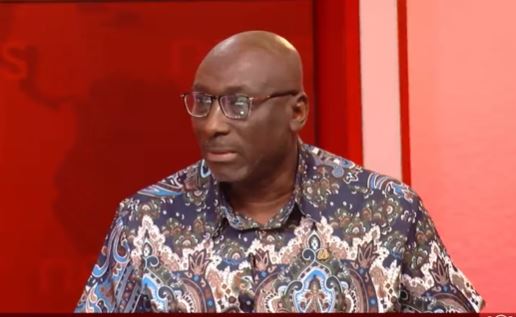
National Democratic Congress (NDC) legal team member, Abraham Amaliba, has cautioned that democracy and law are not the same, and any attempt to conflate the two could unravel Ghana’s constitutional order.
Speaking on JoyNews’ PM Express on Wednesday, May 21, the private legal practitioner said it is dangerous for public discourse to treat democratic ideals as if they override constitutional rules.
“Democracy is different from what the law is,” he stated. “The law is not democracy. Democracy is not a law. These are two different things.”
His comments come amid heated debate over the impeachment proceedings against Chief Justice Gertrude Torkornoo and whether they should be held in camera or opened to the public.
Read also: Suspended CJ Torkornoo files injunction against committee probing her removal
While some argue for transparency, Mr Amaliba insisted that constitutional provisions must take precedence, even over democratic sentiment.
“You may talk about good governance, you may talk about public interest, but the law is the law, as the embattled Chief Justice rightly said,” he noted.
Mr Amaliba stressed that the Supreme Court is not above the Constitution.
“The Supreme Court can only do what the Constitution says it can do. The Supreme Court cannot do what the Constitution doesn’t say it can do. If we say the Court should go beyond the Constitution, then we end up not having a Constitution at all.”
In response to a question from host Evans Mensah about whether proceedings must still be in camera when the Chief Justice herself says she is willing to waive that right, Mr Amaliba replied that the intention of the framers must still guide interpretation.
“I want to believe that the framers of the Constitution were of the view that such matters, because of the position of the Supreme Court, may involve information that, if leaked, could negatively impact the country,” he said.
“It could be national security, public health, we don’t know where it will touch.”
Mr Amaliba said, unlike court practices that evolve over time, such as the use of cameras in courtrooms, the issue of holding removal hearings in camera is not a matter of custom.
“In that situation, we didn’t have any provision prescribing the use of cameras in our courts. It was just a practice. But in this one, it is clearly stated.”
He argued that adhering strictly to the constitutional process is not negotiable.
“You could as well say the two justices shouldn’t sit, or we should go and bring a justice from another country. But the Constitution has stipulated how this must be done, and you have to respect it.”
Abraham Amaliba was emphatic that democratic instincts should not be allowed to override constitutional obligations.
“The law is the law,” he repeated. “And if we decide to interpret it based on convenience or popular opinion, we risk throwing away the entire foundation of our governance system.”
Latest Stories
-
Ghana’s BRICS move requires clear strategy to manage risks – Godfred Bokpin
56 minutes -
Pay teachers realistic income – Duncan Amoah to gov’t
1 hour -
Bechem to become chicken capital of Ghana – Mahama projects
1 hour -
Gov’t targets recruitment of 16,500 health professionals in 2026
2 hours -
Two-week strike will not derail academic calendar – GNAT President
2 hours -
Headmaster detained after BBC investigation into alleged sexual abuse of students
2 hours -
GNAT pushes for clear implementation procedures of teachers’ conditions of service
2 hours -
Recurrent strikes threaten quality of education and academic calendars – Prof Bokpin
2 hours -
‘Cockroach’ group leaders among hundreds detained in Delhi protest
2 hours -
Don’t let speed of information become your judgement – CJ tells new lawyers
3 hours -
World Cup visa scandal: People have leveraged public office to facilitate fraud – Senyo Hosi
3 hours -
Glut! Farmers count losses as prices crash, customers happy
4 hours -
GSA postpones auction of unserviceable vehicles
4 hours -
Man charged with attempted murder after stabbing
4 hours -
World Cup visa scandal: Senyo Hosi says issue goes beyond calls for Sports Minister’s resignation
4 hours