

Audio By Carbonatix
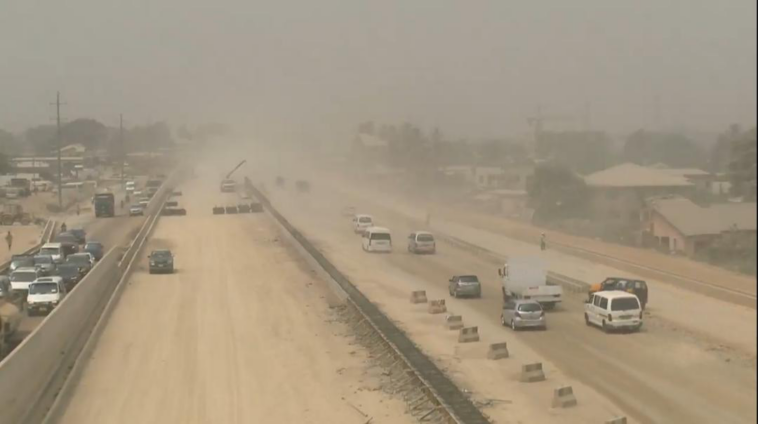
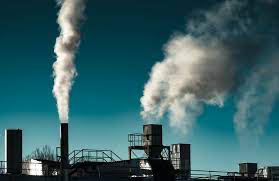
According to WHO's 2022 data, a startling 99 per cent of the global population is exposed to polluted air. In 2019 it was the second largest cause of death, killing 1.1 million people. In Ghana, air pollution is responsible for at least 29,000 deaths annually. Air pollutants come in various forms, including particulate matter (PM), nitrogen oxides (NOx), sulfur dioxide (SO2), carbon monoxide (CO), volatile organic compounds (VOCs), and ozone (O3). These pollutants originate from a range of sources, such as vehicle emissions, industrial processes and power plants. That makes the Tema Industrial enclave a hotspot.
Wisdom Aditse, the Metro Health Officer for the Tema Metropolis, said, “As Tema is an industrial city there's a lot of industries and the operations churn out Fumes into the atmosphere. So it will affect our atmosphere. Burning of waste also, the fumes that come out, people inhale it. And it will affect the health of people who inhale it”
"For years, air pollution has been the talk of the town, especially among the urban poor and in the slum communities around the industrial enclave. Authorities have had a challenge in tackling the menace.
The Tema East Sub-metro Director, Mawunyo Amenyawo explained “We don't know the extent to which our communities are polluted. The quality of air that we also breathe in.”
The inherent difficulty in tackling air pollution stems from the lack of precise data on its sources, affected demographics, and the extent of its harm. Without comprehensive information, devising specific solutions becomes challenging, hindering efforts to effectively address this pressing environmental issue.
People's Dialogue in Collaboration with Clean Air Fund is filling that gap. They are deploying air quality sensors in three urban-poor communities.
Hamza Bawa Mahama who works with People's Dialogue on Human Settlement believes the data will help municipal assemblies to fashion policies that directly tackle the sources of pollution and to plan more inclusive communities.
“The project covers initial three communities. We are looking at Tema Newtown Town here, because of the industrial nature. We are also looking at Sokoban in Kumasi. Sokoban because of the wood industry, the wood factory. It's basically about data. Before you can intervene, you need data. And so the sensors are basically to help us gather data.
"So we have two forms of sort of sensors that we are going to deploy. The first one is, we call it the Purple Air Sensor. The Purple Air Sensor is an outdoor sensor that we are going to anchor. And then we also have the air beam. The air beam is just like a handheld device.”
Between 2015 and 2020, international development funders cumulatively committed 36 times more funding to fossil fuel-prolonging ($14.6 billion) projects than air quality ($403.6 million). In Africa, funding for air quality between 2015 and 2021 was a drop in the ocean.
By supporting projects like these, the Clean Air Fund hopes to change that narrative.
Victoria Tawiah, an analyst at the Clean Air Fund in Ghana said, "And so for this project, we are looking at the slum communities, the urban poor, the effect of air quality, air pollution on their health, and also to inform policies. So we'll be linking that with the policymakers as well, to make certain policies to help mitigate the effects of air pollution.”
At least one stationary outdoor air quality monitor will be mounted in the community and some wearable sensors will be deployed. Additionally, some residents were given the role of air pollution community champions who are to educate others and also to police air pollution in the area.
Joshua Teye Agudah, who is one of them said, “It will help in my community to see how best we can even control how we do things to pollute the air.”
For authorities at the Tema Metropolitan Assembly, this is a welcomed move.
“Knowledge will come so that we ensure that industries put in place, mechanisms that would clean the air,” said Wisdom Aditse.
For Mawunyo Amenyawu, he believes “It's going to help us to measure the level of pollution in the atmosphere, and inform us in terms of public health, and protecting our ecosystem.”
It is now a race to educate the masses about the far-reaching effects of air pollution and their devastating impact on the climate. With projects like these, they hope to win the race.
*******
This story was a collaboration with New Narratives. Funding was provided by the Clean Air Fund. The funder had no say in the content of the story
Latest Stories
-
The Ghanaian prophet and the mysterious death of his scottish wife Charmain Speirs
47 seconds -
Nearly 400 sentenced in Nigeria for links to militant Islamists
22 minutes -
Ghana’s recovery supported by gold strength despite global oil price pressures – Standard Bank Research
29 minutes -
Kwaku Azar writes: A-G vs OSP
1 hour -
Mfantsipim–Adisadel rivalry built excellence, not division – Sam Jonah
1 hour -
Vice President launches Mfantsipim’s 150 years of shaping Ghana’s greatest mind
2 hours -
I assure Otumfuo, Mahama will join him to commission KNUST Teaching Hospital by end of this year – Haruna Iddrisu
2 hours -
Barcelona dominate derby to extend La Liga lead
3 hours -
Gov’t to roll out free special education for persons with disabilities from July 1 – Education Minister
3 hours -
Importers and Exporters Association declares full support for Publican AI port system
3 hours -
“We used it to test our officiating officials’ readiness” – Bawah Fuseini after CAA Athletics event
3 hours -
Volleyball emerges as Ghana’s fastest rising sport
3 hours -
National Sports Fund needs strong leadership from the top – Administrator David Wuaku
4 hours -
JoySports Exclusive: Steve McLaren in talks with GFA after expressing interest in Black Stars job
4 hours -
Fire guts auto parts warehouse at Bubuashie, one fire officer injured
4 hours