


Audio By Carbonatix
Hidden deep in the jungle of the Sierra Nevada de Santa Marta mountains in Colombia sits Ciudad Perdida, the "Lost City." Built by the Tairona people more than 1,000 years ago, the archaeological site only became an attraction after it was uncovered in the 1970s.
Named Teyuna by the Tairona but dubbed Ciudad Perdida upon rediscovery, the ancient wonder is often compared to Machu Picchu as both are archaeological sites perched on hillsides and tucked into South American rainforests.
However, Teyuna is more than 600 years older and, unlike its Peruvian counterpart, there are no trains or buses allowing for easy travels to reach its ruins. The only way to witness its beauty firsthand is on foot: a gruelling multi-day hike.
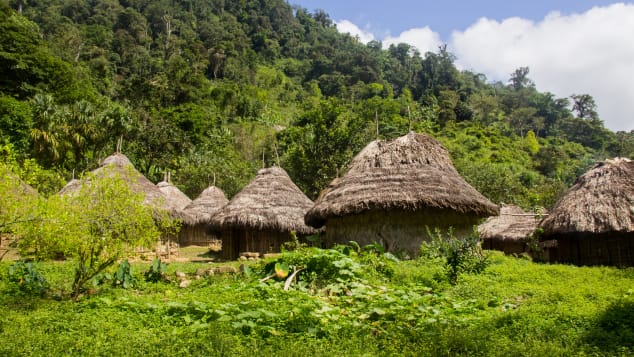 The region is currently on UNESCO's tentative list for world heritage sites.
Shutterstock
The region is currently on UNESCO's tentative list for world heritage sites.
Shutterstock
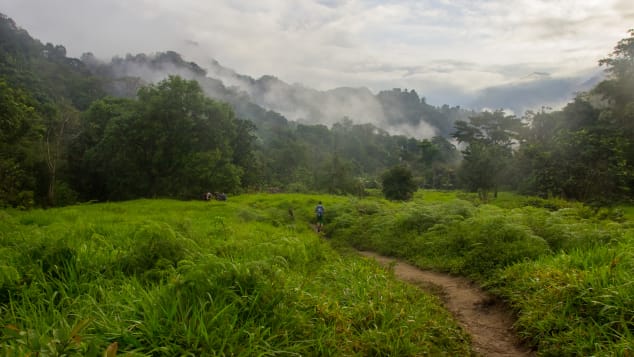 Historians believe that the area may have been abandoned at the time of Spanish conquest.
Shutterstock
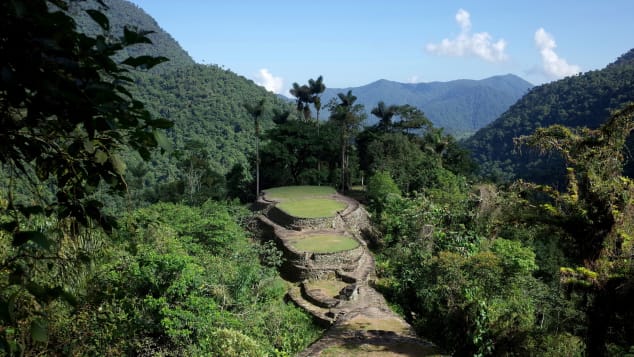
The rugged mountain slope opened up to a series of stone terraces carved into the crests and slopes of the narrow hillside and set to the backdrop of the lush forest.
Likely out of both exhaustion and respect, our group remained quiet as Pedro showed us the place where roughly 2,000 Taironas lived for centuries until it they abandoned it sometime between 1580 and 1650, around the time of the Spanish colonization.
Apart from the indigenous communities, the 169 terraces built over 30 hectares remained hidden and was protected by its remoteness. That is, until 1972, when looters followed the stone steps and pulled back the overgrowth to find treasures of gold, jewelry and ceramics.
After years of pillaging, the Colombian government took steps to protect the archaeological site and helped reconstruct the ancient city.
Historians believe that the area may have been abandoned at the time of Spanish conquest.
Shutterstock
The rugged mountain slope opened up to a series of stone terraces carved into the crests and slopes of the narrow hillside and set to the backdrop of the lush forest.
Likely out of both exhaustion and respect, our group remained quiet as Pedro showed us the place where roughly 2,000 Taironas lived for centuries until it they abandoned it sometime between 1580 and 1650, around the time of the Spanish colonization.
Apart from the indigenous communities, the 169 terraces built over 30 hectares remained hidden and was protected by its remoteness. That is, until 1972, when looters followed the stone steps and pulled back the overgrowth to find treasures of gold, jewelry and ceramics.
After years of pillaging, the Colombian government took steps to protect the archaeological site and helped reconstruct the ancient city.
Trying it for myself
Despite its challenges, I couldn't say no to an opportunity to visit Ciudad Perdida for myself. The trek began in a small town called Mamey, a bumpy two-hour drive from the city of Santa Marta in the north part of the country along Colombia's Caribbean coast. Visitors to the Lost City must be accompanied by a licensed guide, which can be easily booked online through a handful of companies. Over lunch in Mamey, I got acquainted with the 12 other hikers in my group and our guide Pedro.

A local perspective
After dinner on our first night, we gathered around the table and, as the sun slipped from the sky, we listened to Pedro share the history of the area he calls home. Within his lifetime, he explained through a Spanish interpreter, the region has seen three economic booms. The first two were tied to illegal substances: farming marijuana and then coca, the plant used to produce cocaine. (Coca leaf tea is legal in both Bolivia and Peru, although not in Colombia. Currently, there are some movements to legalize coca in the country.) Though farming these crops provided a means for people in the area to make money, Pedro said that the industry also brought with it warring cartels and guerilla groups. A solution to the violence and problems with the government arrived when Ciudad Perdida was uncovered. That also set the stage for the third wave: tourism.
The third wave
Still, some people express concerns about traveling in Colombia. In 2003, a group of tourists was kidnapped while trekking to the Lost City, some of whom were held hostage for 100 days before they were returned unharmed. Today, however, members of the Colombian army patrol the trail. It's an added piece of security that reduces liability for tour companies and eases the minds of thousands of visitors -- myself included.
The region is currently on UNESCO's tentative list for world heritage sites.
Shutterstock
Meeting the neighbors
The Wiwa people are descendants of the Tairona who have been left undisturbed for centuries. They have a deep spiritual connection with the land that continues today. Dressed in all white, a color the Wiwa revere as holy, tribe members gave us a peek into their lives. They showed us how they strip the wax from palm leaves and use the fiber to make cross-body satchels called mochillas. They let us taste the coca leaf, which the Wiwas consider a sacred plant and chew throughout the day. They showed us their poporos, a device made from a gourd that holds powdered lime from seashells, which when mixed with the coca leaves creates a mild stimulant effect. In the Wiwa community, a boy receives his poporo as a rite of passage into manhood. The next morning, we began hiking in the pre-dawn hours, but high temperatures and muscle cramps had already set in by the time we reached the final stretch: 1,200 stone steps built by the Tairona. After finally lifting my sore body up the long flight of stairs, my eyes rested on the scene that had prompted the arduous journey: Ciudad Perdida.
Historians believe that the area may have been abandoned at the time of Spanish conquest.
Shutterstock
The rugged mountain slope opened up to a series of stone terraces carved into the crests and slopes of the narrow hillside and set to the backdrop of the lush forest.
Likely out of both exhaustion and respect, our group remained quiet as Pedro showed us the place where roughly 2,000 Taironas lived for centuries until it they abandoned it sometime between 1580 and 1650, around the time of the Spanish colonization.
Apart from the indigenous communities, the 169 terraces built over 30 hectares remained hidden and was protected by its remoteness. That is, until 1972, when looters followed the stone steps and pulled back the overgrowth to find treasures of gold, jewelry and ceramics.
After years of pillaging, the Colombian government took steps to protect the archaeological site and helped reconstruct the ancient city.







DISCLAIMER: The Views, Comments, Opinions, Contributions and Statements made by Readers and Contributors on this platform do not necessarily represent the views or policy of Multimedia Group Limited.
DISCLAIMER: The Views, Comments, Opinions, Contributions and Statements made by Readers and Contributors on this platform do not necessarily represent the views or policy of Multimedia Group Limited.
Latest Stories
-
Parliamentary probe into cocaine seizure would be a waste of time – Inusah Fuseini
5 minutes -
Cocaine seizure: Focus on Ghana’s reputation, not partisan blame – Osae-Kwapong
11 minutes -
Two Invitations, Three Interrogations: Did Baffour Awuah tell the whole story?
21 minutes -
Drug cartels may be seeing Ghana as easy route – Lenin Anane Agyei
1 hour -
Ghana risks gaining notoriety as drug-trafficking hub – Bobby Banson
1 hour -
Government dismissed my drug trafficking warning, then tried to arrest me – Ntim Fordjour
1 hour -
Day Two: 3rd Republic Bank-JoyNews Habitat Fair Clinic underway at Junction Mall
1 hour -
NACOC addressing inherited gaps in fight against drug trafficking – Deputy Director-General
2 hours -
Taekwondo goes to school as GTF launches five-region youth campaign
2 hours -
The issues Mourinho is struggling to fix at Real Madrid
2 hours -
Hundreds throng EducationUSA College Fair in Kumasi in pursuit of abroad studies
2 hours -
Drug bust: NACOC should be part of port inspection team – Twum-Barimah
2 hours -
Ward appointed Liverpool’s sporting director
2 hours -
This isn’t the first cocaine bust; NPP must stop the politicisation – NACOC deputy boss
2 hours -
Drug bust case: Only Customs officers, MPS officials in scanning room – NACOC
3 hours