

Audio By Carbonatix
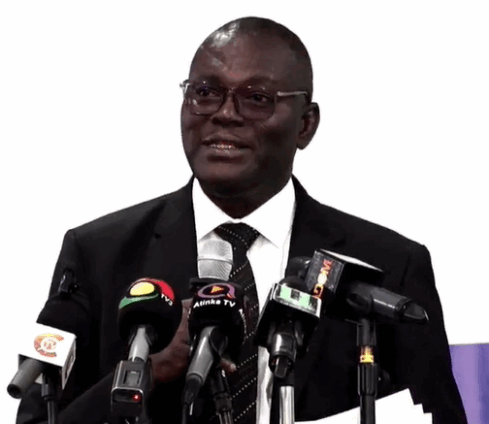
Associate Professor of Law at the University of Ghana Law School, Prof. Abdallah Ali-Nakyea, has revealed a worrying concern about corruption thriving largely due to ineffective laws in Ghana.
He stressed that critical legal gaps enable corruption to permeate every level of society — from politics and governance to the judiciary and cultural institutions — thereby severely undermining national development and eroding public trust.
Speaking at a programme by the Media Foundation for West Africa (MFWA) under the theme “Hidden Riches, Hollow Laws: Dissecting the Loopholes That Fuel Corruption in Ghana”, Prof. Ali-Nakyea delivered a sobering assessment of corruption’s deep-rooted and pervasive impact across the country.
“We are deeply pained by the impact corruption is having on our nation. It is undeniably affecting us profoundly,” he declared.
To underscore the gravity of the situation, he noted, “Over the past two weeks, our newspapers have been awash with reports on corruption.”
Highlighting recent media coverage, he pointed out: “Even today, as we speak, the Ghanaian Times on page 19 calls on journalists to assist in curbing corruption. Meanwhile, on page 3 of the same publication, there is a headline titled ‘OSP Arrest Former GRA Officials Over SML Contract’.”
Prof. Ali-Nakyea revealed that these revelations were brought to light by the MFWA itself, which convened key stakeholders to tackle these pressing issues.
He recalled a moment when the previous government considered withholding full disclosure of critical reports under Section 5 of the Right to Information (RTI) Act, citing privileged information.
“Fortunately, the President intervened and rejected this approach. In the spirit of full transparency, good governance, openness, and accountability to the public, he directed that the full report be published. This report is currently under examination by the Office of the Special Prosecutor (OSP), for which we are extremely grateful,” he added.
The professor also highlighted that leading publications have extensively covered the scandal, with headlines like “OSP Arrest Former GRA SML Staff” and “Controversial SML Contract: OSP Picks Eight, Including Five Former GRA Officials”.
Additionally, the Economic and Organised Crime Office (EOCO) recently arrested the former CEO of the Buffer Stock Company.
“These arrests and investigations reveal something crucial,” he explained. “They expose a glaring loophole, a conflict of interest that our current laws fail to address adequately. How is it possible for someone involved in a controversial contract to continue working within the same institution?”
“This is the loophole we have identified,” Prof. Ali-Nakyea concluded, urging urgent legislative reforms to close these gaps and strengthen Ghana’s fight against corruption.
Latest Stories
-
Furniture boost for Techiman North schools as MP donates to 20 institutions
3 seconds -
Assemblies of God to loan 10,000-seater dome for Ghana@70 celebrations
23 seconds -
Government to audit 2,016 community network sites – Communications Minister
41 seconds -
Heritage Series notes: BoG promises more inclusive cedi with improved sizes, tactile features
18 minutes -
‘We want answers’ – Family seeks probe into 14-year-old’s death 12 days after starting SHS
29 minutes -
No preacher has the right to impose beliefs on bus passengers – Kwesi Pratt Jr backs preaching ban
32 minutes -
Africa Maritime Security Forum opens in Accra with call for stronger continental cooperation
33 minutes -
Techiman North MP fulfills promise with new CHPS Compound in Kokoago
44 minutes -
Enterprise Trustees, Sinapi Aba launch ‘Asetenapa Plan’ to promote retirement savings among informal workers
46 minutes -
Gov’t working to ensure GAUA strike is called off by October 16 – Haruna Iddrisu
50 minutes -
KAIPTC Commandant calls for continent-wide strategy to tackle Africa’s maritime security threats
1 hour -
GRIDCo investigates Mallam substation fire as power restoration continues in Accra
1 hour -
20% digital tax is not E-Levy – GRA boss
1 hour -
Defence Minister calls for intelligence-sharing and regional cooperation to tackle maritime insecurity
1 hour -
Afenyo-Markin failed to comply with procedural rules in defamation suit – Sammy Gyamfi’s lawyers
1 hour