

Audio By Carbonatix
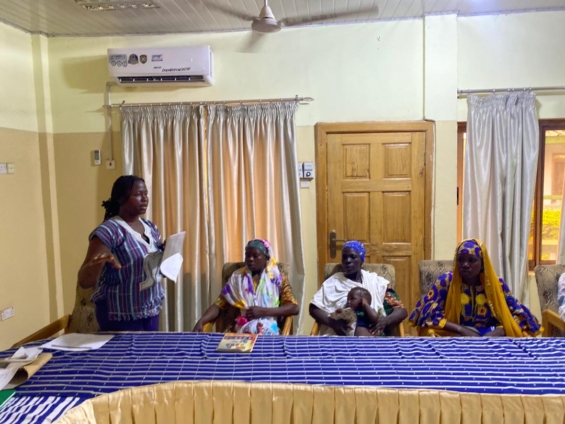
The Centre for Social Justice (CSJ), in collaboration with STAR Ghana Foundation, has commenced a series of stakeholder engagements with market women in Kumasi and women in agriculture in the Northern Region. These engagements aim to explore the challenges informal sector workers—particularly market traders and peasant farmers—face in accessing credit and social insurance services.
The initiative, part of the second phase of the 'Action for Voice and Inclusive Development (AVID II)' Project, is operating under the theme “Bridging the Gap: Financial Accessibility and Social Protection for Informal Sector Traders and Farmers in Ghana.”
These regional dialogues are designed to inform national policy discussions aimed at creating inclusive, practical solutions for some of the country's most economically active, yet underserved, populations.
To meet the goals of the project, CSJ is conducting a comprehensive baseline assessment to gather firsthand accounts from informal workers—primarily market traders and peasant farmers—on the financial and social protection barriers they encounter.
The findings will feed into the design of a 'Policy Action Platform (PAP)' that will bring together key stakeholders, including government agencies, financial institutions, and grassroots representatives, to co-create and commit to sustainable, context-appropriate solutions.
“These engagements are vital in amplifying the voices of women in the informal economy, many of whom have historically been excluded from the financial and social protection systems,” said a CSJ spokesperson. “Our goal is to ensure that inclusive policies are not just discussed in boardrooms, but are shaped by the lived realities of those who need them most.”
The series of regional and national dialogue platforms, to be rolled out in the coming months, are expected to catalyse high-impact reforms that can improve access to microcredit, expand social insurance coverage, and reduce economic vulnerabilities in Ghana’s informal sector.
Although Ghana's informal sector constitutes a significant portion of the nation's workforce, with approximately 89% of the employed population engaged in informal employment, women are disproportionately represented.
Available data show that while women comprise 92% of employed women in the informal sector, they often face challenges in accessing financial services.
A recent study highlighted that 65.3% of the labor force operates within the informal sector, yet there is a notable lack of accessibility, quality, and usage of financial services and products among these workers. In terms of social protection, enrollment of informal sector workers in Ghana's National Health Insurance Scheme (NHIS) remains low, constituting just over one-third of total enrollees annually.
These figures point to the pressing need for initiatives aimed at enhancing financial inclusion and social insurance coverage for Ghana's informal sector, particularly for women who are predominantly represented in this segment.
The CSJ-led AVID II project is being delivered with the strong support of partners like the STAR Ghana Foundation, The William and Flora Hewlett Foundation, and local community stakeholders, whose shared commitment continues to advance social justice and economic equity across Ghana.
By working directly with those most affected, the AVID II Project seeks to close the inclusion gap and strengthen the resilience of Ghana’s informal workforce—one engagement at a time.
Latest Stories
-
20% digital tax is not E-Levy – GRA boss
8 minutes -
Defence Minister calls for intelligence-sharing and regional cooperation to tackle maritime insecurity
12 minutes -
Afenyo-Markin failed to comply with procedural rules in defamation suit – Sammy Gyamfi’s lawyers
22 minutes -
GRA recovered GH¢1.3bn out of about GH¢1.4 bn unpaid VAT from ECG – Anthony Sarpong
25 minutes -
KMA to extend daily toll collection to nights and weekends
26 minutes -
Ghana secures second consecutive term on UN Human Rights Council
31 minutes -
KATH Catheterisation lab targets December completion amid specialist staffing concerns
31 minutes -
Government working to address economic challenges driving youth into galamsey – Mahama
41 minutes -
Domestic Capital Africa campaign targets US$600bn pension funds for SME growth
42 minutes -
Women leaders’ wisdom and work deserve recognition – Mahama
52 minutes -
NRSA to refund surplus from auctioned vehicles of non-subscribers after deducting towing costs
53 minutes -
Ghana must integrate AI into mainstream education – DigiMarkt Project Board
54 minutes -
Armwrestling: Ghana unveils World Armwrestling Championship squad, appeals for travel support
54 minutes -
NPRA cites pensions college, data bank to justify 10-storey building project
59 minutes -
16 arrested as security team recovers guns, ammunition at Gbane mining site
60 minutes