

Audio By Carbonatix
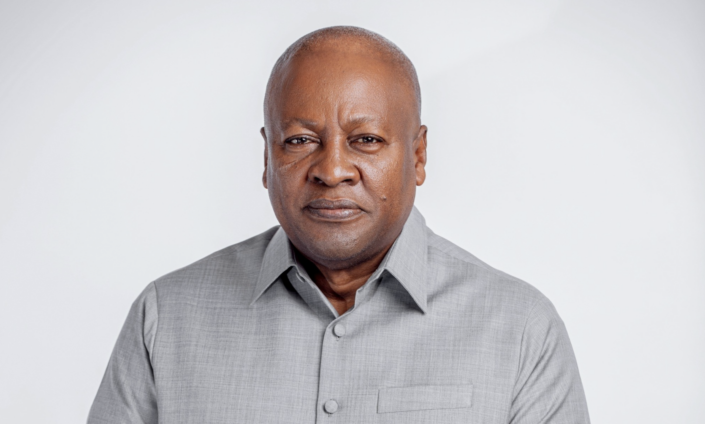
The Honorary Vice President of IMANI Africa, Bright Simmons, has characterised President John Mahama’s decision to reduce the number of ministries from 30 to 23 as more of a response to public sentiment than a genuine step toward government efficiency.
In an article titled The Stressful Difference between Cutting Ministries & Cutting Costs in Ghana, he delved into the deeper implications of such restructuring, cautioning that it may not translate to significant cost savings.
“Cutting down the number of ministries and ministers is thus an exercise in ‘reading the sentiments’ of the public, and in being ‘responsive,’” Bright Simmons wrote, “and not about lean and efficient government reforms per se.”
According to Bright Simmons, the public’s disdain for a bloated government largely stems from optics.
“The people just don’t like seeing presidents appoint a large number of ministers because it ‘feels’ and ‘looks’ quite ‘obscene,’” he explained.
The reduction, therefore, serves as a symbolic gesture aimed at portraying a listening and responsive government.
Clustering Ministries: A Subjective Endeavor
Bright Simmons also shed light on the often arbitrary process of merging or separating government ministries.
Referencing past administrations, he noted that decisions to cluster certain sectors have always been inconsistent and seldom explained.
“In the 2000s, the Kufuor government decided that ‘youth and sports’ belonged with ‘education.’ The Mills government disagreed,” Bright Simmons noted, adding that similar inconsistencies persist.
He humorously admitted that he, too, could express subjective opinions about ministry alignments. “Looking at the new list, I might argue that ‘water resources’ fit best with ‘land and natural resources’ due to similar concessions and control issues. And that the same ministry should handle ‘environment.’”
The Real Cost Drivers
Bright Simmons argued that while the public may applaud the trimming of ministries, the real cost drivers in government remain unaddressed.
“Ministries are merely the tip of the iceberg,” he observed.
“Agencies like the Police, Ghana Educational Service, and Ghana Revenue Authority are far heftier.”
He stated that state-owned enterprises like the Ghana National Petroleum Corporation (GNPC) and the Electricity Company of Ghana (ECG) have a far greater impact on spending efficiency than ministerial titles.
Simmons questioned whether the reduction in ministries would lead to actual savings.
“Would there be less spending on bureaucracy across the government as a whole following the reduction in the number of ministries? Where are the financial numbers to prove this?”
He argued that past reductions have not resulted in lower costs. “You might be surprised to see that the expense tends to increase year on year regardless.”
Big Ministries, Bigger Budgets
Highlighting the disproportionate budgets of some ministries, Simmons noted that cutting smaller ministries barely dents overall expenditure.
“Frankly, ministries like Chieftaincy and Religious Affairs, which received less than $5 million a year, and the Ministry of Parliamentary Affairs, which gets barely $600,000 a year, won’t be missed by anyone,” he remarked.
However, he pointed out large ministries such as Education and Health are the real budget giants. “Education gets a cool $2 billion a year, more than 20% of the total government budget in most years,” he revealed.
“If you really want to make major savings in government spending, you could introduce reforms in health and education that would eclipse the savings made from abolishing five ministries.”
A Call for Real Reform
Simmons suggested that true reform requires more than cosmetic changes.
“If you’re talking about truly abolishing ministries, it means sacking workers and auctioning V8s. Not the Ghana-style ministerial collapses in which everything remains as before except the few titles dropped,” he argued.
He stated that significant savings would only come from addressing debt management, capital expenditure, and procurement.
“Ministerial perks should be on the list somewhere, for sure—perhaps on page 17 of the memo, in between stationery and guest house management,” Bright Simmons quipped.
In conclusion, Simons acknowledged the challenges facing the government.
“The issues plenty. And Mr. President has only four years. So, the work dey. Serious! But God too dey.”
Latest Stories
-
Today’s front pages: Wednesday, September 16, 2026
36 minutes -
Regulating establishment of EV charging stations: my thoughts
1 hour -
Open Letter to the Chairperson and Members of the Constitution Review Implementation Committee – Preserving the People-Centred Character of Ghana’s Constitutional Reform Process
2 hours -
Catholic Bishops demand 20% quota for Catholics in mission schools
3 hours -
GES releases outstanding 2023 Capitation Grant arrears to basic schools
3 hours -
TikTok used to recruit Ghanaian Girls into sex trade in mining communities – Challenging Heights
3 hours -
Recurrent brouhaha over SHS school placement: Which way out of the quagmire?
4 hours -
Auditor-General must explain missing Local Gov’t, Transport ministries Covid spending – Davis Ansah Opoku
4 hours -
COVID Audit: PAC Vice Chair says ‘no arrests’ yet over alleged missing fumigation spending
4 hours -
Old farming practice is offering new hope for climate action in Zuuku
4 hours -
Auditor-General’s own audit objective raises questions over omission of Local Gov’t spending – Manasseh Awuni
4 hours -
Auditor-General reported GH¢96m, but Local Gov’t spent GH¢299m on fumigation – Manasseh Awuni
5 hours -
GH¢299m COVID fumigation spending audited but left out of report, says Manasseh Awuni
5 hours -
Telecel CEO Obo-Nai champions integrity in leadership
5 hours -
Novartis backs Ghana Medical Trust Fund, eyes partnership to expand specialist care
6 hours