

Audio By Carbonatix
The death toll from a bombing on a Colombian highway on Saturday has risen to 20, with another 36 people injured, including minors.
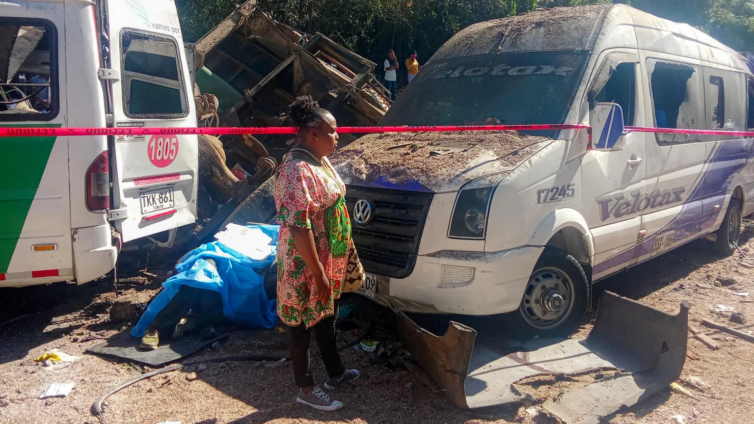
Videos shared from the scene showed damaged vehicles and debris strewn across the Pan-American Highway in the southern Cauca region.
Colombian President Gustavo Petro blamed the attack on rebels linked to dissident factions of the Revolutionary Armed Forces of Colombia (FARC), while local governor Octavio Guzman described the attack as the most brutal against civilians in decades.
Peace talks between FARC and the government in 2016 ended in a deal under which thousands of fighters demobilised, but some broke away and refused to disarm.
"Those who carried out this attack... are terrorists, fascists and drug traffickers," Petro said on X.
"I want our very best soldiers to confront them," he added.
Guzman posted a video on X of upturned vehicles and craters littered along the highway and described the bombing as "indiscriminate".
"Cauca cannot continue to face this barbarity alone," he wrote.
On Sunday, he said in an update that 15 women and five men had been killed in the attack, which left a crater 200 metres in size.
Witnesses told the AFP news agency that the blast was so powerful they were knocked back several metres.
A spate of smaller attacks has also been reported in Cauca since Friday, the governor added, including one that targeted a military base in the city of Cali that injured two people.
Defence Minister Pedro Arnulfo Sánchez said a bus filled with explosives failed to detonate earlier in the day in the Cauca region, saying it was carried out by members of a drug-trafficking cartel.
The latest attacks come one month out from Colombia's presidential election on 31 May.
Petro, himself a former guerrilla fighter, has been pursuing a controversial peace strategy with various armed factions, which has led to intermittent ceasefires and periods of relatively low violence. His term will end later this year.
Multiple dissident offshoots of the FARC operate across Colombia, many of them with extensive involvement in drug trafficking. Efforts by Petro's left-wing government to start peace talks with them have been unsuccessful.
Colombia is holding presidential elections on 31 May. Left-wing candidate Ivan Cepeda, who is endorsed by Petro, has called for more negotiation efforts with the rebels.
Opposition right-wing candidates Paloma Valencia and Abelardo De la Espriella have promised a crackdown on the insurgents.
Latest Stories
-
Insults generally are not crimes, but some may be criminal under the law – Samson Lardy Anyenini
5 minutes -
IGP deploys specialised police team, armoured vehicle to strengthen security in Nkwanta
5 minutes -
Dr Bawumia advocates solar power, access to credit, training and certification for artisans
7 minutes -
Trade Minister engages Russia, UAE and UNDP to boost trade, investment
9 minutes -
7 best foods to help keep blood sugar levels steady
12 minutes -
Ghana to host signing of UN trade convention to modernise global cargo documentation on October 26
27 minutes -
Family announces memorial mass for Nana Konadu Agyeman-Rawlings
31 minutes -
Mahama, Trade Minister, tours Afienya and Tema factories, schedules meeting on Free Zones incentives
36 minutes -
Gyakie and FlipTheMusic unveil ‘Your Body’ following a new distribution deal with Warner Music Africa
37 minutes -
Stop looking down on new media practitioners as if they don’t matter – New Media President
38 minutes -
Ghana’s BRICS partnership bid aimed at broadening development opportunities – Mahama
43 minutes -
Fiabci-Ghana inaugurated to promote professionalism and global collaboration in real estate sector
1 hour -
‘No flying in just for matches’ – Kofi Adams sets conditions for next Black Stars coach
1 hour -
Ghana and BRICS: Strategic opportunity, economic imperative or geopolitical gamble?
1 hour -
SML vs GRA: Court grants preservation order in dispute over US$500 million investment
1 hour