

Audio By Carbonatix
In a collaborative endeavor, the International Labour Organization (ILO) and the government of Ghana are diligently finalizing the Decent Work Country Programme III (DWCP III).
DWCPs are the primary vehicle through which the ILO supports member states.
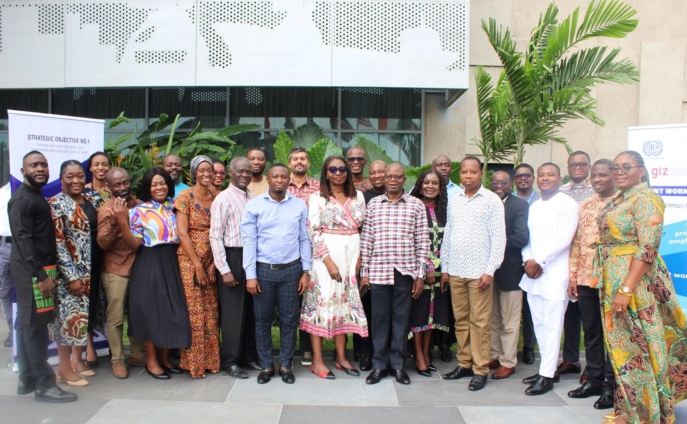
The meeting was held from July 24 to 26, 2023, to review, fine-tune and validate the proposed priorities and initiatives in the new DWCP III, which is aligned with Ghana’s development priorities and frameworks and the United Nations Sustainable Development Cooperation Framework.
The workshop brought together representatives of the ILO, the Ministry of Employment and Labour Relations, the Department of Social Welfare, the Ghana Employers' Association, the Ghana Federation of Labour, the Trade Union Congress Ghana, the Department of Factories and Inspectors, and the National Development Planning Commission and other partners who contributed to putting the document together.
In her opening remarks, Ms. Gloria Noi, Director for policy, planning, monitoring, and evaluation at the Ministry of Employment and Labour Relations, said it is time to create a robust Decent Work Country Programme document that will serve as a springboard for providing vital ILO assistance to member states.
“The Decent Work Country Programme III represents a significant commitment towards advancing the principles of decent work, fostering inclusivity, and promoting social justice in our beloved nation,” Ms. Noi said.
“Ensuring fair and productive employment opportunities is not only a fundamental human right but also a driving force for sustainable development.”
The DWCP III document has three priority areas: increasing decent and sustainable jobs, expanding social protection coverage, and promoting rights at work in line with international labour standards. These priority areas are designed to help Ghana achieve its national development goals, such as creating opportunities for all Ghanaians and building a thriving nation.
Richard Acheampong, a representative from the Trade Union Congress Ghana (TUC), affirmed the union’s commitment to supporting a robust programme that will benefit its members.
“We believe that as workers or as a people participating in the economic development programme depends on having decent jobs. That is how we are able to take care of our families. If you look at the programme's priorities, as in increasing decent work and sustainable jobs, expanding social protection coverage, and promoting workers' rights is exactly in line with the strategies the TUC employs in promoting the interest of our members.”
The Ghana Employers Association’s representative, Kingsley Laar, also said as employers, they are keen on advocating a safe and secure environment where entrepreneurship innovation and job creation can thrive.
He said “In our quest to create jobs, we’ve also made a promise, intentionally to incorporate principles of decent work. Over the past year, we have established a very strong relationship with our partners, especially with ILO to ensure that the issue of decent work agenda is at both the national and enterprise levels.”
Ms. Chinyere Emeka Anuna, Senior programme officer at the ILO country office delivered a message on behalf of Vanessa Lerato Phala, Director of the ILO Country Office for Nigeria, Ghana, Liberia, and Sierra Leone.
She said in supporting member states in efforts to achieve decent work for all, gender equality is the cross-cutting objective. She said the DWCP III will allow the ILO to provide technical assistance to Ghana in line with government priorities and the UN Sustainable Development Commission.
“When you look at the indicators of SDG goal 8 you will notice that the DWCP is a forward-looking document as it speaks to the target of SDG 8 and in addition to other targets from other SDG indicators,” Anuna said.
About Decent Work Country Programmes (DWCPs)
Decent Work Country Programmes (DWCPs) have been established as the main vehicle for the delivery of ILO support to countries. DWCPs have two basic objectives. They promote decent work as a key component of national development strategies.
At the same time, they organise ILO knowledge, instruments, advocacy, and cooperation at the service of tripartite constituents in a results-based framework to advance the Decent Work Agenda within the fields of comparative advantage of the Organization.
Tripartism and social dialogue are central to the planning and implementation of a coherent and integrated ILO programme of assistance to constituents in member states.
Latest Stories
-
NPP won’t force candidates to step down – Miracles Aboagye
3 minutes -
Black Stars: Building in the sinking sands
5 minutes -
Low inflation on paper, high cost of living: How Presidents Mahama and Trump are facing stark economic reality
13 minutes -
NPP will negotiate with popular non-politicians to secure winnable candidates – Miracles Aboagye
17 minutes -
Only 5% of Ghanaians can afford housing without support – Gov’t
17 minutes -
Nigeria launches rescue after military plane crashes with 32 aboard
24 minutes -
GES digitalisation already exists; restore discontinued platforms – Adutwum spokesperson
24 minutes -
Police launch manhunt for 7 after deadly Bunkprugu violence
26 minutes -
GTEC directs UDS to immediately cease unauthorised mode of delivering accredited LLB programme
30 minutes -
We must address the role of boys in impregnating young girls, not just blame girls – Kobby Kyei
32 minutes -
Mahama grants presidential pardon to 863 convicted persons
42 minutes -
Tema Central MP assaulted my driver – Ebi Bright alleges
58 minutes -
Gbande’s arrest directive confirms NPP’s claims of selective justice – Miracles Aboagye
1 hour -
US to announce $150 million for Alaska power lines as Vance campaigns in Senate battleground
1 hour -
Two CHPS compounds, educational facilities under construction in Keta – MP
1 hour