

Audio By Carbonatix
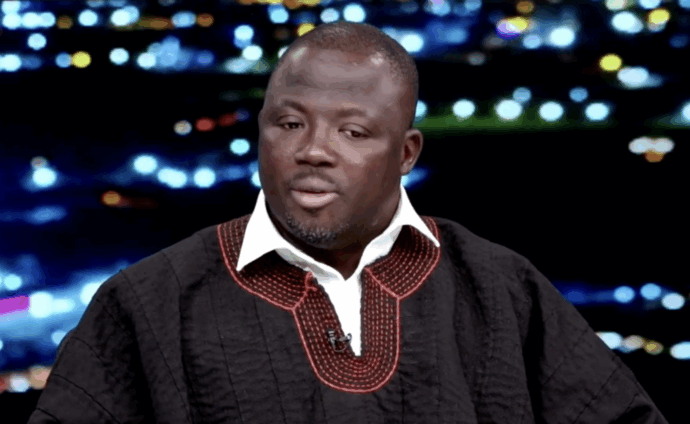
NDC Deputy General Secretary Mustapha Gbande has warned that the Supreme Court’s decision declaring the delegate system unconstitutional could impose significant financial and logistical challenges on political parties.
Speaking on Joy News’ PM Express on Wednesday, he said that while the ruling seeks to deepen Ghana’s democracy, implementing it would raise difficult practical questions that political parties must carefully consider.
“I think that we must first of all congratulate ourselves collectively with civil society on how far we have come and championing our democracy. We are not talking about coups d’état again; we are seeking to strengthen and deepen our democracy. It comes at a cost and sacrifice.”
The Supreme Court, in a 5-2 majority decision, ruled that the long-standing delegate system used by political parties to elect presidential and parliamentary candidates violates democratic principles.
The Court directed all political parties to allow every registered, card-bearing member to participate in their presidential and parliamentary primaries.
Reacting to the judgment, Mr Gbande said the issue is not entirely new to the NDC.
“I have always been an ardent student of controlled democracy, because excess democracy comes with its own issues, and so that is where my personal opinion is.”
He explained that the party had previously attempted to broaden participation in its internal elections but later abandoned the approach after encountering challenges.
“But as far as this matter is concerned, it is not new to the NDC as a party. We’ve been here before in our own account, where we sought to deepen our participation, widen it to all members. We had our challenges with it, and we had to abandon it at some point in time.”
Mr Gbande stressed that the latest decision differs because it is now a directive from the country’s highest court, adding that the NDC will study the full judgment before taking an official position.
“This particular one is a body imposing on all of us to do it; the party is yet to read the judgment, come to a full appreciation of what the prevailing issues are.”
He questioned who would finance the expanded electoral process if every registered party member is required to vote.
“Number one, who is going to bear the cost of the election? Because even managing our own college system, you would have to pay, sometimes, the electoral commission to supervise that election for it to be credible. Is it the case that the state would do that?”
Mr Gbande also raised concerns over the logistics of mobilising party members nationwide.
“Now, who is going to do some mobilisation? It’s not easy to mobilise the number of people we are talking about, even to a voting centre, even if we are going to do it like that, or we are going to do it on an electoral area basis, or we are going to do it this district or constituency basis, it comes with its own challenges.”
He said the NDC would study the judgment, consult its lawyers and determine whether any clarification from the Court would be necessary before adopting an official position.
“But I think that it’s an issue of mixed feelings.”
Latest Stories
-
UGMC research must translate laboratory findings into healthcare solutions – Prof Evelyn Bonnie
4 minutes -
Court remands 3 over alleged gold concentrate robbery
6 minutes -
Two bodies stuck at St. Anne’s mortuary after refrigeration engines break down
30 minutes -
‘We will not let this matter rest’ – Afenyo-Markin after Bagbin rejects narcotics probe
33 minutes -
AFCON 2027Q: Ghana suffer 4-2 defeat to Gambia
37 minutes -
Your strike could disrupt academic calendar – GES urges teachers to return
44 minutes -
Speaker’s ruling has failed integrity test required of Parliament to discharge its duties – Afenyo-Markin
1 hour -
St. John’s Grammar edges Mfantsipim in nail-biting NIQ showdown
1 hour -
Expanding Financial Inclusion: Advans Ghana’s client base more than doubles to 160,000
1 hour -
AFCON 2027Q: Ghana surrender two-goal lead to lose to Gambia
1 hour -
Daily Insight for CEOs: Preparing the organisation for 2027
2 hours -
‘Don’t just sit silent and expect a referral’ – Speaker urges Human Rights Committee to investigate abuses
2 hours -
‘Give caucus leaders adequate time to speak before ruling’ – Afenyo-Markin to Bagbin
2 hours -
Petrosol gives back to society by donating 3,600 books and bags to Sawla DA Primary
2 hours -
Bagbin dismisses Minority motion on narcotics seizures as inadmissible
2 hours