

Audio By Carbonatix
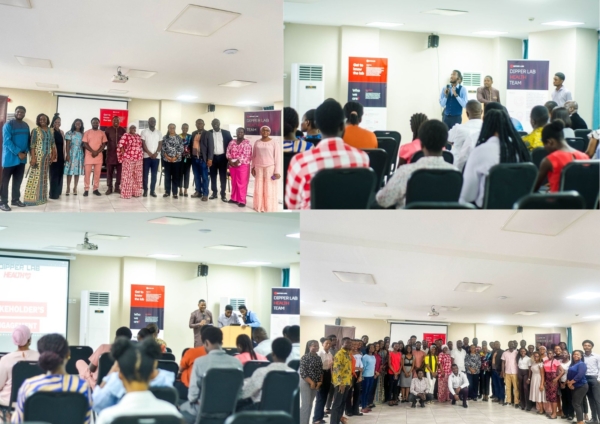
The Distributed IoT Platforms, Privacy and Edge-Intelligence Research (DIPPER) Lab at the Kwame Nkrumah University of Science and Technology (KNUST) has held a stakeholder engagement session with healthcare workers, including general practitioners, pediatricians, nurses, lab technologists, among others.
The engagement was organized to present and receive feedback on several low-cost medical innovations developed by the lab to improve neonatal care and reduce infant mortality in Ghana.
Speaking at the event, Rev. Dr. Prince Odame, Child Health and Innovation Team Lead at DIPPER Lab, explained the rationale behind the initiative.

“We want our innovations to have a real-life impact and be adopted by hospitals to save lives.
That’s why we brought in key players in the health sector to evaluate what we’ve built, advise us on improvements, and point out potential challenges,” he said.
The lab showcased a range of medical devices and tools focused on neonatal health, including affordable phototherapy units for treating jaundice, automated exchange transfusion devices, an AI-based jaundice detection system, color-coded thermometers, sleep apnea monitoring devices, and low-cost incubators.

Dr. Odame noted that the Child Health and Innovation team’s work is motivated by challenges encountered in neonatal wards and the need for practical, affordable engineering solutions that can be deployed in hospitals across the country.
Despite some progress, Ghana continues to record a high number of newborn deaths due to preventable causes such as jaundice, respiratory distress, and hypothermia.
Experts have emphasized the need for homegrown, low cost interventions that can be used in resource constrained settings.
Dr. Adoma Odame, Deputy Team Lead of the DIPPER Lab’s Child Health and Innovation team and a Senior Specialist Pediatrician, stressed the importance of developing solutions that are both affordable and usable within the local healthcare context.
“As a pediatrician working in child health, seeing newborns die, we realize that it's very important for us to, as much as possible, develop low-cost interventions that are easily usable within our environment that can save the lives of newborns,” she noted.
Dr. Adoma added that while Ghana’s neonatal mortality rates have improved over the years, there is still much more to be done.
The engagement drew participation from pediatricians across the country, many of whom expressed strong support for the Lab’s approach.
Dr. Eugene Martey, Ashanti Regional Chair of the Pediatric Society of Ghana, was impressed by the Lab’s innovations and highlighted the importance of devices like CPAP machines.
“Pneumonia and respiratory failure remain major causes of death in children. I’m encouraged by the lab’s effort to provide affordable respiratory support systems, especially for preterm babies,” he said.
Dr. Josephine Oduro Tweneboah, a pediatrician at Komfo Anokye Teaching Hospital (KATH), praised the initiative and the focus on locally driven solutions.
“It’s refreshing to see such innovations coming from Ghanaians for Ghanaians. Most of the equipment we use is imported, and when they break down, they often become unusable. Locally developed devices are easier to maintain and more sustainable,” she noted.
The session featured a panel discussion led by Dr. Eric Tutu Tchao, Scientific Director of DIPPER Lab, and a poster exhibition.
The stakeholder meeting marks a significant step in bridging the gap between biomedical research and frontline healthcare delivery in Ghana, with a shared goal of reducing preventable deaths among newborns.
Latest Stories
-
UK identified as leading destination for Ghana’s illicit cannabis exports – Report
2 minutes -
Drug money allegedly finances Ghana’s political parties and real estate – Global Organised Crime Index
7 minutes -
NSA outlines seven steps for successful posting and validation of national service personnel
8 minutes -
GPRTU taskforce clamps down on unapproved fares at Kasoa
9 minutes -
Prime Insight: Making room for meaningful national conversations on Joy Prime
20 minutes -
FABAG commends Ato Forson’s over removal of 20% excise duty on locally manufactured fruit juices
27 minutes -
HIV stigma discourages testing, prevention and treatment in Ghana – Ghana AIDS Commission
29 minutes -
Blocking cocaine probe lends weight to claims of political protection for traffickers – Assin South MP
33 minutes -
NPP Vice Chair race: I may be the youngest, but most experienced – Nana B
35 minutes -
Last UK and US troops leave Iraq as anti-Islamic State mission ends
35 minutes -
Don’t stay home idle, embrace entrepreneurship while awaiting posting – Unemployed nurses urged
47 minutes -
Aayalolo buses not speeding on contra-flow lanes – GAPTE assures commuters
50 minutes -
Effia MP calls for Kurt Okraku’s removal, overhaul of Ghana football structure
51 minutes -
CAS hearing on AFCON final appeal by Senegalese Football Federation set for October 8
51 minutes -
STC fares to go up by up to 8% this week – Deputy MD
52 minutes