


Audio By Carbonatix
Alejandro Ramos Martínez, a seafood diver from Pisco, Peru, recently made international headlines after a terrible accident left him looking like a human balloon.
He apparently rose from a depth of 30 meters too fast, which caused the nitrogen in his blood to form giant bubbles that adhered to his muscles, leaving him looking deformed.
Martínez’s unusual case was featured on Peruvian TV show “Cuarto Poder”, where doctors were left stunned by the horrifying effect of the nitrogen pods on the man’s physical appearance.
Decompression sickness, also known as ‘the bends’, causes nitrogen to come out of solution and form bubbles in the blood and tissues.
In mild cases, symptoms include unusual fatigue, dizziness, nausea and joint pain, but in rare cases it can also cause paralysis or even death. The deforming effects it has had on this Peruvian diver are believed to be unique.
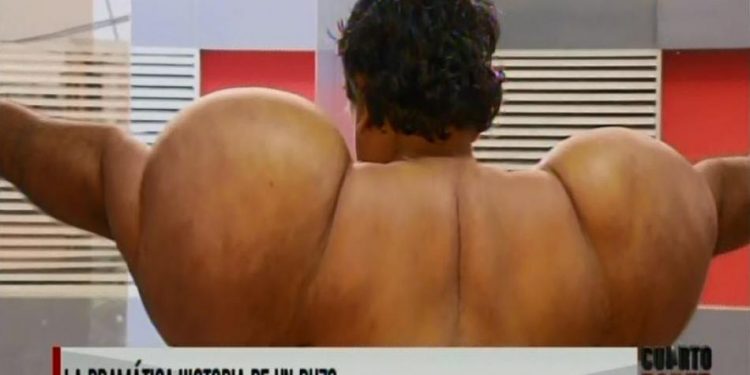
Alejandro Ramos Martínez suffered his diving accident four years ago, but doctors are still looking for ways to get the nitrogen bubbles out of his body.
Because these gas sacks are apparently attached to the man’s flesh, they cannot be removed surgically, so the best solution they’ve come up with so far has been administering oxygen in a pressurized chamber. They have so far been able to eliminate about 30% of the enormous nitrogen bubbles, and estimate Martínez will require at least another 100 sessions in the hyperbaric chamber.
The bizarre reaction to the rapid ascent not only left the seafood diver looking like a walking balloon, but apparently also added an extra 30 kg to his frame. The nitrogen bubbles apparently cause Martínez excruciating pain which he can only live with thanks to painkillers, as well hypertension.
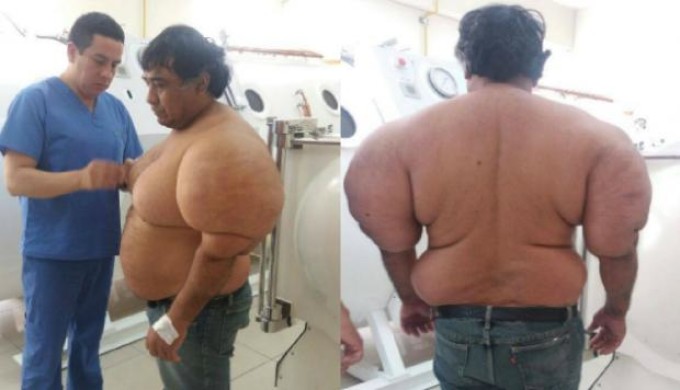
His deformed frame has recently resulted in a serious hip injury which doctors say will require a prosthesis. Peruvian news site Alvaroz reports that if the number of nitrogen bubbles in Alejandro Ramos Martínez can be reduced with the help of oxygen therapy, he will be eligible for a complicated surgical procedure to have them removed completely.
However, the estimated cost of such a surgery is $100,000, which the poor diver does not have. It is unclear how he can even make a living now that he cannot dive anymore.
Latest Stories
-
Ghana still needs landfills but Accra should prioritise waste-to-energy – Waste Care Associates CEO
4 minutes -
Godwin Mahama declares bid for NDC Greater Accra Regional Secretary
8 minutes -
Bawumia unveils NPP plan to scout parliamentary candidates capable of winning parliamentary seats
12 minutes -
NPP Chairmanship race: How APL’s survey made a near-perfect prediction
13 minutes -
Remember Adomako-Boateng: Aduana right-back regains consciousness after collapsing during a league match
13 minutes -
Today’s front pages: Monday, October 5, 2026
13 minutes -
Families still selling homes, exhausting savings to pay for specialised care – GMTF Administrator
34 minutes -
Unity is what we need, Shatta Wale has reminded us
37 minutes -
Ghana Medical Trust Fund has exceeded expectations in first year – Health Minister
42 minutes -
One-Week Observation for Mrs Janet Gyasi Boakye
55 minutes -
Before the bulldozers arrive: What the state owes workers in the informal economy
56 minutes -
NIA extends Ghana Card registration for children in North East and Upper East
59 minutes -
Volta Team wins NPA 2026 Welfare Week Quiz championship
1 hour -
Maxwell Klu turns birthday into relief mission for Hohoe flood victims
1 hour -
NDC congratulates NPP, calls for national interest to rise above party politics
1 hour