

Audio By Carbonatix
By Elizabeth Cohen, CNN Senior Medical Correspondent
(CNN) -- When Hilarie Cash arrives home from work in the evening, she has a choice: She can go outside and tend to her garden or she can hop on her laptop.
The lilacs really need weeding. The computer, on the other hand, can wait, as her work is done for the day.
Despite this, Cash feels drawn to the computer, as if it's a magnet pulling her in. Maybe there's an e-mail from a friend awaiting her, or a funny tweet, or a new picture posted on Facebook.
"I find it extremely difficult to walk away," Cash says. "It's so hard to tell myself, 'Don't do it. Go do the gardening.'"
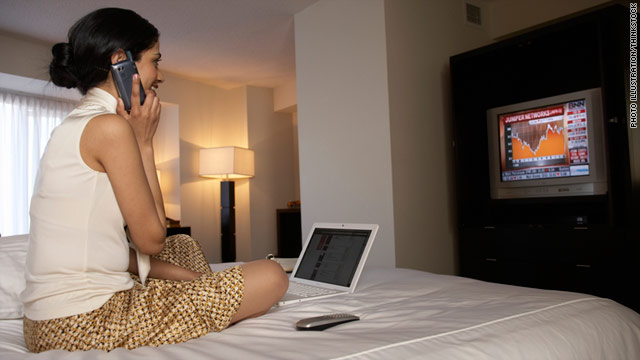 Does it really matter if Cash gardens or goes online? Increasing, experts say it does. The worry is that life online is giving us what researcher, David Levy, calls "popcorn brain" -- a brain so accustomed to the constant stimulation of electronic multitasking that we're unfit for life offline, where things pop at a much slower pace.
Preferring a smartphone to a child
Levy, a professor with the Information School at the University of Washington, tells the story of giving a speech at a high-tech company. Afterward at lunch, an employee sheepishly told him how the night before his wife had asked him to give their young daughter a bath. Instead of enjoying the time with his child, he spent the time on his phone, texting and returning e-mails. He didn't have to work, it was just that the urge to use the phone was more irresistible than the child in the tub.
"It's really ubiquitous," says Cash, a counselor who treats people who have trouble giving up their gadgets. "We can't just sit quietly and wait for a bus, and that's too bad, because our brains need that down time to rest, to process things."
Clifford Nass, a social psychologist at Stanford, says studies show multitasking on the Internet can make you forget how to read human emotions. When he showed online multitaskers pictures of faces, they had a hard time identifying the emotions they were showing.
When he read stories to the multitaskers, they had difficulty identifying the emotions of the people in the stories, and saying what they would do to make the person feel better.
"Human interaction is a learned skill, and they don't get to practice it enough," he says.
This is your brain on technology
The human brain is wired to crave the instant gratification, fast pace, and unpredictability of technology, Cash says.
"I never know what the next tweet is going to be. Who's sent me an e-mail? What will I find with the next click of the mouse? What's waiting for me?" says Cash, who practices in Redmond, Washington. "But I know what's waiting for me in my garden."
Dr. Nora Volkow, director of the National Institute on Drug Abuse, admits she, too, has a hard time resisting the call of her BlackBerry. "On vacation, I look at it even though I don't need to," she says. "Or I take a walk with my husband and I can't resist the urge to check my e-mail. I feel guilty, but I do it."
She explains that constant stimulation can activate dopamine cells in the nucleus accumbens, a main pleasure center of the brain.
Over time, and with enough Internet usage, the structure of our brains can actually physically change, according to a new study. Researchers in China did MRIs on the brains of 18 college students who spent about 10 hours a day online.
Compared with a control group who spent less than two hours a day online, these students had less gray matter, the thinking part of the brain. The study was published in the June issue of PLoS ONE, an online journal.
How to cope with popcorn brain
Some people can easily switch from the constant popping of online life to the slower pace of the real world. If you're not one of those people and the slow pace makes you jittery, here are some tips:
Does it really matter if Cash gardens or goes online? Increasing, experts say it does. The worry is that life online is giving us what researcher, David Levy, calls "popcorn brain" -- a brain so accustomed to the constant stimulation of electronic multitasking that we're unfit for life offline, where things pop at a much slower pace.
Preferring a smartphone to a child
Levy, a professor with the Information School at the University of Washington, tells the story of giving a speech at a high-tech company. Afterward at lunch, an employee sheepishly told him how the night before his wife had asked him to give their young daughter a bath. Instead of enjoying the time with his child, he spent the time on his phone, texting and returning e-mails. He didn't have to work, it was just that the urge to use the phone was more irresistible than the child in the tub.
"It's really ubiquitous," says Cash, a counselor who treats people who have trouble giving up their gadgets. "We can't just sit quietly and wait for a bus, and that's too bad, because our brains need that down time to rest, to process things."
Clifford Nass, a social psychologist at Stanford, says studies show multitasking on the Internet can make you forget how to read human emotions. When he showed online multitaskers pictures of faces, they had a hard time identifying the emotions they were showing.
When he read stories to the multitaskers, they had difficulty identifying the emotions of the people in the stories, and saying what they would do to make the person feel better.
"Human interaction is a learned skill, and they don't get to practice it enough," he says.
This is your brain on technology
The human brain is wired to crave the instant gratification, fast pace, and unpredictability of technology, Cash says.
"I never know what the next tweet is going to be. Who's sent me an e-mail? What will I find with the next click of the mouse? What's waiting for me?" says Cash, who practices in Redmond, Washington. "But I know what's waiting for me in my garden."
Dr. Nora Volkow, director of the National Institute on Drug Abuse, admits she, too, has a hard time resisting the call of her BlackBerry. "On vacation, I look at it even though I don't need to," she says. "Or I take a walk with my husband and I can't resist the urge to check my e-mail. I feel guilty, but I do it."
She explains that constant stimulation can activate dopamine cells in the nucleus accumbens, a main pleasure center of the brain.
Over time, and with enough Internet usage, the structure of our brains can actually physically change, according to a new study. Researchers in China did MRIs on the brains of 18 college students who spent about 10 hours a day online.
Compared with a control group who spent less than two hours a day online, these students had less gray matter, the thinking part of the brain. The study was published in the June issue of PLoS ONE, an online journal.
How to cope with popcorn brain
Some people can easily switch from the constant popping of online life to the slower pace of the real world. If you're not one of those people and the slow pace makes you jittery, here are some tips:
Does it really matter if Cash gardens or goes online? Increasing, experts say it does. The worry is that life online is giving us what researcher, David Levy, calls "popcorn brain" -- a brain so accustomed to the constant stimulation of electronic multitasking that we're unfit for life offline, where things pop at a much slower pace.
Preferring a smartphone to a child
Levy, a professor with the Information School at the University of Washington, tells the story of giving a speech at a high-tech company. Afterward at lunch, an employee sheepishly told him how the night before his wife had asked him to give their young daughter a bath. Instead of enjoying the time with his child, he spent the time on his phone, texting and returning e-mails. He didn't have to work, it was just that the urge to use the phone was more irresistible than the child in the tub.
"It's really ubiquitous," says Cash, a counselor who treats people who have trouble giving up their gadgets. "We can't just sit quietly and wait for a bus, and that's too bad, because our brains need that down time to rest, to process things."
Clifford Nass, a social psychologist at Stanford, says studies show multitasking on the Internet can make you forget how to read human emotions. When he showed online multitaskers pictures of faces, they had a hard time identifying the emotions they were showing.
When he read stories to the multitaskers, they had difficulty identifying the emotions of the people in the stories, and saying what they would do to make the person feel better.
"Human interaction is a learned skill, and they don't get to practice it enough," he says.
This is your brain on technology
The human brain is wired to crave the instant gratification, fast pace, and unpredictability of technology, Cash says.
"I never know what the next tweet is going to be. Who's sent me an e-mail? What will I find with the next click of the mouse? What's waiting for me?" says Cash, who practices in Redmond, Washington. "But I know what's waiting for me in my garden."
Dr. Nora Volkow, director of the National Institute on Drug Abuse, admits she, too, has a hard time resisting the call of her BlackBerry. "On vacation, I look at it even though I don't need to," she says. "Or I take a walk with my husband and I can't resist the urge to check my e-mail. I feel guilty, but I do it."
She explains that constant stimulation can activate dopamine cells in the nucleus accumbens, a main pleasure center of the brain.
Over time, and with enough Internet usage, the structure of our brains can actually physically change, according to a new study. Researchers in China did MRIs on the brains of 18 college students who spent about 10 hours a day online.
Compared with a control group who spent less than two hours a day online, these students had less gray matter, the thinking part of the brain. The study was published in the June issue of PLoS ONE, an online journal.
How to cope with popcorn brain
Some people can easily switch from the constant popping of online life to the slower pace of the real world. If you're not one of those people and the slow pace makes you jittery, here are some tips:- Keep a record of your online life Keep track of how much time you spend online, and what you're doing with it, Levy suggests. Note how you feel before and during your time at the computer. "Everyone I've told to do this has come back with personal realizations," he says. "Very commonly, people will say they tend to go online when they're feeling anxious or bored."
- Set time limits for your Internet use Give yourself a specific time period -- say two hours -- to answer personal e-mails, update your Facebook page, and check texts, Cash suggests. After that, it's time to turn the computer (or phone) off and do something offline.
- Stare out the window Take two minutes to stare out the window. Levy says this can help train your brain to slow down a bit.
- Establish "free times" In a blog on Psychology Today, psychologist Robert Leahy recommends experimenting with BlackBerry-free times. "For example, "I won't check my messages between 6 and 9 p.m.," he writes. Leahy, director of the American Institute for Cognitive Therapy, also recommends rewarding yourself for every hour that you don't check. "Tell yourself that you are reclaiming your life," he writes.
- Phone a friend Bloggers on WikiHow have been sharing their own list of tips on how to wean themselves off of everything from Internet searching to texting. One person suggests phoning a friend instead of sending instant messages. "Call a friend and ask them to go outside for at least 3 hours a day," they write. "This will distract you from the computer."
- Get tested
According to the Center for Internet and Technology Addiction, you may have a problem if loved ones are becoming troubled with the amount of time you are devoting to the Internet or if you experience guilt or shame. They offer a virtual Internet addiction test that can help you determine whether it might be time to shut down, logoff or change your IM status to "away."
Source: CNNDISCLAIMER: The Views, Comments, Opinions, Contributions and Statements made by Readers and Contributors on this platform do not necessarily represent the views or policy of Multimedia Group Limited.Tags:DISCLAIMER: The Views, Comments, Opinions, Contributions and Statements made by Readers and Contributors on this platform do not necessarily represent the views or policy of Multimedia Group Limited.
Latest Stories
-
Ghana lose Morocco friendly as Atlas Lions turn to Mali
1 hour -
2026/2027 GPL: Kelvin Nkrumah strike sends Medeama top of league table
1 hour -
Emmanuel City crowned champions of maiden Global Game Scouting Tournament
1 hour -
Thomas Partey loses father Jacob Teye Partey
2 hours -
Martin Kpebu explains when EOCO can arrest Manhyia South MP after securing court warrant
2 hours -
EOCO’s reasons for seeking Manhyia South MP arrest warrant not justified – Kpebu
2 hours -
MTN Ghana warns SMEs against sharing PINs amid digital fraud risks
2 hours -
Yendi nursing students warn restricted access to skills lab could affect their training
2 hours -
Minority awaits formal notice of arrest warrant for Manhyia South MP – Annoh-Dompreh
2 hours -
LTIF announces 2026 Pan-African edition in Accra from October 6-7
2 hours -
Mfantsipim needs broader funding partnerships to bridge infrastructure gap – Prof Baiden
2 hours -
MP status must not shield anyone from law enforcement – Kwakye Ofosu
2 hours -
EOCO had tactical team ready to arrest Baffour Awuah – Felix Kwakye Ofosu
3 hours -
Afoko can unite NPP’s factions, says Charles Owusu Juanah
3 hours -
Guardiola backing Man City after guilty verdicts
3 hours