

Audio By Carbonatix
The Leader of Risk Communication for the National Covid-19 response team has cautioned Ghanaians not to be complacent about the rapid reduction of the infection rate.
Dr Dacosta Aboagye said that the drop in the local infections (community spreads) is as a result of the compliance to the measures put in place by the government, Ghana Health Service, Ministry of Health and other stakeholders like the media.
He believes that in spite of the reduced Covid-19 infection rate, the nation is still at a critical stage in the fight against the pandemic, which requires intensified public education and community engagement.
His fears that out of complacency citizens might let down their guard on the safety protocols, leaving them open to the spread of the virus.
“The reason why I said we have reached the critical stage in the fight against the COVID-19 is that as a country, this is the time that we have to see the need to intensify public education, community engagement like house-to-house education and make sure that every Ghanaian is adhering to the safety protocols; wearing of the face masks, regular washing of hands of at least 20 seconds with soap under running water,” he cautioned.
In addition to adhering to all existing safety protocols, Dr Aboagye encouraged Ghanaians to maintain a healthy diet to help fight the virus.
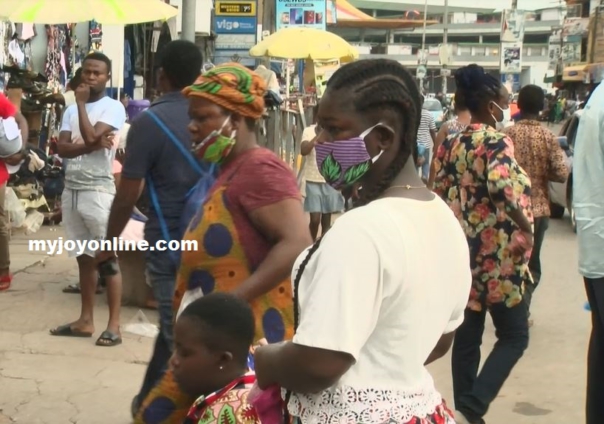
“If you are leaving your homes, please wear your face masks because it is a law to wear them and the police are still enforcing that law.
"We have gotten to a point in the fight against the virus where the citizens have to help us to eradicate the infection from the country entirely as we continue to ease some of the restrictions”.
“This is the time that every Ghanaian should eat a well-balanced diet from local foods and adhere to all the preventive measures to avoid what we call the second wave.
"We should not be complacent that the infection rate is reducing and so we will not comply with the safety protocols; we should not be complacent”, he said emphatically.
He called on the media to use their channels to educate the public on the need to stay safe as the fight against the virus had reached a critical stage.
Currently, there are no recorded Covid-19 cases in the North East, Savannah, Upper East, and Upper West Regions, and residents have been charged to do everything possible to maintain that situation.
Greater Accra, Ashanti, Central, Eastern, and Western continue to be the Regions with the highest number of active cases.
Thus far, a total of 40,567 persons have recovered from the virus. This means the nation's recovery rate has improved from 89.5 per cent to 95.1 per cent in three weeks.
Latest Stories
-
June 29 floods exposed weaknesses in Ghana’s environmental sanitation system – Ayariga
4 minutes -
Local Gov’t Minister announces plans to regenerate Agbogbloshie enclave
9 minutes -
LA 2028: Black Queens performance watch ahead of Mauritius clash
9 minutes -
Gov’t transfers GH¢9.1bn DACF to MMDAs under Mahama — Mahama Ayariga
10 minutes -
From tools to strategy: How Ghanaian MSMEs can harness AI for scale
12 minutes -
GCB MD engages customers in live social media ‘Ask Me Anything’ session
14 minutes -
Football clubs ‘are in love’ with Kurt Okraku – Aduana FC boss
14 minutes -
397 CHPS compounds, 502 classroom blocks completed under DACF projects – Mahama Ayariga
15 minutes -
SavannaFest Tournament: Coach appeals to MTN to invite scouts in future tournaments
17 minutes -
John Boadu pledges unity, reconciliation as he takes over as NPP National Chairman
19 minutes -
‘Whatever the personal cost, I will not abandon my duty’ – Baffour Awuah assures Salomey Bafoh
20 minutes -
Government to increase funding for Houses of Chiefs to speed up dispute resolution
22 minutes -
Mahama Ayariga outlines plans to transform sanitation system in Greater Accra
23 minutes -
Govt’ to introduce digital property rate system to boost MMDAs’ revenue – Mahama Ayariga
24 minutes -
Traditional Medicine Practice Council closes three unlicensed spa and massage centres in Ashanti Region
26 minutes