


Audio By Carbonatix
The World Health Organization (WHO) has rebuked Tanzania for failing to provide information about possible Ebola virus infections.
The WHO said it had learned of one suspected fatal case in Dar es Salaam and two others but, despite repeated requests, was given no information.
Tanzania has said it has no suspected or confirmed cases.
The latest outbreak has killed more than 2,000 in eastern DR Congo, with Uganda battling to stop any spread.
An epidemic that ravaged parts of West Africa from 2014 to 2016 killed more than 11,000 people.
What is the WHO complaining about?
A statement on Saturday said that on 10 September the organisation had learned of a suspected infection in Dar es Salaam, Tanzania's most populous city, in what would be the country's first Ebola case.
It said the patient had been to Uganda, shown symptoms of Ebola in August, tested positive and died on 8 September. It said that the woman's contacts had been quarantined.
The WHO said it had unofficial reports of two other possible cases.
It said: "Despite several requests, WHO did not receive further details of any of these cases from Tanzanian authorities."
It added: "The limited available official information from Tanzanian authorities represents a challenge for assessing the risk posed by this event."
What has Tanzania said in response?
On 14 September, Tanzania said there were no confirmed or suspected cases of Ebola in the country.

However, it did not directly address the case of the woman mentioned by the WHO and provided no further information.
Last week, US Health Secretary Alex Azar criticised Tanzania for its failure to share information on possible cases.
Tanzania is heavily reliant on tourism, which could be affected by confirmed cases.
What is the latest on the outbreak?
It began in the eastern DR Congo in August last year and is the biggest of 10 Ebola outbreaks to hit the country since 1976, when the virus was first discovered.
There have been more than 3,000 cases and more than 2,000 deaths.
Other nations are on high alert. Four people have died after being diagnosed with the virus in Uganda, which has maintained largely successful screening centres along its border.
The disease can spread rapidly and similarly rapid measures are needed to control it, including hand-washing regimes and quarantines.
What is Ebola?
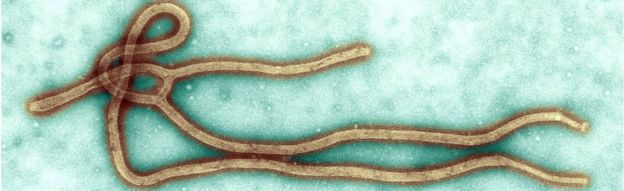
- Ebola is a virus that initially causes sudden fever, intense weakness, muscle pain and a sore throat
- It progresses to vomiting, diarrhoea and both internal and external bleeding
- People are infected when they have direct contact through broken skin, or the mouth and nose, with the blood, vomit, faeces or bodily fluids of someone with Ebola
- Patients tend to die from dehydration and multiple organ failure
Latest Stories
-
Monetise Idiocy In Ghana
2 minutes -
The Ghanaian prophet and the mysterious death of his scottish wife Charmain Speirs
47 minutes -
Nearly 400 sentenced in Nigeria for links to militant Islamists
1 hour -
Ghana’s recovery supported by gold strength despite global oil price pressures – Standard Bank Research
1 hour -
‘Excellence is our inheritance’ – Nana Sam Brew-Butler hails Mfantsipim’s 150-year reign in leadership
2 hours -
Kwaku Azar writes: A-G vs OSP
2 hours -
Mfantsipim–Adisadel rivalry built excellence, not division – Sam Jonah
2 hours -
Vice President launches Mfantsipim’s 150 years of shaping Ghana’s greatest mind
3 hours -
I assure Otumfuo, Mahama will join him to commission KNUST Teaching Hospital by end of this year – Haruna Iddrisu
3 hours -
Barcelona dominate derby to extend La Liga lead
3 hours -
Gov’t to roll out free special education for persons with disabilities from July 1 – Education Minister
4 hours -
Importers and Exporters Association declares full support for Publican AI port system
4 hours -
“We used it to test our officiating officials’ readiness” – Bawah Fuseini after CAA Athletics event
4 hours -
Volleyball emerges as Ghana’s fastest rising sport
4 hours -
National Sports Fund needs strong leadership from the top – Administrator David Wuaku
4 hours