

Audio By Carbonatix
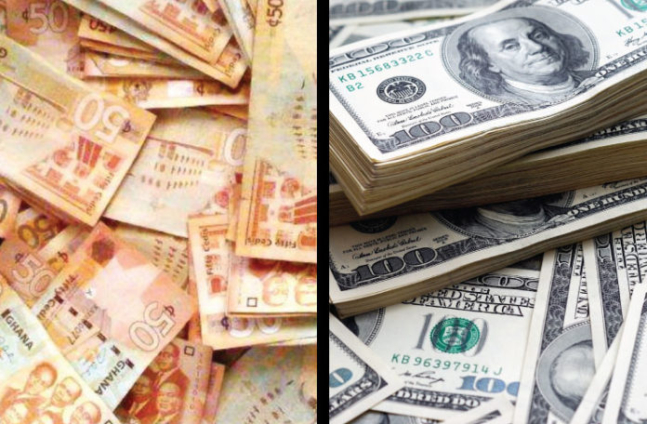
London-based Economist Intelligence Unit (EIU) is expecting the cedi’s end of year rate against the dollar to hit ¢7.87 as captured in its April 13, 2022, assessment of the Ghanaian economy.
The expected depreciation of the local currency against the dollar for the next eight months of this year, according to the EIU, will be influenced by the import structure of the economy and some actions of the offshore investors in Ghana’s bonds.
The EIU also adjusted its average end of year depreciation from ¢6.55 to ¢7.35.
Implications
Based on the forecast by the EIU, one can say the cedi's worse and challenging depreciation against the US dollar is over.
Some may also argue that the depreciation rate against the dollar will slow down significantly over the next eight months of this year.
This is because, based on the average quotes by some of the major commercial banks in the country, they are selling a dollar ¢7.80 to their retail clients.
The development may mean that for the next eight months, the cedi's depreciation against the dollar may not be more than ¢0.7.
It may bring some comfort to businesses that had raised concerns about the sharp depreciation rate against the dollar in the past.
EIU on cedi's woes in the first quarter of 2022
The cedi weakened sharply in the first two months of 2022, reflecting increased demand for hard currency due to a strengthening in Ghana's (structurally import-dependent) business activity and profit repatriation by Ghana-based multinationals (which is primarily carried out during the first quarter of the calendar year).
In a bid to stabilise the cedi, the Bank of Ghana announced foreign-exchange interventions, with $450m to be released via foreign-exchange forward auctions in the first quarter of 2022.
Some $300m had been released as of early March.
Regardless, strengthening growth will continue to reinforce import dependency, causing the cedi to depreciate on average over 2022.
EIU and Ghana Monetary Policy
The Unit said some further tightening by the Money Policy Committee of the Bank was needed to supply-side price pressures - including high utility and food prices, new taxes, rising global commodity prices and heightened freight charges, alongside supply-chain disruptions due to the Ukraine conflict, which are likely to keep inflation (especially fuel costs) elevated in 2022.
Inflation
We expect the headline inflation rate to remain high (averaging about 15%) throughout early 2022, driven by supply-side price pressures, including rising global oil and food prices—exacerbated by logistical bottlenecks related to the Russia-Ukraine war.—and high utility and transport costs.
Background
Average inflation will rise from 10% in 2021 to 13.4% in 2022 as prices for global commodities continue to increase, domestic demand starts to pick up further, and the currency depreciates sharply.
Inflation is forecast to average 8.8% in 2023-26, falling towards the lower end of the year.
This will reflect monetary tightening and weakening supply-side price pressures as the forecast period progresses, in part offset by ongoing local-currency depreciation.
Latest Stories
-
Conflicts among care providers linked to maternal, neonatal deaths – Expert
3 minutes -
GIS marks 10th TIME conference, champions improved teaching practices
10 minutes -
BRICS Or Balance? What Ghana’s bid really means
36 minutes -
GPRTU wants full TRAFFITECH-GH implementation to start in 2027
55 minutes -
Mahama announces plans to import electric wheelchairs for PWDs
59 minutes -
KGL U17 Colts 2026: Western beat Prempeh Elite Academy to set up final final with Greater Accra Region
1 hour -
Late Solanke strike salvages 10-man Spurs draw at Man United
1 hour -
Gender Ministry to monitor welfare of Nana Akua Addo’s children amid domestic violence case
2 hours -
Benedict Okyere Yeboah: Ghana’s football problem goes beyond sacking a coach
2 hours -
GPL 2026/27: Darkwah Wiafe’s winner sees All Blacks beat Kotoko
2 hours -
ITF World Tour : Patel Wins Boys’ Singles Final at J100 Accra
2 hours -
Ghana must pursue BRICS partnership if it brings economic benefits – Kpebu
2 hours -
Success and Wright Claims J100 Accra Girls’ Doubles Championship
2 hours -
ITF J100: America’s Wright wins J100 Accra Girls’ Singles Title
2 hours -
Expedition hopes to find aviator Amelia Earhart’s plane on remote island
2 hours