

Audio By Carbonatix
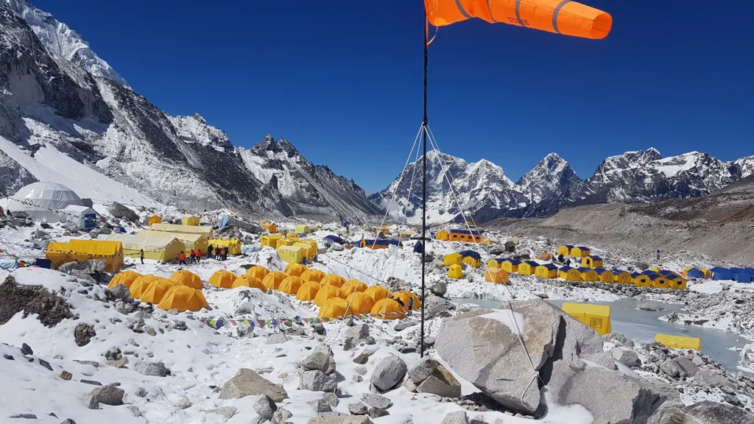
The Nepalese army says it has removed eleven tonnes of rubbish, four corpses and one skeleton from Mount Everest and two other Himalayan peaks this year.
It took troops 55 days to recover the rubbish and bodies from Everest, Nuptse and Lhotse mountains.
It is estimated that more than fifty tonnes of waste and more than 200 bodies cover Everest.
The army began conducting an annual clean-up of the mountain, which is often described as the world’s highest garbage dump, in 2019 during concerns about overcrowding and climbers queueing in dangerous conditions to reach the summit.
The five clean-ups have collected 119 tonnes of rubbish, 14 human corpses and some skeletons, the army says.
This year, authorities aimed to reduce rubbish and improve rescues by making climbers wear tracking devices and bring back their own poo.
In the future, the government plans to create a mountain rangers team to monitor rubbish and put more money toward its collection, Nepal's Department of Tourism director of mountaineering Rakesh Gurung told the BBC.
For the spring climbing season that ended in May, the government issued permits to 421 climbers, down from a record-breaking 478 last year. Those numbers do not include Nepalese guides. In total, an estimated 600 people climbed the mountain this year.
This year, eight climbers died or went missing, compared to 19 last year.
A Brit, Daniel Paterson, and his Nepalese guide, Pastenji Sherpa, are among those missing after being hit by falling ice on 21 May.
Mr Paterson’s family started a fundraiser to hire a search team to find them, but said in an update on 4 June that recovery “is not possible at this time” because of the location and danger of the operation.
Mr Gurung said the number of permits was lower this year because of the global economic situation, China also issuing permits and the national election in India which reduced the number of climbers from that country.
The number of permits will likely drop more after Nepal’s Supreme Court ordered the government in May to limit permits. The preliminary order didn't set a maximum number.
Mr Gurung says he welcomes the order and the government is thinking about reforms such as staggering climbers to reduce traffic jams at the summit.
The government will work with experts to determine a safe number of climbers, Mr Gurung said.
"Without the scientific study, it can’t be said what will be the perfect number for Mount Everest," he said.
Latest Stories
-
GPL 2025/26: Dreams FC stage stunning comeback to hammer Eleven Wonders
1 hour -
Livestream: The Probe examines Kumasi’s looming water crisis
1 hour -
MTN Ghana gears up to lead Africa’s AI revolution
1 hour -
Philanthropist Alhaji FuZak donates Da’wah bus to Ambariya Sunni community
1 hour -
GUTA calls for suspension of Publican AI system over trade disruptions
2 hours -
TTAG raises alarm over proposed recruitment of 7,000 teachers, demands national posting roadmap
2 hours -
Civilians feared killed after reports of air strike on Nigerian market
2 hours -
Bishop Simon Kofi Appiah installed as new Jasikan Diocese Bishop
2 hours -
Trump’s Strait of Hormuz blockade threat raises risks and leaves predicaments unchanged
2 hours -
US Court backs extradition of former MASLOC CEO Sedina Tamakloe-Attionu to Ghana
3 hours -
Seven arrested as NAIMOS dismantles illegal mining camp, seizes firearms at Boin River
3 hours -
Fire erupts at Madina Ritz Junction, destroys multiple wooden structures and containers
3 hours -
Daniel-Kofi Kyereh returns from long-term injury, registers assist for Freiburg U23
3 hours -
Knifeman calling himself ‘Lucifer’ slashes three at NYC’s Grand Central
3 hours -
Brands are built from within to without
3 hours