

Audio By Carbonatix
Recent research has identified that a crucial strategy for enhancing the efficiency of coastal policy formation and implementation involves adopting a dual approach that combines grassroots involvement with top-down decision-making.
The research led by Prof Isaac Boateng, Pro Vice Chancellor at the Akenten Appiah-Menka University of Skills Training and Entrepreneurial Development (AAMUSTED, Ghana) and Prof Siân Davies-Vollum, Deputy Dean at the Faculty of Arts, Science and Technology of the University of Northampton in the UK, says the approach integrates the firsthand experiences of coastal stakeholders, and local resource users into policy development, thereby empowering coastal communities to assume a central role in shaping the direction, design, and priorities of coastal governance.
The approach if applied, also enhances the coastal stakeholders’ sense of ownership of coastal policies, and thus facilitates the successful implementation of coastal policies.

The study highlighted the development of collaborative projects like the West Africa Coastal Areas Resilience Investment Project (WACA ResIP), the Guinea Current Large Marine Ecosystem (GCLME) programme, and the West Africa Coastal Areas Management Programme (WACA) to support regional coastal management. But these projects, national and regional initiatives aimed at securing the future of lagoons and wetlands have seen limited success.
The GCRF network research project titled, establishing a network to build resilient coastal communities in West Africa, focuses on addressing the lack of understanding of developing and managing coastal lagoons as a resource sustainably. The project has established Resilient Lagoon Communities Network (RLCN) in West Africa. The RLCN links researchers and policy makers partners lagoon communities, providing a platform to share experiences and understanding of key challenges.
The RLCN also provides the expertise needed to respond to the problems of lagoon communities and has provided a framework for sustainable lagoon management for adoption among West African countries.
The research funded by the Global Challenges Research Fund (GCRF) in the UK identifies participatory approach as the key pillar of the framework, which provides the connections and shared understanding required to build long-term resilience for lagoon communities.
Challenges facing lagoons
The study highlighted some of the challenges facing coastal lagoon and associated solutions. It reveals that, formal top-down approaches have faltered due to a "policy gap," which represents a disconnect between international/regional policies and local stakeholders, hindering effective implementation at the grassroots level.
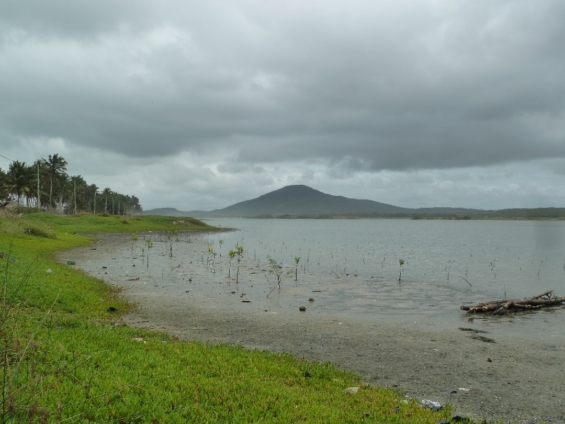
The challenges facing lagoons and the communities who live on and around them are complex and interconnected. This is particularly true of Muni and Lagos lagoons, where communities rely on them for resources and livelihood.

Coastal lagoons are in trouble because of rising sea and changing weather. In Muni Lagoon in Ghana, the shore is eroding because of higher sea levels, and forecasts say it will keep getting worse. Rainy seasons are also changing, affecting when the lagoon opens and causing more floods. This messes up fishing and hurts people's jobs. In Lagos Lagoon in Nigeria, the researchers reported that, floods happen more often because of rising sea and different rain patterns. This costs Lagos about US$4 million every year.
People who live near lagoons rely on them for important things like water, food, fuel, and materials for building. As more people move to these areas, they use up more of these resources. Unfortunately, this has led to a challenge: resources are being used up faster than they can be replaced, causing them to run out. For example, the researchers found that mangrove trees, which used to be abundant in the lagoon, are almost gone because people have been cutting them down for cooking and smoking fish to sell.
“Attempts at re-planting mangroves have had limited success. This is particularly problematic because mangroves act as natural protection from coastal erosion. Removal of barrier sand (known in the region as ‘sandwinning’ for use in the construction of new houses around Muni Lagoon has also taken place despite laws designed to prevent this activity.”
The research also found that urbanization and industrialization have significantly affected the water quality of Lagos Lagoon, with the highest pollution levels observed in the Lagos harbour area due to activities related to the port and oil industry. Hydrocarbons pose a significant problem, especially when they enter the lagoon ecosystem through urban runoff, petroleum industry spills, boat motors, and improper waste oil disposal.

In Muni Lagoon, pollution is mainly caused by urban runoff and lack of sanitation facilities, with pollution levels increasing when the lagoon is closed off from the ocean. Both Muni and Lagos lagoons suffer from limited waste management and disposal infrastructure, leading to the dumping of waste in and around the lagoons. The widespread presence of plastic waste exacerbates the issue further.
Addressing these challenges require multi-faceted approaches that draw on a range of expertise, experiences, and knowledge, linking stakeholders, local resource users, policy makers, practitioners, and researchers,” authors of the research said.
This Resilient Lagoon Communities Network aims to challenge conventional top-down management methods, advocating instead for participatory approaches that emphasize the importance of local knowledge and prioritize coastal communities in resilient lagoon governance.
The Resilient Lagoon Network comprises an international interdisciplinary team that aims to facilitate dialogue and knowledge transfer in ways that foreground local communities’ knowledge and expertise to inform the ways in which policymakers conceptualise and respond to the challenges facing lagoons."
Latest Stories
-
Baffour Awuah deliberately refused to honour EOCO invitation – Deputy AG, Srem-Sai
9 minutes -
‘Believe in these players’ – Carlos Queiroz tells Ghanaians after leaving Black Stars job
9 minutes -
ECG announces planned maintenance outage in parts of Accra on Friday
21 minutes -
Carlos Queiroz sacked as Black Stars head coach
28 minutes -
Parliamentary Sports Committee to ‘interrogate’ Black Stars struggles with Ministry, GFA invitations
37 minutes -
Asutifi North Police arrest 7 in crackdown on suspected drug activities
47 minutes -
Attijariwafa Bank: What to know about the Moroccan Group taking over SG Ghana
51 minutes -
University Librarians Ghana honours past leaders for distinguished service
57 minutes -
Seychelles President leads high-level dialogue on Africa’s digital future at FALS Global Conversations in New York
58 minutes -
24-hour economy requires faster justice for commercial cases – Chief of Staff
1 hour -
Five Agric Colleges receive digital tools to drive climate-smart farming
1 hour -
GPL 2026/27: Kotoko face Karela test as Hamza Obeng takes temporary charge
1 hour -
Morocco strike late to overcome 10-man Black Starlets
2 hours -
Nyaho-Tamakloe calls on Kurt Okraku to resign amid Black Stars struggles
2 hours -
Societe Generale Group agrees to sell Ghana subsidiary to Attijariwafa Bank
2 hours