


Audio By Carbonatix
The Finance Ministry’s report on the management of the Energy Sector Support Account has revealed that proceeds from the Energy Sector Shortfall and Debt Repayment Levy were still insufficient to fully cover Ghana's energy sector obligations in 2025 despite the introduction of the additional GH¢1 levy.
In April 2025, Parliament amended the ESLA framework by consolidating several existing levies, including the Energy Debt Recovery Levy, Energy Sector Recovery Levy, Sanitation and Pollution Levy and the Price Stabilization and Recovery Levy, into a single levy known as the Energy Sector Shortfall and Debt Repayment Levy.
According to the Finance Ministry, the consolidation was intended to improve transparency, streamline administration and enhance revenue mobilization.
Two months later, government increased the levy from 95 pesewas to GH¢1.95 per litre.
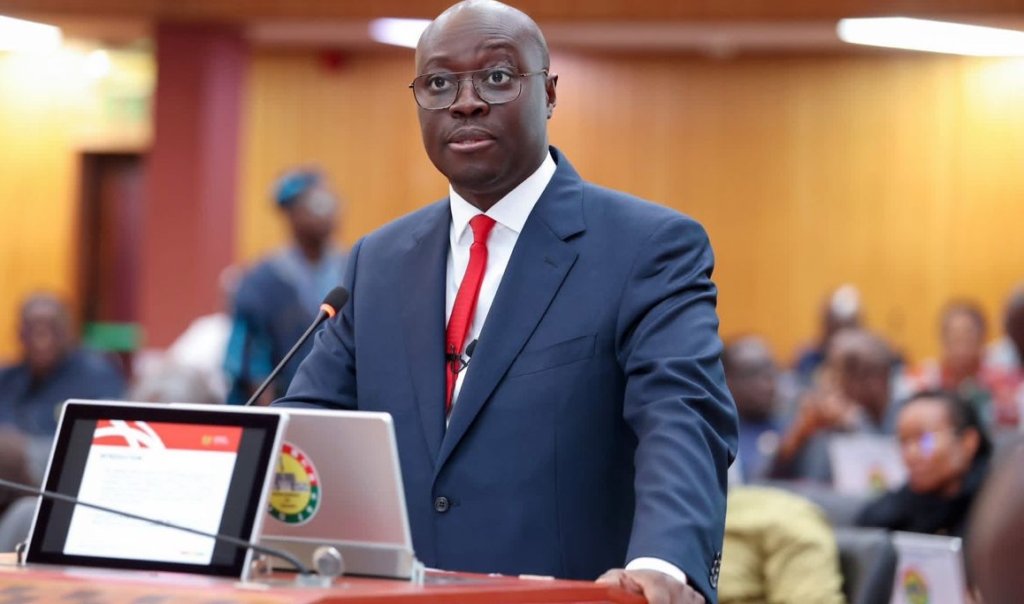
Finance Minister Dr. Cassiel Ato Forson said the additional GH¢1 would help reduce energy sector shortfalls, clear legacy debts and support a more stable electricity supply.
However, the ministry's 2025 report shows that even with the increase, the levy was unable to fully finance the sector's obligations.
Total revenue from the levy amounted to GH¢8.66 billion in 2025.
Yet total energy sector payments in 2025 amounted to GH¢22.67 billion, equivalent to about US$1.9 billion, requiring substantial government support.
The largest payments included GH¢5.46 billion to settle outstanding gas invoices owed to Eni and Vitol for power generation, GH¢4.54 billion to pay legacy debts owed to Independent Power Producers, GH¢6.94 billion to restore the World Bank Partial Risk Guarantee and GH¢5.73 billion for the procurement of liquid fuel and gas to support electricity generation.
With expenditure far exceeding revenue, the Treasury had to step in.
According to the report, an additional GH¢12.85 billion was transferred from the Treasury Main Account through the Controller and Accountant General's Department to support the sector.
Of that amount, GH¢5.16 billion was used to finance ongoing energy sector shortfalls while GH¢7.69 billion went toward the repayment of legacy debts.
The findings are notable because they come at a time when ECG is fully complying with the Cash Waterfall Mechanism and no longer under declaring revenue.
The cedi has also remained relatively stable compared with previous years, reducing one of the major drivers of energy sector shortfalls.
Historically, exchange rate depreciation has been one of the major drivers of energy sector shortfalls because much of Ghana's power generation costs, particularly fuel and gas purchases, are denominated in dollars while electricity is sold to consumers in cedis.
Some of the costs incurred in 2025 may not recur in future years.
The restoration of the World Bank Partial Risk Guarantee was necessary because the facility had previously been drawn down.
Similarly, as compliance with the Cash Waterfall Mechanism improves and government continues to clear legacy debts, some of the accumulated obligations within the sector could gradually decline.
Government is also pursuing private sector participation in ECG's distribution business and undertaking operational reforms aimed at reducing technical and commercial losses within the power sector.
Additionally, a breakdown of the Treasury support suggests that the bulk of the funding was not used to cover current shortfalls.
Of the GH¢12.85 billion provided by government, about GH¢5.16 billion went toward energy sector shortfalls while GH¢7.69 billion was used to repay legacy debt.
This suggests that a significant portion of the support was aimed at clearing historical obligations rather than financing new deficits.
Yet despite these efforts, the 2026 Budget projects energy sector shortfall financing requirements of GH¢15.2 billion, up from about GH¢12 billion in 2025.
One interpretation is that government is attempting to aggressively clear legacy debt while simultaneously meeting current sector obligations.
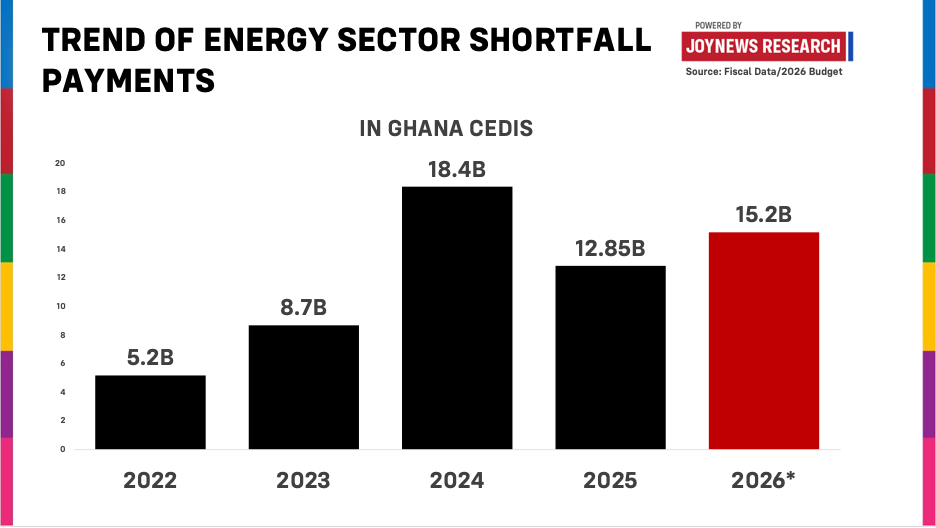
The figures suggest that while the additional GH¢1 levy helped narrow the financing gap, it has not solved the sector's underlying problems.
As Finance Minister Dr. Cassiel Ato Forson acknowledged during the presentation of the 2025 Budget, the deeper challenges remain structural.
They include poor revenue collection, system losses, weaknesses in the implementation of the Cash Waterfall Mechanism, expensive power purchase agreements and inefficiencies across the sector's value chain.
The additional levy has provided some relief.
But the Finance Ministry's own figures suggest that lasting solutions will require deeper structural reforms rather than higher taxes alone.
Latest Stories
-
Africa moves to claim place in Global Golf Tourism Economy with Africa Golf Tourism Convention
9 minutes -
When truth is under fire: Why press freedom still defines democracy
13 minutes -
Ghana and Germany strengthen green hydrogen collaboration for sustainable industrial development
13 minutes -
Local Food Fest and Golden Jubilee activities ignite Seychelles’ 50th independence commemoration
18 minutes -
Black Stars: We need to be more aggressive with officials – Semenyo
46 minutes -
Seychelles primed for 69th UN Tourism CAF Summit as Golden Jubilee celebrations commence
1 hour -
KAIPTC marks 15th Graduation Ceremony with call for peace and security leadership
1 hour -
World Drug Day: Bel-Aqua Foundation donates GH¢120,000 to NACOC to combat drug abuse in SHSs
1 hour -
When African States walk away from the ICC, victims pay the highest price
1 hour -
Kenpong Travel disputes First Atlantic Bank’s winding-up move over alleged GH¢2.5m debt
2 hours -
Dr Tengol K. Kplemani appointed Africa Ambassador by global tourism network
2 hours -
Reversing utility tariff hikes might be difficult – PURC
2 hours -
Reggae legend Brinsley Forde announces new single ‘Ites Gold & Green’
2 hours -
Gyakie releases new single ‘Treasure’
2 hours -
Justice Mensa-Bonsu warns of changing face of warfare, rising extremism and threats to global peace
3 hours