

Audio By Carbonatix
As part of efforts to deal with lead exposure, the Chief Executive Officer of the Environmental Protection Agency is working with other ministries to produce a Lead Prevention Policy.
The organization is also scaling up education to increase knowledge of the dangers of lead.
The Executive Director of the EPA, Dr. Henry Kwabena Kokofu was speaking at a press conference in Accra.
“The EPA will then move ahead and recommend that a high-level multi-sector ministerial sector committee comprising of the Ministry of Science, Ministry of Heath, Ministry of Local Government and Rural Development may consider the establishment with the support of Pure Earth and UNICEF to develop a lead prevention and reduction policy for Ghana,” he said.
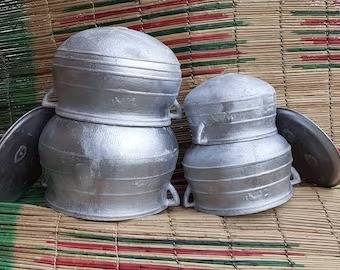
This became necessary after a new study on nearly 200 consumer products and food samples across four regions in Ghana revealed worrying levels of lead contamination in the popular metal cookware, 'dades3n'.
The Global Rapid Market screening study which happens to be the largest of its kind highlighted alarming levels of lead in consumer goods and food produced in low and middle-income countries including Ghana with far-reaching global consequences.
More: Metal cookware ‘Dades3n’ shown to cause lead poisoning and low IQ
The study conducted by the environmental NGO, Pure Earth’s Blacksmith Initiative revealed that there are high levels of lead contamination in the following: Metal cookware (Dades3n) is 55%, ceramic cookware has 18%, toys for kids has 14%, and cosmetics (local mascara) has 7% of lead.
According to a report launched by the World Bank recently, the levels of lead exposure are extremely high which leads to a decrease in IQ.
“Children under 5 years old worldwide lost 765 million IQ points, those living in low and middle-income countries lost 729 million IQ points.”
“There is an average loss of 5.9 IQ points per child and this IQ points loss is 80% greater than the previous estimate,” the report stated.
Country Director for Pure Earth, Esmond Wisdom Quansah also reiterated that eating from these metallic cookwares puts individuals at a high risk of lead poisoning.
According to him, the experiment was conducted six times and the results were the same hence the institution wants to create public awareness so that other alternatives may be considered to avoid further damage.
“What this points to is that we are not safe, if you happen to be eating from any of these metallic or ‘dades3n’ cookware we are at risk of lead poisoning.”
“We’ve grown a step further, our scientists have conducted what we call the leach test to determine the percentage of leach of this lead concentration in this metallic or aluminium cooking pot into the food and we were surprised by the findings of the scientists.”
"52% of the pots tested leached lead in concentrations greater than our reference level of 10 ug/L. The repeated leaching “boils” in pots in general resulted in lower lead in leachate, although lead remained above the 10 ug/L reference level in most cases, so that is a cause for concern for everyone and that is why we are putting this information in the public,” he explained.
Latest Stories
-
Fire destroys belongings in Akweteyman apartment
27 minutes -
Baffour Awuah to turn himself in to EOCO today – JoyNews sources
32 minutes -
Government identifies payment discrepancy holding up teachers’ strike resolution
50 minutes -
BoG signals no FX intermediation for October as GoldBod plans $1bn support for banks
54 minutes -
When share ownership becomes personal: The African mindset of the Dangote IPO
1 hour -
Why MFWA Legal Fund matters to Ghana’s democracy
1 hour -
Fuel prices to rise from October 1; diesel could hit GH¢19.60 – COMAC
1 hour -
Parliament must investigate how 3.9 tonnes of cocaine left Ghana undetected – Samuel Jinapor
1 hour -
Government pledges to pay striking teachers as payment dispute is resolved
1 hour -
Government cannot investigate drug exports under its own watch – Abu Jinapor
1 hour -
Government extends GH¢2 diesel subsidy for two more months
1 hour -
GTEC flags over 100 tertiary institutions as unrecognised
2 hours -
Agric Committee chair commends NAFCO for turnaround from GH¢20m debt to GH¢96m profit
2 hours -
NPP: Judicial office requires judges to surrender some personal freedoms
2 hours -
Senyo Hosi: Ghana missed its chance to end galamsey under Akufo-Addo
2 hours