

Audio By Carbonatix
Ports and shipping are vital for a well-functioning global economy. According to the World Bank, in 2019, trade represented more than 60 percent of the global gross domestic product (GDP).
Data from The International Chamber of Shipping reveals that shipping plays by far the largest part in this, facilitating roughly 90 percent of the world’s trading. The ports of the world literally keep its goods flowing.
The comprehensive report, Connected Ports: A guide to making ports smarter with private cellular technology, outlines how challenges of equipment downtime, congested port yards for loading and unloading, worker safety, and environmental impact could be resolved with private cellular networks.
5G-ready private cellular networks provide fast, reliable, and secure connectivity required by a smart port’s network infrastructure to handle the large amounts of data generated by cranes, vehicles, equipment, and workers.
In the maritime report findings, Ericsson collaborated with leading sensor technology provider, ifm electronic, as well as researchers from management consultancy Arthur D. Little, to examine and quantify five use cases with the most beneficial applications for smart port technologies:
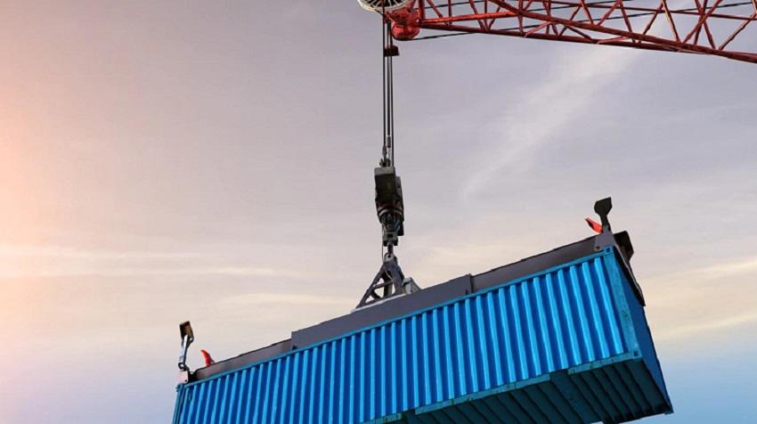
- Remote-controlled ship-to-shore cranes load and unload container ships, moving containers between the ship and the dock with precision and maneuverability.
- Automated rubber tired gantry cranes stack containers at terminals, crucial for when high-capacity stacking and good maneuverability are needed.
- Automated guided vehicles(AGVs) navigate through the port using smart 3D sensors, handling all port materials, reducing energy costs and risk of accidents.
- Condition monitoring detects faults before they occur, reducing unplanned downtime and maximizing asset productivity.
- Drones deliver documents from ship to shore, reducing costs and environmental impact of crewed boats while also conducting security surveillance of ports.
The report projects that if all of the five use cases are deployed together, complete payback can be achieved in less than two years. By year five, the report projects that the ROI would be 178 percent for our standard baseline port.
One port that is already deploying these types of smart technologies is Italy’s Port of Livorno – for example, by leveraging 5G technologies to enhance the exchange of real-time information among actors in the port’s terminal process.
These applications have the potential to reduce CO2 emissions by 8.2 percent for one terminal operation.
Latest Stories
-
Mr President, Ghana was mentioned at the UN; why aren’t we talking about it?
2 hours -
Accra to convene Africa’s regulators and markets on tokenisation at AVAS 2026
3 hours -
The Paradox of Plenty — When every smartphone becomes a newsroom
3 hours -
GTA sensitises taxi drivers in ‘Know Ghana’ tourism campaign
4 hours -
Archbishop Agyinasare calls for responsible speech amid growing social media abuse
4 hours -
‘It will be inexcusable for gov’t not to honour payment of teachers’ arrears by 30th October’ – Haruna Iddrisu
5 hours -
Forbes’ World’s Best Employers 2026: No Ghanaian firm ranked among 900 companies
5 hours -
Electronic processing of teachers’ data: ‘The decision is the Controller’s’ – GES boss
5 hours -
Teachers’ Strike: Haruna Iddrisu questions paper-based processing of promoted teachers’ data
5 hours -
Savannah Region: Kunfusi bridge collapses again, leaving nearly 4,000 residents cut off
5 hours -
Teachers’ strike: GES targets Monday deadline to submit promotion data to Controller
5 hours -
Inflation to average 11.3% in 2027 – Fitch Solutions
5 hours -
‘I didn’t campaign for NDC to come and do this nonsense’ – Kpebu on EOCO’s conduct
5 hours -
Fitch Solutions maintains policy rate forecast of 14% by December 2026
6 hours -
Diaspora Nasara Caucus congratulates Mohammed Ali Suraj, new NPP executives
7 hours