


Audio By Carbonatix
Dr. Kwadwo Ohene Sarfoh, a professional in housing and urban development, has emphasised that the role of consulting engineers will become increasingly valuable with the mainstream adoption of Environment, Social, and Governance (ESG) practices.
Speaking at the 2023 2023 Sustainable Infrastructure Conference organised by the Ghana Consulting Engineers Association (GCEA) in Accra, Dr. Sarfoh said “The ESG will enhance their competitiveness and brand, boost their disposition to innovations, and be holistically ethical in their actions even as they deliver sustainable infrastructure in their commissioned assignments.”
GCEA is an Association made up of indigenous legally constituted and registered consulting engineering firms licensed to practice in Ghana.
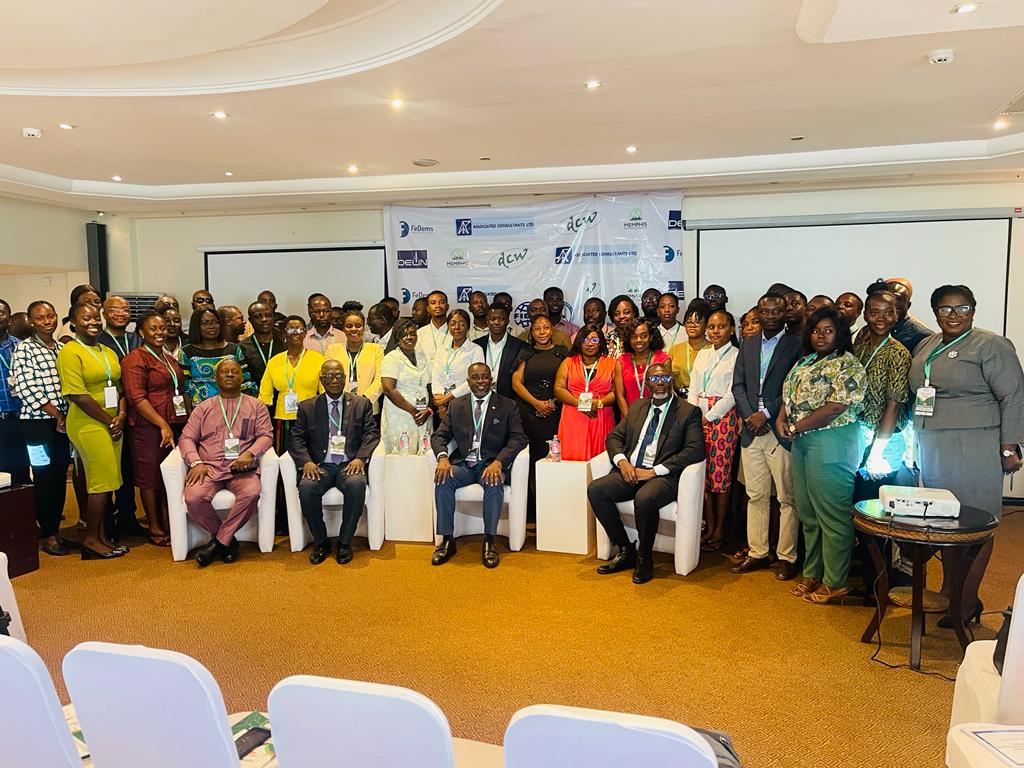
Speaking as the Guest Speaker on the conference theme, “Sustainable Infrastructure: Can we do better?” Dr. Sarfoh called on the members of the GCEA to be intentional in their commitment to ESG norms and practices.
He said “Calcified orthodox practices of non-transparent and minimalist inclusion of reactive compliance-responsive Environmental and Social considerations must give way to internal restructuring and rebuilding at the firm and collective levels to internalize ESG as core corporate values.”
He explained that the mainstreaming of ESG must first start with each individual practice. “It needs values modification, practice disruption and re-orientation, unlearning and relearning, and generally a remodeling of corporate structures. All of these cannot be undertaken without pain or cost.”
Mainstreaming ESG
Dr. Sarfoh said Ghanaian consulting engineers can mainstream ESG through fundamental steps including supporting awareness creation, among members and clients through conferences and seminars, targeted educational programmes, public debates, and other civic engagements.
Presently, he said one cannot find any such platforms at national level targeting executive- level practitioners as your kind selves assembled here today.
“At best, there a few free online courses that lacks local contextual foregrounding. Related to that, office-level staff training programs are not well tailored and, very often, are left to individual staff to pursue at their own costs and convenience,” he stated.
He said the development of industry practice notes and guidance, codes of professional conduct, advisory circulars, and such heuristic tools are also important for ensuring sector-wide appreciation and accommodation of ESG.
These tools have compelling powers that ensure minimal practice standards, he pointed out, stressing that the lack of such tools in Ghana is a general malaise of professional practice in the country and runs across various professions and business associations.
“GCEA needs to be minded about waht becomes its "bottom line" in collective corporate practice beyond profits, mark ups and return on investments,” Dr. Sarfoh stated.
Clear and consistent vision
Dr. Sarfoh said there must be clear vision for the development and consistent implementation of ESG frameworks and tools to assess and monitor the performance of infrastructure projects to alignment with key covenants, such as the Sustainable Development Goals (SDGs) and the Paris Agreement on climate change.
“Sporadic application will not yield the success that is desired,” he said.
Opening the conference, the President of GCEA, Ing. Magnus Lincoln Quarshie said, the responsibility of sustainable infrastructure lies with all of us – government, businesses, investors and citizens alike.
He called on all, to collectively embrace a paradigm shift, moving from traditional infrastructure development to one that is deeply embedded in sustainable principles.
“The transition to sustainable infrastructure is not without its own challenges; this conference seeks to map out strategies and solutions to address those challenges”, Ing. Quarshie added.
He said the conference theme, “Sustainable Infrastructure: Can we do better?” highlights the urgent need to invest in infrastructure in a sustainable way at the national level where we can improve the environment that we all depend on.
The conference also seeks to map out strategies and solutions to address those challenges.
“We cannot speak to Sustainability without talking about the triple bottom line: planet, people and profit. Our actions and inactions must always protect the planet. When the last tree dies the last man dies. We need to place people in the Centre of our decisions. Much as we exploit the earth for human development we need to do so wise,” Ing. Quarshie said.
Latest Stories
-
GPL 2025/26: Late Kwartemaa strike downs Hearts in Tema
4 minutes -
Ghana Faces Sierra Leone Moment as Prosecutorial Powers come under strain
14 minutes -
Don’t consume fish or seafood from Tema Shipyard until further notice – FDA warns
19 minutes -
Why volunteering might be Africa’s most underrated career accelerator
25 minutes -
ActionAid Ghana raises concern over gender gaps in Feed Ghana Programme
27 minutes -
Windstorm wreaks havoc in Gushegu, displacing nearly 2,000 residents and damaging schools
30 minutes -
Friends of Bridget Bonnie Marks her 35th birthday with donation to Kasseh Model Health Centre
1 hour -
From Ekumfi Kokodo to the Pulpit Stage: Essi Donkor’s gospel journey takes shape
2 hours -
Landfilling waste management creates no value, it’s an economic waste
2 hours -
Photos: Speaker Bagbin Commissions MPs constituency office under parliamentary decentralisation programme
2 hours -
Black Stars technical advisor Winfried Schäfer sacked as GFA shakes up backroom staff
2 hours -
Wenchi water project almost complete, critical to gov’t agenda – GWL MD
2 hours -
Anti-LGBTQ+ bill not part of government’s legislative agenda – Inusah Fuseini
2 hours -
Anti-LGBTQ Bill: Forget the rumour mongers, I’m a man of action, and will pass the bill – Speaker
3 hours -
Women and children among those killed in Sudanese army shelling of wedding celebration
3 hours