

Audio By Carbonatix
More than 200 people have starved to death since July in Edaga Arbi town, in Ethiopia's drought-hit and war-scarred Tigray region, local authorities say.
Another 16 have died in nearby Adwa town.
Officials in Tigray warn the region is on the brink of famine on a scale last seen in 1984, prompting the global fundraising music event Live Aid the following year.
But famine is a highly sensitive word in Ethiopia.
The central government in Addis Ababa denies famine is looming and says it is working to provide aid.
Yet medics and humanitarians say aid is not coming fast enough, leaving them helpless to save lives.
"As a doctor, I witness non-stop dying. Having my knowledge and skills but no means to help my people is futile," Desta Kahsay in the city of Shire tells the BBC.
He says it is like "doomsday", with people dying needlessly of preventable causes.
Many of those dying are children and young people.
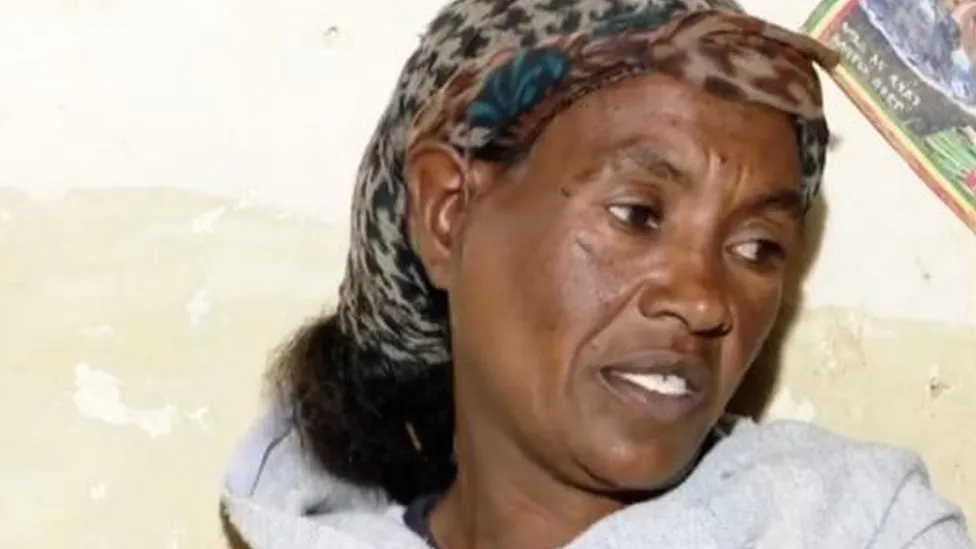
Tigray resident Abrehet Kiros tells the regional TV channel she regularly checks up on her elderly neighbour, who has no remaining family to support her after her grandson died in the recent civil war.
"Everyone here is destitute - we're all facing hunger. We call on everyone who can to support us," she says.
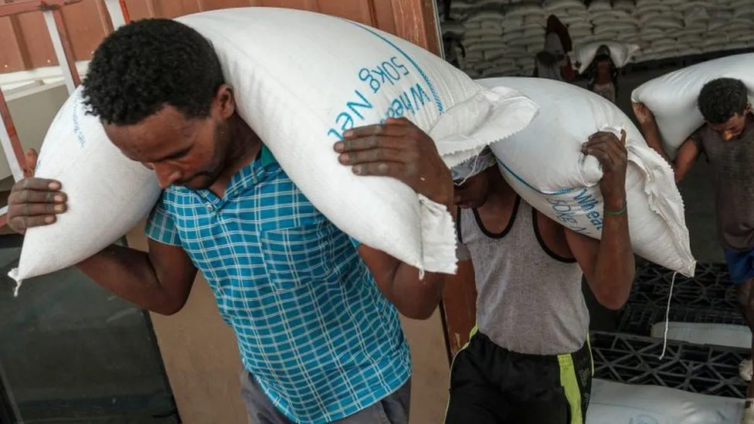
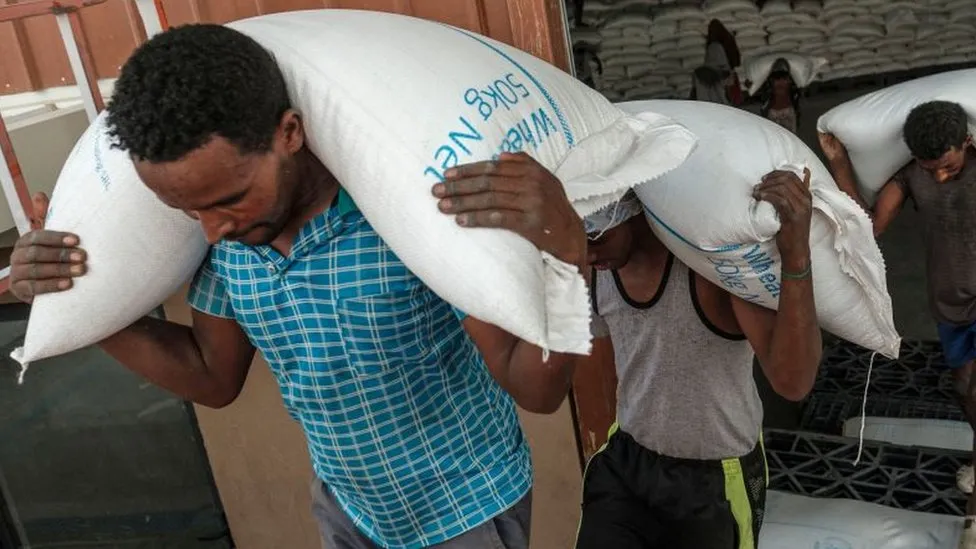
When alleged looting of food aid was uncovered by the World Food programme and USAid last Spring, they halted aid to Ethiopia for months on end until resuming at a more cautious rate in December. Close to 1,500 people reportedly died of starvation during that time in Tigray.
At present an estimated 20 million people require food assistance in Ethiopia due to conflicts, drought, and flooding, according to the UN.
By mid-2024, the Early Famine Warning Systems Network predicts that the food crisis will be a near-nationwide emergency.
Currently the food crisis affects the northern region of Amhara which is at war, parts of the south of Ethiopia, and Tigray.
A multitude of factors make the situation in Tigray particularly stark, says analyst Alex de Waal.
"It has not recovered from the war - the horrible asset-stripping and destruction, the mass displacement, from the failure to pay salaries, from the destruction of employment. And on top of that there has been a terrible drought," he told BBC Newsday.
He agrees that Ethiopia's food crisis could become as bad or worse than 40 years ago, and warns "we could see half a million people or more dying of starvation in the coming year - if there isn't prompt action".
Dr Kahsay in Shire worries many have already given up hope.
"People have accepted daily mourning and funerals, and they have understood that they are destined to die."
Latest Stories
-
Brandon Asante and Coventry all but promoted to Premier League despite Sheffield Wednesday draw
13 minutes -
GPL 2025/26: Late Kwartemaa strike downs Hearts in Tema
19 minutes -
Ghana Faces Sierra Leone Moment as Prosecutorial Powers come under strain
29 minutes -
Don’t consume fish or seafood from Tema Shipyard until further notice – FDA warns
34 minutes -
Why volunteering might be Africa’s most underrated career accelerator
40 minutes -
ActionAid Ghana raises concern over gender gaps in Feed Ghana Programme
42 minutes -
Windstorm wreaks havoc in Gushegu, displacing nearly 2,000 residents and damaging schools
45 minutes -
Friends of Bridget Bonnie Marks her 35th birthday with donation to Kasseh Model Health Centre
2 hours -
From Ekumfi Kokodo to the Pulpit Stage: Essi Donkor’s gospel journey takes shape
2 hours -
Landfilling waste management creates no value, it’s an economic waste
2 hours -
Photos: Speaker Bagbin Commissions MPs constituency office under parliamentary decentralisation programme
2 hours -
Black Stars technical advisor Winfried Schäfer sacked as GFA shakes up backroom staff
2 hours -
Wenchi water project almost complete, critical to gov’t agenda – GWL MD
3 hours -
Anti-LGBTQ+ bill not part of government’s legislative agenda – Inusah Fuseini
3 hours -
Anti-LGBTQ Bill: Forget the rumour mongers, I’m a man of action, and will pass the bill – Speaker
3 hours