

Audio By Carbonatix
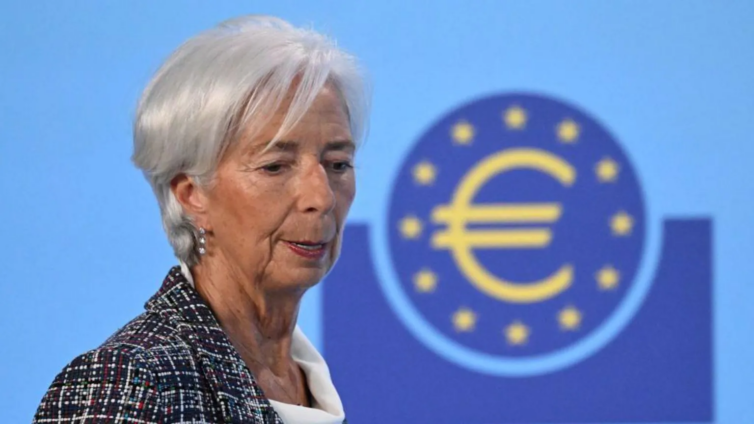
The European Central Bank (ECB) has cut interest rates for the sixth time in nine months as it seeks to bolster eurozone economic growth.
The bank stuck to its plan to lower rates in the face of economic challenges, including threats of US tariffs and plans to boost European military spending.
The ECB cut its main interest rate to 2.5% from 2.75%, and once again reduced its forecasts for economic growth in the eurozone.
The latest cut came as a sell-off of German government bonds spread to other bond markets, including the UK.
The sell-off came after Germany's move this week to increase military and infrastructure spending.
Political parties in talks to form a new government plan to pay for this by loosening Germany's fiscal rules, raising the prospect of a big increase in debt.
In response, longer term German bonds saw their biggest sell-off in years on Wednesday.
This pushed borrowing costs - as measured by the yields on the Germany's 10-year bonds - up by biggest daily amount since May 1997.
On Thursday, German borrowing costs - as measured by the yields on the country's bonds - continued to rise.
Yields continued to rise on Thursday, hitting 2.929% at one point - the highest level since October 2023.
The increase has had a knock-on effect on other countries, with UK borrowing costs also increasing.
UK government borrowing costs have already risen due to concerns about persistent inflation and interest rates not coming down as quickly as previously thought.
However, Lindsay James, an investment strategist at Quilters, said the market was still expecting the Bank of England to make two further rate cuts in 2025, "with recent inflation data reasonably encouraging".
Challenges ahead
With inflation getting closer to its 2% target, the ECB said its interest rate cuts were "making new borrowing less expensive for firms and households".
But it trimmed its prediction for eurozone growth, putting expansion in 2025 at just 0.9%, only slightly above the 0.7% pace recorded last year.
The ECB faces a number of upcoming challenges as it tries to get inflation to its 2% target.
The eurozone economy may suffer if the Trump administration goes ahead with plans to impose "reciprocal tariffs" on every country that taxes US imports.
Latest Stories
-
Trump says he is considering firing US ambassador to Greece
2 hours -
Man City bananas ‘brought fun back’, says Varadi
2 hours -
Meta releases Muse Wonder AI models to challenge Anthropic and OpenAI
2 hours -
Daily Insight for CEOs: The CEO as Chief Decision Maker
2 hours -
Burnham had formal meeting with Man City chair while mayor
2 hours -
Is Ghana producing too many lawyers? What is the best lawyer-to-citizen ratio?
2 hours -
NDC sinking Ghana’s democracy with Emelia Agbenyo’s appointment – Miracles Aboagye
3 hours -
Seedorf back in football as Corinthians head coach
3 hours -
Hincapié and Zubimendi injured in post-match training session
3 hours -
Fridges in French supermarkets hit by cyberattack
3 hours -
Qantas flight grounded after bedbug outbreak
3 hours -
Reality Zone with Vicky Wireko: International Day of the Girl, shaping today’s girl for tomorrow’s future – ZONTA Clubs lead the way
4 hours -
Global health must be led by countries, not designed for them – Mintah Akandoh
5 hours -
Mahama honoured at 2026 World Health Summit in Berlin for global health leadership
5 hours -
Breast cancer is not a death sentence – Besease Kontire Obaapanin, Magmina Foundation lead awareness campaign
5 hours