

Audio By Carbonatix
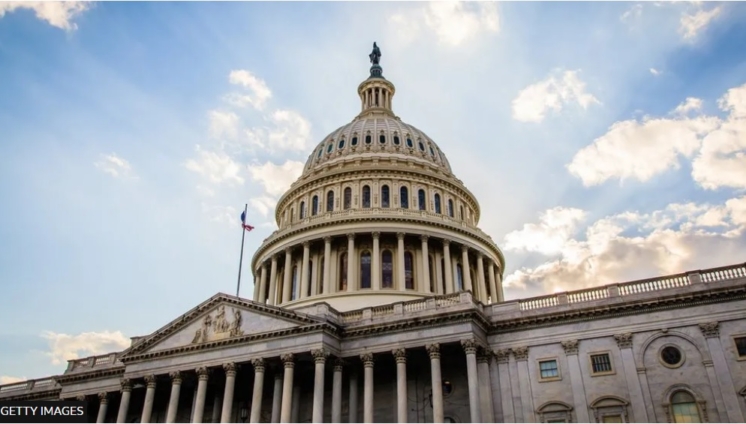
Republican majorities in both chambers of the U.S. Congress will give Donald Trump the power to achieve many of his goals when he is sworn in as president, but when he's blocked, expect to hear the F-word.
That's "filibuster," the Senate rule that requires 60 of the chamber's 100 members to agree to pass most legislation. President-elect Trump's party will be able to bypass it on some matters -- such as cutting taxes -- but efforts to rewrite immigration laws or abolish government departments will run into it.
Here is an explanation of the filibuster:
WHAT IS THE FILIBUSTER?
To "filibuster" means to delay action on a bill or other issue by talking.
The Senate filibuster first captured the American imagination in Frank Capra's 1939 movie "Mr. Smith Goes to Washington," when Jimmy Stewart's character spoke for more than a day before collapsing from exhaustion.
There is no filibuster provision in the U.S. Constitution. But by the 1800s, long speeches were a common dilatory tactic in the Senate. In 1917, senators agreed that a two-thirds majority could end debate. That threshold proved to be hard to achieve and in 1975, the Senate lowered the threshold to its current three-fifths, 60 votes.
Under Senate rules, a filibuster can only be stopped if 60 senators vote to end debate in a process called cloture. Neither party has achieved a 60-member majority since 1979 and Republicans' majority will fall well short of that.
ARE FILIBUSTERS A COMMON TACTIC?
Yes, increasingly. A record 336 cloture motions were filed in the Senate in 2021-2022 to break filibusters. Compare that with 68 filed in 2005-2006 and just one in 1959-1960. The number of filibusters has fallen during the current two-year session, with 238 filed from 2023 through September 2024, when Congress recessed.
WHAT IS THE LONGEST FILIBUSTER SPEECH?
Groups of senators have banded together to delay work on individual bills for days or weeks. But the longest uninterrupted speech by a single senator is 24 hours and 18 minutes in 1957 by Senator Strom Thurmond, a segregationist opposed to civil rights legislation.
More recently, it has become rare for a single senator to take the floor and talk and talk and talk. Instead, a senator or group of senators make it known they will try to prevent passage of a bill through a filibuster. But they come and go from the chamber amid short speeches or "quorum calls" where nothing happens on the floor other than a clerk calling the roll.
WHAT HAVE DEMOCRATS TRIED TO DO?
Frustrated Democrats have mulled plenty of ideas for changing the filibuster rule. One proposal was to require senators in opposition to a bill to remain on the floor and actually debate it.
In early 2022, the Senate defeated a Democratic move to alter the rules and require a "talking filibuster" amid a push for expanded voting rights legislation.
Two senators who were then Democrats voted with all Republicans to defeat that rule change.
Democrats have also threatened to suspend the filibuster in order to pass a bill guaranteeing the right to abortion, after the Supreme Court in 2022 overturned Roe v. Wade.
WHAT DO REPUBLICANS WANT TO DO?
When he was president for four years beginning in 2017, Trump feared he and his fellow Republicans would be blamed by voters if they failed to enact their agenda because of Democratic opposition. But then-Senate Majority Leader Mitch McConnell would not entertain the idea of altering the filibuster rule on legislation and he was backed by his rank-and-file.
McConnell, however, did end the filibuster against Trump's Supreme Court nominees, a few years after Democrats had prohibited it for all other presidential nominations that need Senate confirmation.
McConnell, 82, is stepping aside from his leadership role next year. Republican senators picked Senator John Thune to succeed him and Thune said he would defend the practice. It was unclear whether Trump might try to influence Republican senators in the other direction.
DOES THE HOUSE HAVE A FILIBUSTER RULE?
No. With 435 members the U.S. House of Representatives has strict limitations on debate, making it easier for the majority party to pass legislation.
Defenders of the Senate filibuster argue that it is the "saucer that cools" the intemperate House and gives more of a voice to minority views. And that, they argue, is what makes the Senate "the world's greatest deliberative body," a claim that many senators now sneer at in this increasingly partisan and sometimes atrophied chamber.
Latest Stories
-
GPRTU in Savannah Region to protest alleged eviction in Damongo
24 minutes -
Re: Reinsurance does not replace process — A response to the SIGA–SIC defence
39 minutes -
Gender Ministry supports Harriet Amuzu in ongoing abuse case
52 minutes -
AG joins plaintiff to scrap OSP ?: We should be mindful of the mischief in this – Bobby Banson
58 minutes -
Samson Lardy Anyenini questions willingness of Attorneys-General to prosecute political colleagues
1 hour -
It is only fair the OSP is heard in Supreme Court case – Bobby Banson
1 hour -
Asiedu Nketia resumes Ashanti tour, second leg kicks off on Sunday
1 hour -
NLA denies salary cut claims, threatens legal action over reports
1 hour -
BoG Governor honoured for stabilising cedi, improve inflation
1 hour -
Kyebi Easter Homecoming 2026: A resounding success!
2 hours -
RNAQ divorce ruling: What the noise is hiding
2 hours -
Trade Minister applauds GUTA as a pillar of economic growth; Prez Mahama honoured
2 hours -
President’s brother’s takeover of Damang Mines is ‘untidy’ – Alhassan Tampuli
2 hours -
It’s not true that gov’t decided not to renew the lease for Gold Fields – Bobby Banson
3 hours -
Ghana to boost tomato production with 60-hectare irrigated farms and processing initiatives
3 hours