

Audio By Carbonatix
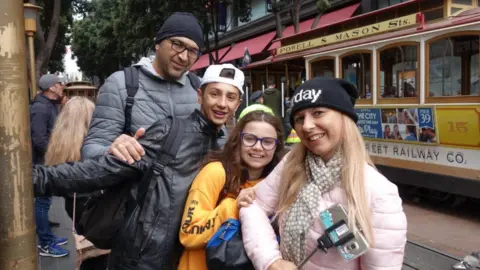
On the morning of 14 August 2018, Claudia Possetti, 47, was in the car with her new husband Andrea and her two children, aged 12 and 16.
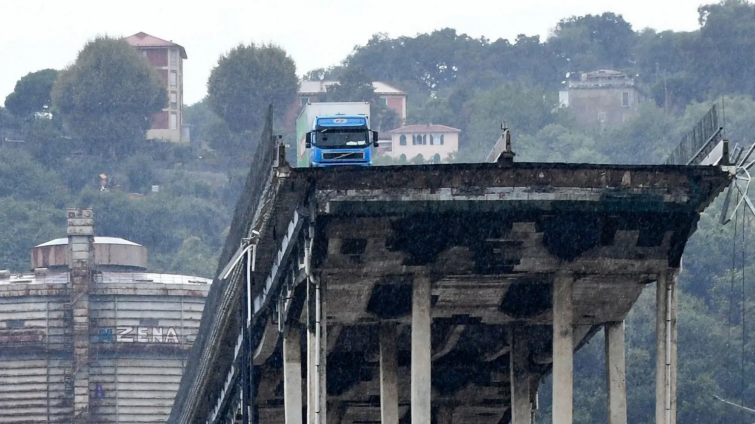
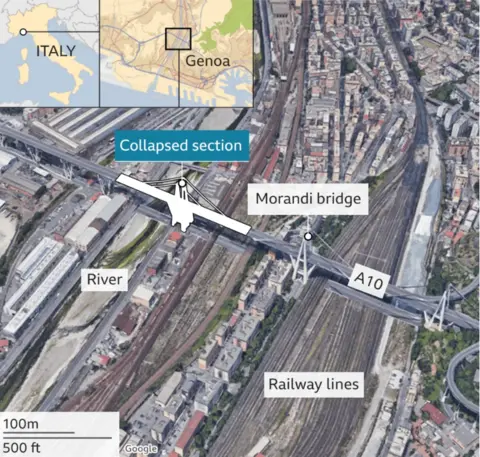
The couple had just married and were driving to the Italian Riviera with the youngsters for a holiday when the Morandi bridge in the northern city of Genoa collapsed beneath them.
Their car was among those that plunged from the viaduct on to the railway tracks below. The four of them were among 43 people killed in one of Italy's worst infrastructure disasters in decades.
Nearly eight years on, Claudia's sister, Egle Possetti, will be among relatives gathering in a Genoa courtroom on Thursday to hear a first-instance verdict in the trial over the collapse. The children's father, who survived them, is also expected to be in court.
"I feel anxious, worried, very emotional," Egle told the BBC. "After so many years, so many hearings, we may be able to see some light. It would be so important for us to know if someone's been held accountable."
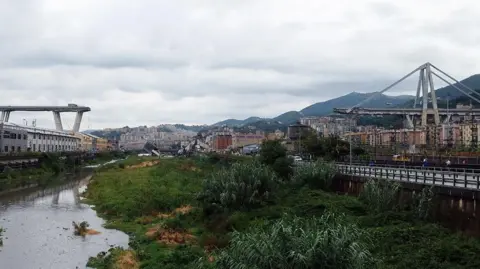
The bridge came down during a summer storm at the height of the holiday season, sending cars and lorries plunging to the ground below.
The collapse triggered years of investigation into how the viaduct, built in the 1960s and part of a key route linking Genoa to the French border, had been allowed to fail.
Fifty-seven people have stood trial since July 2022. Among them are former executives of toll road operator Autostrade per l'Italia and its parent company Atlantia, engineers from the maintenance firm Spea, and former transport ministry officials. The charges range from multiple manslaughter to falsifying documents.
All the defendants deny wrongdoing.
At the heart of the Morandi Bridge case is a fundamental disagreement over why the bridge collapsed.
Prosecutors say maintenance was repeatedly delayed, even as warning signs were ignored, while profits kept flowing.
Defence lawyers argue the real cause was a design flaw in the specific cable that failed, and that no maintenance regime could have prevented it as it was encased in concrete. Some lesser charges, including document forgery, have already lapsed under Italy's statute of limitations.
The trial has run for almost four years and 284 hearings.
Francesco Pinto, the former deputy chief prosecutor who worked on the case, has described the length of the proceedings as symptomatic of deeper problems in Italy's justice system, and believes an appeal and a final Supreme Court ruling could together take another two and a half years.
Giovanni Paolo Accinni, who is defending former Atlantia chief executive Giovanni Castellucci, points instead to the prosecution's lengthy pre-trial technical investigations, much of which he says had to be gone over again once the trial began.
Castellucci is already serving a six-year sentence over another fatal incident on a viaduct in southern Italy which killed 40 people in 2013.
But the collapse of the bridge also prompted a fierce and ongoing debate about the condition of Italy's infrastructure, highlighting concerns over ageing structures and long-standing maintenance issues.
Families of the victims are calling for answers after so many years of uncertainty.
Egle Possetti, who also represents the victims' families committee, says she and other relatives of the deceased hope responsibility will be clearly pinned down.
"For so many years, lawyers told us that what happened was no-one's fault, that it was just an accident. But this decision could be symbolically so important. Finding who is responsible could give us some sort of peace and a sense of justice."
On the eve of the verdict, Autostrade per l'Italia issued its first apology over the disaster, in an open letter from chief executive Arrigo Giana published in two Italian newspapers.
Giana, who took over last year, wrote that he had long wondered why the company never apologised at the time, calling it a "further, incomprehensible wound" for a community already in shock.
He said the current company operates under different ownership and management, and that making amends now, even if it cannot undo the families' pain, was a moral duty. Aspi and Spea are no longer defendants in the criminal case, having reached a settlement to pay around €30m (£25m) in damages.
The old viaduct's remains were blown up in early 2019 with two explosions.
A new viaduct, designed by Genoa-born architect Renzo Piano, opened just 18 months later, in August 2020.
Known as the Genoa San Giorgio Bridge, it features sail-like white pillars meant to evoke the city's maritime history.
The victims' families committee is due to hold a press conference in Genoa on Thursday evening, once the verdict has been delivered.
Latest Stories
-
GTA sensitises taxi drivers in ‘Know Ghana’ tourism campaign
1 hour -
Archbishop Agyinasare calls for responsible speech amid growing social media abuse
1 hour -
‘It will be inexcusable for gov’t not to honour payment of teachers’ arrears by 30th October’ – Haruna Iddrisu
1 hour -
Forbes’ World’s Best Employers 2026: No Ghanaian firm ranked among 900 companies
1 hour -
Electronic processing of teachers’ data: ‘The decision is the Controller’s’ – GES boss
1 hour -
Teachers’ Strike: Haruna Iddrisu questions paper-based processing of promoted teachers’ data
2 hours -
Savannah Region: Kunfusi bridge collapses again, leaving nearly 4,000 residents cut off
2 hours -
Teachers’ strike: GES targets Monday deadline to submit promotion data to Controller
2 hours -
Inflation to average 11.3% in 2027 – Fitch Solutions
2 hours -
‘I didn’t campaign for NDC to come and do this nonsense’ – Kpebu on EOCO’s conduct
2 hours -
Fitch Solutions maintains policy rate forecast of 14% by December 2026
2 hours -
Diaspora Nasara Caucus congratulates Mohammed Ali Suraj, new NPP executives
4 hours -
Dr Antwi-Boasiako’s cybersecurity book showcased at UN crime prevention congress
4 hours -
We will empower the grassroots and protect every vote – NPP’s 1st Vice Chair Kojo Bamba
4 hours -
I do not see myself as better than anyone – NPP’s 1st Vice Chair Kojo Bamba
5 hours