

Audio By Carbonatix
Rice, maize, and soya bean farmers across Ghana say they are on the brink of collapse, with more than 1 million metric tons of paddy rice, valued at about GH₵5 billion, lying unsold in warehouses and farms nationwide.
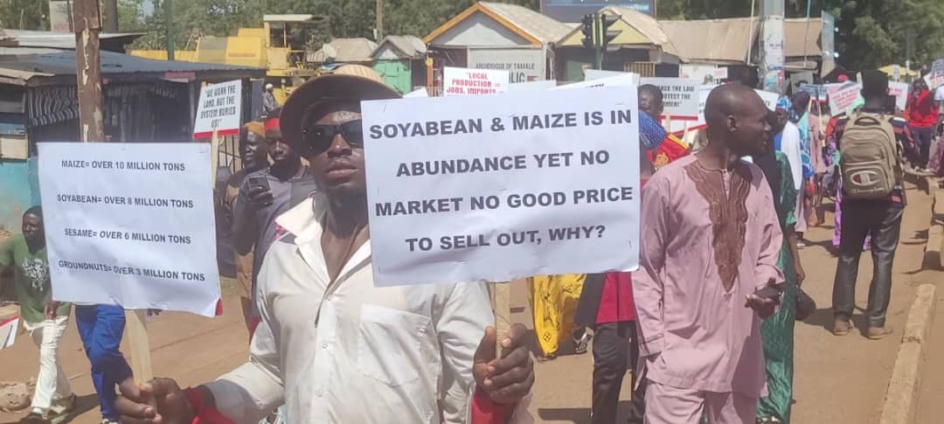
At a demonstration in Tamale on Monday, members of the Association of Ghana Rice Producers and Processors accused the government of neglecting the local agriculture sector while allowing cheap and substandard rice imports to flood the market.
Reading a petition on behalf of the farmers, Abdul-Aziz Jawhara, a member of the association, said the situation has become dire, forcing farmers to sell their produce at giveaway prices or abandon their harvests entirely.
“We stand ready to feed our people, but we need a level playing field and policies that serve Ghanaian farmers first,” Ms. Jawhara said.
She blamed the crisis on the government’s failure to prioritise local produce and the National Food Buffer Stock Company’s (NAFCO) unfulfilled promise to purchase excess rice and maize from farmers. The group says major millers have suspended operations, compounding the losses of farmers already struggling with rising input costs and limited access to credit.
The farmers are calling on government to impose a six-month moratorium on rice and maize imports, create a transparent import quota system, and clamp down on rice smuggling. They also want government institutions to be required to procure Ghanaian rice for official use, and for NAFCO to publish details of contracts and beneficiaries under its purchase programme.
In addition, Ms. Jawhara appealed for the introduction of minimum farmgate prices for rice, maize, and soya, and the provision of low-interest loans to rice millers to sustain local processing. The farmers also want government to lift the ban on soya bean exports, which they argue would boost income for smallholder farmers.
She described the farmers’ plea as a “desperate cry for help,” warning that without urgent intervention, thousands of livelihoods across the country’s agriculture value chain could be lost.
“We are not asking for handouts. We are asking for fair policies that protect Ghanaian farmers and secure the nation’s food system,” she added.
The demonstration comes at a time when Ghana is battling a growing trade imbalance in the rice sector, with import volumes rising despite years of government initiatives aimed at promoting local production.
Agricultural experts say the farmers’ concerns reflect a deeper structural issue — inconsistent policies, lack of price protection, and poor coordination between producers, millers, and regulators — which continue to undermine Ghana’s food self-sufficiency agenda.
Latest Stories
-
Bank of Ghana urges public to uphold dignity of local currency
1 minute -
Global Chairman of World Assemblies of God Fellowship lauds Mahama’s sterling leadership
6 minutes -
Global economy’s resilience nearing limits – IMF
13 minutes -
Trust-building is crucial for sustaining confidence with communities – Police Commander
18 minutes -
Government to redevelop Aboabo Market in Tamale – Mahama Ayariga
24 minutes -
We haven’t handed over our forex role to Goldbod – BoG Governor Asiama
28 minutes -
AG urges Legal Aid Commission to expand services to districts
29 minutes -
Ghana calls for stronger African cooperation to tackle maritime threats
34 minutes -
‘Trust but verify’ – MTN Ghana urges SMEs to guard against cyber fraud
37 minutes -
Let us all be mentors to our younger generation – Mahama
41 minutes -
Assemblies of God Congress: Mahama urges churches to promote compassion, integrity
47 minutes -
North Korea and China open new bridge after 12-year delay
57 minutes -
Anthropic flags revenue surge to investors ahead of stock market debut
1 hour -
Norway’s wealth fund set to overhaul ethical rules after US scrutiny
1 hour -
‘There can be no mistake, regardless of who is picked’ – Bentil on CJ contenders
1 hour