

Audio By Carbonatix
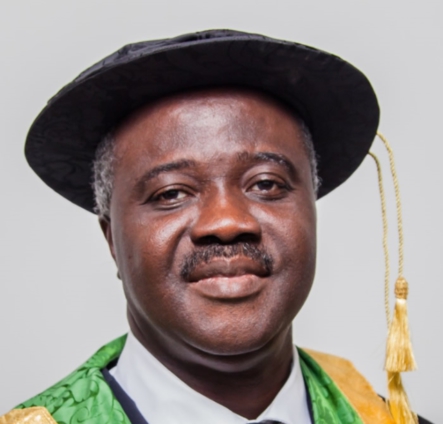
The Vice Chancellor of the University of Health and Allied Sciences (UHAS), Dr. John Owusu Gyapong, has noted that government’s policy to wean public tertiary institutions off the state coffers would inevitably lead to fee hikes.
The fee hikes, he explains, would aid the universities fill the gap that would be created from the lack of government support.
Speaking on JoyNews’ PM Express, he explained that the current system where fees are capped by Parliament has left public universities handicapped and unable to run efficiently and effectively.
This he says has not only affected the quality of education being offered at the universities but consequently the quality of students these universities churn out year-after-year.
“I think my colleague, Samuel, has indicated clearly that this would lead to a hike in fees and charges. Because as we speak now our current approved fees and charges…I mean to get our fees approved we have to present it to Parliament. The last approval that I recall was in 2016. And every time we send it, we have challenges; it never gets passed to say the least.
“So we are still applying 2016/2017 academic year fees in 2022. And of course if you talk about the value of the cedi and all that it means that the value of the resource coming to the universities has basically dwindled, and it’s a big struggle to run public universities on this day and era.
“So if weaning means taking away the breast milk, then a ‘weanimix’ must be introduced which will invariably be in the form of the fees not being capped as is currently being done,” he said.
Meanwhile, the Vice Chancellor has advocated for a good student loan system to enable the underprivileged access funds to support their education.
Drawing inspiration from the British school funding system, he noted that students who get into universities on student loans could then have a long period of time after school to pay back the loan.
“The concept is that if you get a good tertiary education, you’re likely to find a good job and should be able to pay over a period of time. So we are not talking about a loan that you pay over 3 or 4 years, these loans are paid almost over a lifetime.
“So in that instance, it doesn’t become a very heavy burden on the student who is receiving the loan, but it also gives the space to government and the universities to be able to do what it is that they have to do,” he stated.
Latest Stories
-
Ghana housing finance conference adopts communiqué to improve affordable housing access
23 minutes -
Special Initiatives Minister urges Wa Technical Institute to enrol more girls as EU-backed solar training lab opens
49 minutes -
In the matter of my first year at the Bar
1 hour -
ActionAid Ghana calls for an end to child marriage, greater investment in girls’ rights
1 hour -
Newsfile to tackle World Cup visa scandal, beach demolitions, education strikes, BRICS bid
1 hour -
UK-Ghana Trade & Investment Summit: Trade Resource Centre to help businesses maximise UK-Ghana trade opportunities
2 hours -
Embassy of Denmark celebrates World Maritime Day
2 hours -
Linking LEAP to productive inclusion could cut extreme poverty by 2030 – UNICEF
3 hours -
Trade Ministry backs use of creative arts to rehabilitate prison inmates
3 hours -
Negotiations with government to continue despite strike suspension – GNAT
3 hours -
‘Ghana cannot afford to waste public resources; every cedi has a job’ – Ato Forson
3 hours -
Ghana expects economic boost as World Assemblies of God Congress brings 10,000 delegates to Accra
3 hours -
Joy in Nayilifong as Farouk Aliu Mahama donates 100kVA transformer to improve power supply
4 hours -
Chief Justice urges employers to tackle mental health stigma in workplaces
4 hours -
Analysis: Ghana’s yellow fever numbers reveal a gap between vaccination and protection
5 hours