

Audio By Carbonatix
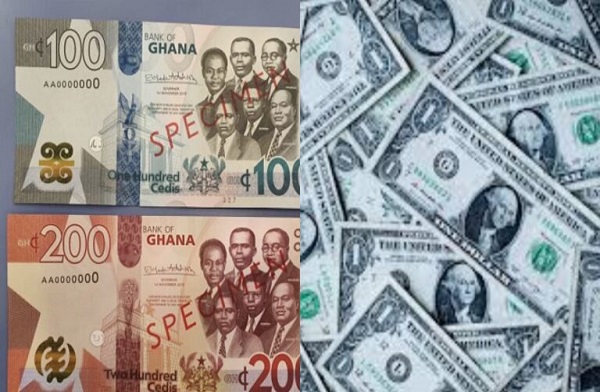
Fitch Solutions is forecasting a 43% depreciation of the cedi to the US dollar in 2022.
It is also projecting a 30.1% fall in value of the cedi to the American currency in 2023, which means the woes of the local currency will not get better anytime soon.
Disclosing this in its latest report on the country dubbed “Ghana’s Private Infrastructure Investment Set For Medium-Term Recovery”, it said, the continuing investor concern over the country’s large fiscal deficits puts downward pressure on the cedi.
“We expect weakness for the Ghanaian cedi to persist throughout the near term, as we currently forecast the currency to depreciate by 43% and 30.1% against the US dollar in 2022 and 2023, respectively”.
“We expect that Ghana's inflation rate will remain high in the near term in the face of spiking global food and fuel prices and as continuing investor concern over the country’s large fiscal deficits puts downward pressure on the cedi”, it added.
Again, it pointed out that the currency’s weakness will keep revenue risks elevated for foreign investors dependent on revenue streams in local currency.
This is despite an expected $2 billion inflows from the Afrexim Bank and COCOBOD syndicated loan.
Cedi depreciation to add upward pressures on prices of construction materials
Furthermore, it said in the light of the reliance of Ghana’s construction industry on imports, the cedi’s weakness will add to upward pressures on prices of construction materials from existing supply chain disruptions.
This, in turn, will further contribute to increased project costs and potential investment delays in the near term.
“In 2021, Ghana’s trade deficit for iron and steel products is estimated to have exceeded $1.2 billion, up from an estimated deficit of over $780 million worth of iron and steel products in 2020. In light of the Ghanaian construction industry’s reliance on materials imports, we expect that the cedi’s weakness will add to upward pressures on construction materials prices from existing supply chain disruptions. This, in turn, will further contribute to increased project costs and potential investment delays in the near term”.
Prices of goods and services shoot up
The cedi has since the beginning of the year lost about 36% in value to the dollar, according to Bloomberg.
It depreciated by a little over 4% last week, starting the week at ¢10.10 pesewas to the American ‘greenback’.
This has drastically shot up the prices of some goods and services, increasing both the cost of doing business and living in the country.
Latest Stories
-
Reality Zone with Vicky Wireko: International Day of the Girl, shaping today’s girl for tomorrow’s future – ZONTA Clubs lead the way
2 minutes -
Global health must be led by countries, not designed for them – Mintah Akandoh
1 hour -
Mahama honoured at 2026 World Health Summit in Berlin for global health leadership
1 hour -
Breast cancer is not a death sentence – Besease Kontire Obaapanin, Magmina Foundation lead awareness campaign
1 hour -
EcoBank invests in digital education of 4 Garisson School to mark 40 years in Africa
2 hours -
AGI urges investment in skills and raw materials to strengthen local manufacturing
2 hours -
GPL 2026/27: ‘We have to rectify our mistakes’ – Boadu reacts to Aduana FC defeat
2 hours -
No disability access, no building permit – KMA declares
2 hours -
Asantehene to lead environmental restoration effort at Jimi Land Reclamation Site
2 hours -
Poor Ghanaians are being jailed because they cannot afford justice – Crime Check Foundation
2 hours -
No conflict in appointing Emelia Agbenyo as Deputy EC Chair – NDC
2 hours -
87-year-old man jailed 20 years for defiling 9-year-old girl at Ofankor
2 hours -
Sankofa Gold targets 70kg output after 9-month shutdown
2 hours -
Tamale, Bolgatanga had just one Legal Aid lawyer between them – Kwesimintsim MP
2 hours -
PAC orders eviction of former irrigation company MD from official residence
2 hours