

Audio By Carbonatix
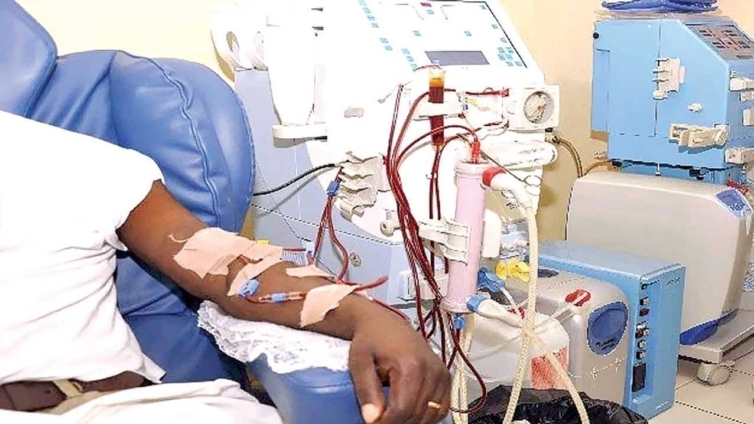
A Fellow at the Centre for Democratic Development (CDD) Ghana, Dr Kwame Sarpong Asiedu, has questioned the timing of the upcoming free dialysis treatment program under the National Health Insurance Scheme (NHIS), to begin December 1.
In an interview on Joy News’ PM Express on Monday, he expressed mixed feelings about the move, calling it “necessary and affordable” but criticising the delay in implementation.
“If you remember from October last year, we discussed this, and I was very categorical that this was affordable and necessary. There was no reason for a delay because a delay would inevitably lead to a loss of lives,” he stated.
While he is pleased to see the policy finally rolling out, he argued that it could and should have been implemented sooner.
His remarks come in response to Vice President Dr Mahamudu Bawumia’s announcement of the initiative aimed at providing all kidney patients covered by NHIS with free dialysis.
Drawing on global standards, Dr. Asiedu questioned why Ghana had taken so long to act when “renal dialysis is typically covered by insurance in most countries.”
He stressed that dialysis costs are too high for individuals to bear on their own.
He added, “I had not seen any country in the world where renal dialysis is paid for by patients directly because it would certainly bankrupt them. It’s always funded by insurance, so I’m glad it’s being funded now, but my concern remains: Why now?”
Dr Asiedu went on to explain the prevalence of kidney disease in Ghana, noting that an estimated 39 patients per million people require dialysis each year.
“The prevalence of end-stage renal failure is around 13%, but only about 39 out of every million people end up needing dialysis,” he said, estimating that roughly 1,350 patients nationwide would need dialysis annually.
“However, many patients avoid seeking formal medical care, instead relying on alternative treatments or prayer centres without fully understanding their health needs,” he added.
Based on these numbers, he estimated that only about 800-900 people would likely access the treatment initially, explaining that NHIS had already accounted for 400 patients in a recent pilot program, though even that fell short of expected uptake.
When asked whether the recent pilot program justified the delay, Dr. Asiedu responded, “That’s a question worth addressing. If the pilot provided clear, positive results, that data should be available to allay concerns.”
He stressed that transparency regarding the pilot’s findings is critical for public confidence.
“For those with doubts, seeing the numbers would help. From my perspective, and from the data I’ve seen, the resources are more than adequate to support this initiative,” he argued.
He expressed that if the resources were found lacking, then “the NHIS—and indeed the nation—is failing its people.”
Dr Asiedu further highlighted the potential for partnerships with private dialysis centres, urging NHIS to explore funding negotiations with these facilities to increase access for patients who might prefer private treatment.
“Now that insurance will cover dialysis, perhaps private providers can be brought on board in a structured way, allowing a Funding Facility through NHIS,” he proposed.
He also mentioned that government hospitals already pre-financed dialysis treatments during the pilot, a practice he hopes will extend to other facilities once the policy is fully implemented.
Dr Asiedu’s stance centred on the potential lives saved and the avoidable suffering caused by the delay. “If the government had acted earlier, lives could have been saved,” he said.
“The numbers have been steady since last year, between 34 and 39 per million. If the resources to fund it were available, what justified the wait?” Dr Asiedu questioned, reiterating his hope that the health insurance and government can live up to the commitment to make life-saving treatments accessible for all.
Latest Stories
-
Glasner suffers loss on Selhurst return as Palace beat Forest
56 minutes -
WAFU B U17: ‘We won but I expected more from my boys’ – Kassim Ocansey
1 hour -
Man City cruise to statement win over 10-man Liverpool
1 hour -
Be careful with cross-border lending, foreign currency exposures – BoG to financial institutions
3 hours -
GPL 2026/27: Medeama go three clear as Hearts of Oak recover and Bechem stage stunning comeback
4 hours -
Ntiamoah Foundation launches “BEYOND 20” anniversary campaign
4 hours -
Credit Risk Management Directive: BoG to begin implementation for banks, others from July 1, 2027
4 hours -
Ghana Brands Awards 2026: Leading brands, business trailblazers to shine on November 20
5 hours -
T-bills auction: Demand improves as government exceeds target by about 76%; interest rates soften
5 hours -
Ziope undertakes initiative to build a technologically inclined community, commissions self-help ICT lab
5 hours -
ECG announces power outage in parts of Tema, Central Region due to network fault, maintenance
5 hours -
When the Gospel Becomes a Weapon: The church, blackmail and the abuse of faith
6 hours -
JoyNews’ Jacqueline Ansomah Yeboah selected for UK Media Excellence for Emerging Technologies Fellowship
6 hours -
Mental Health Alliance urges government to operationalise Mental Health Fund
6 hours -
Ghana–Holy See agreement heads to Parliament after Cabinet approval
7 hours