

Audio By Carbonatix
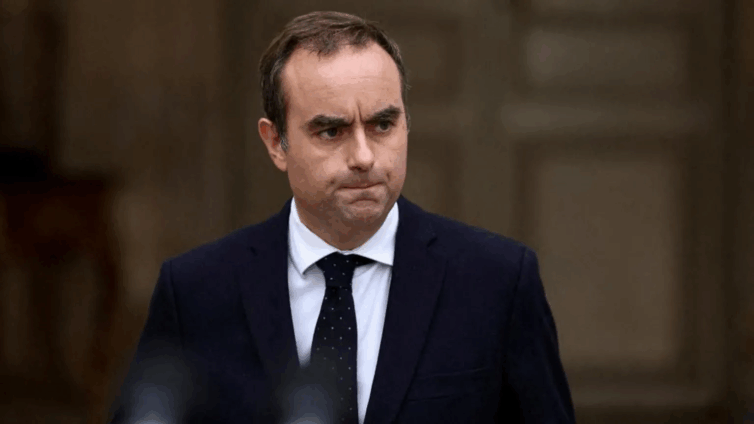
French Prime Minister Sebastien Lecornu narrowly survived a crucial test on Tuesday as the country's divided parliament voted in favour of a 2026 budget bill.
If Lecornu had failed to win a majority in the National Assembly for his social security budget, it would have gravely weakened his hand ahead of the main budget vote, which is due by the end of the year.
But in the end, the bill passed by 247 votes to 234. It will now go back to the upper house or Senate before returning for a final reading in the Assembly.
"It's a good sign that a majority has been found. The immense likelihood now is that the (social security budget) will be adopted definitively," said Assembly speaker Yael Braun-Pivet.
Appointed in September by President Emmanuel Macron, Lecornu has devoted himself exclusively to the uphill task of guiding 2026 budget legislation through the two chambers of parliament.
Since snap elections called by Macron in June 2024, the more powerful chamber, the National Assembly, has been split into three roughly equal blocs - centre, left, and far-right - none of which is capable of commanding a majority.
Lecornu is Macron's fourth prime minister since then – the two previous incumbents Michel Barnier and François Bayrou were both forced to resign after trying to rein in France's burgeoning debt. Barnier stepped down exactly a year ago after failing to push through his 2025 social security budget.
In the French system, there are two budgetary laws – one that raises and allocates money in the social security system, including hospitals and pensions; and the principal one that covers everything else, from defence to education. For years both have run on massive deficits.
Widely acknowledged for his discretion and diligence, Lecornu had to convince enough deputies from 11 different parliamentary groups that failure to vote for the budgets would plunge the country into even deeper financial gloom.
His main target was the Socialist Party (PS) with around 70 MPs, many of whom are uncomfortable in their erstwhile electoral alliance with the far-left France Unbowed party (LFI).
In major concessions to the PS, Lecornu promised to suspend Macron's key second-term reform increasing to 64 the statutory age of retirement, and also to refrain from using a government power (known as 49-3) to force through the budget laws without a vote.
Socialist leaders Olivier Faure and Boris Vallaud praised Lecornu's sense of compromise and led their MPs in voting for the budget.
But by giving ground to the centre-left, Lecornu lost support in his own camp on the centre-right, where important figures such as former prime minister Edouard Philippe said the bill would do little to redress the country's fast deteriorating public accounts.
Bruno Retailleau, who leads the conservative Republican party with 40 or so seats, described Tuesday's bill as a "fiscal hold-up" because of the concessions made in it to the left.
"This is a budget which will allow Macron to stay in power a little longer, but which leads France into a wall," he said after the vote.
Mathilde Panot of the far-left LFI accused the Socialists of betraying their principles. "At least they have made a clear choice in voting for the budget. We know now that they're now no longer in opposition."
Also voting against the bill was Marine Le Pen's hard-right National Rally, the biggest party in parliament with around 120 seats.
Attention now shifts to the main budget vote which must take place before the end of the year. Analysts had given Lecornu little chance of winning it if he first failed to get the social security budget passed, and even now it is far from certain he will succeed.
If he fails to get the main budget through, he will be obliged to introduce a special law to allow the state administration to continue functioning from January 1 using 2025 allocations. The same procedure was used at the start of this year.
But Tuesday's vote was widely interpreted as a victory for the Lecornu method, consisting of a dogged behind-the-scenes hunt for votes from across the political spectrum.
Latest Stories
-
I leave with respect, gratitude and pride – Carlos Queiroz
12 minutes -
Stop turning investigation into punishment – OccupyGhana tells EOCO, BNI
12 minutes -
GPL 2026/27: Medeama go top after win over Port City
25 minutes -
Manhyia South MP Baffour Awuah reports himself to EOCO after arrest warrant
35 minutes -
Ghana records 11 cocaine cases in 28 drug busts since March 2025; biggest hauls seized abroad
37 minutes -
The numbers behind Carlos Queiroz’s tenure as Black Stars boss
45 minutes -
The man who saw tomorrow: How Dr Bawumia built for Ghana what America and Nigeria are building today
1 hour -
Kumasi drivers demand price controls for goods, brand some traders as real ‘Kalabule’
1 hour -
Consumer Protection Agency commends FDA for destroying illegal bales of diapers
1 hour -
GNFS rescues stranded persons after flooding in Hohoe
2 hours -
Baffour Awuah deliberately refused to honour EOCO invitation – Deputy AG, Srem-Sai
2 hours -
‘Believe in these players’ – Carlos Queiroz tells Ghanaians after leaving Black Stars job
2 hours -
Gideon Boako: GoldBod books must be stretched to establish true nature of reserves support
2 hours -
ECG announces planned maintenance outage in parts of Accra on Friday
2 hours -
Carlos Queiroz sacked as Black Stars head coach
2 hours