

Audio By Carbonatix
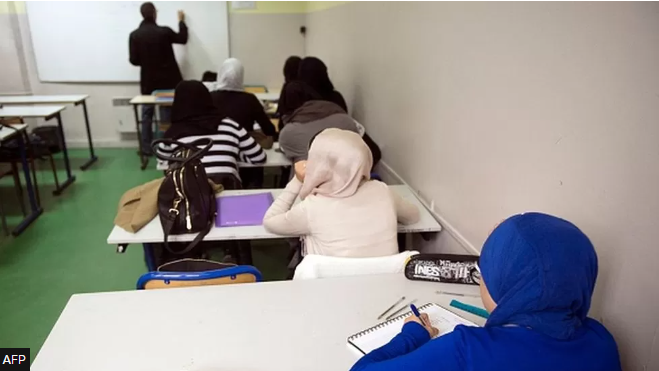
The French education minister has said that nearly 300 pupils arrived at school on Monday wearing the abaya, the long Muslim robe which was banned in schools last week.
Most of the girls agreed to change into other clothes.
According to official figures, 298 girls - mainly aged 15 or more - turned up at school in the banned garment.
Under instructions laid down by the ministry, there followed in each case a period of dialogue with school staff.
Most girls then agreed to dress differently and were able to start classes.
However, 67 girls refused to comply and were sent home.
A further period of dialogue with their families will now ensue. If that fails, they will be excluded.
Set against the 12 million school boys and girls who started term on Monday, the government believes the figures show that its ban has been broadly accepted.
However, a legal challenge by a group representing some Muslims goes before the courts later today.
At the end of August, the education minister announced that pupils would be banned from wearing the loose-fitting full-length robes worn by some Muslim women in France's state-run schools at the start of the new school year on 4 September.
France has a strict ban on religious signs in state schools and government buildings, arguing that they violate secular laws.
Wearing a headscarf has been banned since 2004 in state-run schools.
The move comes after months of debate over the wearing of abayas in French schools.
The garment is being increasingly worn in schools, leading to a political divide over them, with right-wing parties pushing for a ban while those on the left have voiced concerns for the rights of Muslim women and girls.
In 2010, France banned the wearing of full-face veils in public, provoking anger in France's five million-strong Muslim community.
France has enforced a strict ban on religious signs at schools since the 19th Century, including Christian symbols such as large crosses, in an effort to curb any Catholic influence on public education.
Reflecting its changing population, it has updated the law over the years to include the Muslim headscarf and Jewish kippa, but abayas have not been banned outright until now.
Latest Stories
-
6,079 promotion cases fully processed and paid – CAGD says amid nationwide teachers’ strike
1 minute -
Teacher unions to meet government Monday over nationwide strike
17 minutes -
Photo story: Republic Bank-JoyNews Habitat Fair clinic wraps up after three days of housing solutions, expert engagement
20 minutes -
National Peace Council urges investment in youth to sustain Ghana’s peace
42 minutes -
Afenyo-Markin urges youth to speak up against injustice
53 minutes -
CAF annuls Edo Queens victory, orders WAFU B final to resume from extra time
1 hour -
Interior Minister urges traditional authorities to enforce anti-bushfire bye-laws
1 hour -
3rd Republic Bank-JoyNews Habitat Fair Clinic ends on a high note after three days of strong patronage
1 hour -
Ten climbers missing after avalanche hits Himalayan base camp
2 hours -
NPP had more permanent fuel relief measures than current GH¢2 diesel cut – Amin Adam
2 hours -
Photos from the 3rd Republic Bank-JoyNews Habitat Fair Clinic
2 hours -
Ethiopia’s army promises restraint amid fears of new civil war
3 hours -
Amin Adam calls for review of fuel taxes as diesel prices remain above GH¢18
3 hours -
World Vision Ghana, Ahafo districts sign MoU for universal WASH coverage
4 hours -
When the gold engine stutters: What Ghana’s Cedi and reserves are telling us about the new economic architecture
4 hours