

Audio By Carbonatix
There is no agreed definition of "Loss and damage" in the international climate negotiations. However, according to Climate Promise, the term can refer to the unavoidable impacts of climate change that occur despite, or in the absence of, mitigation and adaptation.
Importantly, it highlights that there are limits to what adaptation can accomplish; when tipping point thresholds are crossed, climate change impacts can become unavoidable.
Loss and damage can refer to both economic and non-economic losses. Economic loss and damage can include costs of rebuilding infrastructure that has repeatedly been damaged due to cyclones or floods, or the loss of coastline land (and homes and businesses) due to sea-level rise and coastal erosion.
Non-economic loss and damage include negative impacts that cannot be easily assigned a monetary value. This can include trauma from experiencing a climate-related natural disaster, loss of life, the displacement of communities, loss of history and culture or loss of biodiversity.
It must be stated that such extreme climate related events have become more frequent and intense in recent years. A more recent example is Cyclone Freddy, which hit Southern Africa in February and March 2023, and was scientifically described as record-breaking in its strength, length, and resurgence. It left over 1.5 million people displaced in Malawi, Mozambique, and Zimbabwe. In Malawi alone, Cyclone Freddy, which was also exceptionally one of the long-lived storm that traversed the southern Indian Ocean for more than five weeks, killed over 1000 people. Freddy is both the longest-lasting and highest-ACE-producing tropical cyclone ever recorded worldwide.
In support of vulnerable countries hit hard by climate disasters, a landmark decision on loss and damage funding was agreed at the 27th session of the Conference of Parties (COP27) of the United Nations Framework Convention on Climate Change (UNFCCC).
“This outcome moves us forward,” said Simon Stiell, UN Climate Change Executive Secretary at the COP27 closing plenary. “We have determined a way forward on a decades-long conversation on funding for loss and damage – deliberating over how we address the impacts on communities whose lives and livelihoods have been ruined by the very worst impacts of climate change.”
Governments took the ground-breaking decision to establish new funding arrangements, as well as a dedicated fund, to assist developing countries in responding to loss and damage. Parties also agreed to establish a ‘Transitional Committee’ to make recommendations on how to operationalize both the new funding arrangements and the fund at COP28, later this year.
The said Transitional Committee on the operationalization of the new funding arrangements and fund was established, to make recommendations for consideration and adoption at COP 28.
At the Bonn Climate Conference of the Subsidiary Bodies (SB58) currently taking place, Parties are deliberating on key issues for this important agenda items and the African Group of Negotiators on Climate Change (AGN) has made its stance clear.
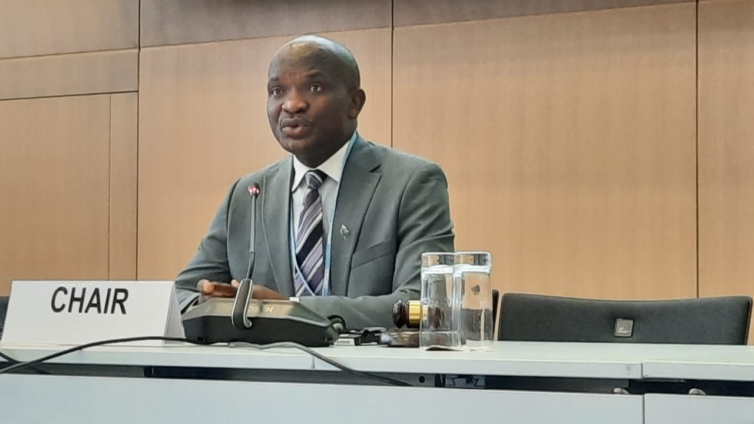
“The Africa Group underlines the significance of the outcome of the Glasgow Dialogue for informing the recommendations of the Transitional Committee to the COP on the operationalization of the Loss and Damage Fund,” said Ephraim Mwepya Shitima, Chair of the AGN. “In this regard, the Group is looking forward to engaging in a fruitful discussion with Parties in the Dialogue during this session.”
In view of another equally important agenda item for Africa, the Global Stocktake (GST), Shitima emphasised on the need for the GST to dedicate sufficient time for consideration of loss and damage, separate from the adaptation discussion. “The Group underlines that the outcome of the Global Stocktake should provide clear guidance for bridging gaps and addressing challenges related to averting, minimizing and addressing loss and damage in developing countries,” he said.
The global stocktake is a Party-driven process conducted in a transparent manner and with the participation of non-Party stakeholders, that enables countries and other stakeholders to see where they’re collectively making progress toward meeting the goals of the Paris Agreement – and where they’re not.
With a growing list and frequency of climate-related disasters, the UNFCCC Executive Secretary, Simon Stiell, believes loss and damage funding is a lifeline for billions of people, especially across the developing world.
In his remarks at the opening of the 2nd Glasgow Dialogue on Loss and Damage, Stiell highlighted the importance of loss and damage.
Simon Stiell said: “This year will be decisive for climate action. The global stocktake at COP28 will assess our implementation of the commitments we have made since the adoption of the Paris Agreement and give us a view of how to course correct to meet them. We are already facing serious impacts. Floods are washing away entire villages, wildfires are devastating communities, and droughts are fueling famines in some of the world’s most vulnerable nations. The agreement in Sharm El Sheikh to set up new funding arrangements and a fund for loss and damage was only the first step. We are talking about funding, yes. But these arrangements can translate into real, life-saving change for billions of people. The loss and damage funding arrangements are a lifeline for vulnerable people and places.”
The author is AGN Communication Specialist; fphiri200@gmail.com WhatsApp +260-969624582
Latest Stories
-
Prioritise cocoa sector with better prices, timely payments-Annoh-Dompreh urges NDC
20 minutes -
Lands and Mines Watch Ghana endorses Heath Goldfields’ mining capacity
35 minutes -
Gbintiri residents protest alleged diversion of 24-hour market project
1 hour -
Justin Bieber headlines Coachella with nostalgia-fuelled set
1 hour -
Ukraine and Russia accuse each other of hundreds of ceasefire violations
1 hour -
Asha Bhosle: The sound of Bollywood dies aged 92
2 hours -
Fire destroys section of 4-bedroom apartment at Tantra Hill
2 hours -
Safe city: Unnoticeable protection
2 hours -
North East Regional Police Commander raises alarm over burning of checkpoints
2 hours -
Free Primary Healthcare Programme set for take-off — Health Ministry confirms readiness
2 hours -
3 co-wives, 5 children perish in canoe disaster – Maritime Authority insists life jackets use mandatory for all water transport
3 hours -
Iran war lands ‘triple blow’ to flood-ravaged Sri Lankans
3 hours -
Gunmen kill at least 11 people at Afghanistan picnic spot
4 hours -
Woman, 25, in court for stealing baby at Bogoso
4 hours -
Trump unveils giant gold-accented victory arch design for US capital
4 hours