

Audio By Carbonatix
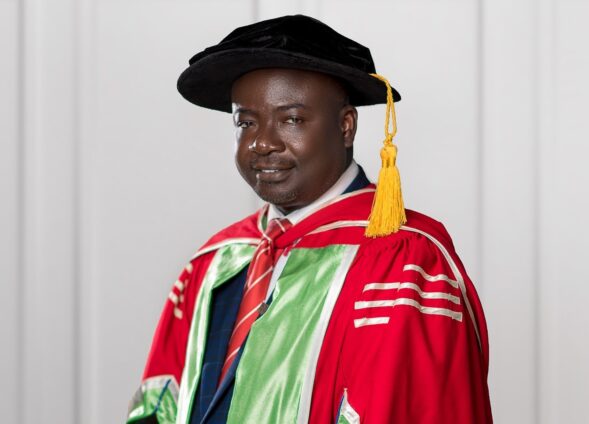
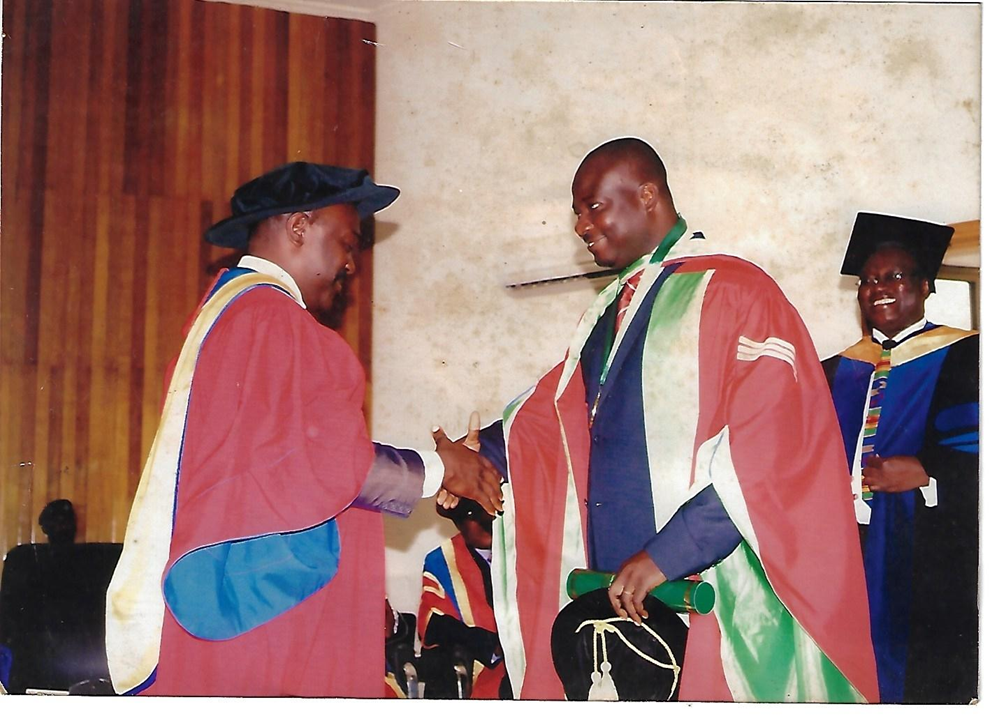
The University of Mines and Technology (UMAT) is having its first Vice Chancellor, who is also an alumnus of the school in 2026. 48-year-old Professor of Geomatic Engineering, Bernard Kumi Boateng, first came to UMAT in 2001 as a student of Geomatic Engineering.
His grass-to-grace story- starting as caretaker of a public latrine in Kumasi, the Ashanti regional capital, to becoming one of Ghana’s most sought-after mining engineers- is what sets him apart, and it is based on this record that he plans to turn around UMAT, the university after his heart, into a world-class engineering centre of excellence.
He intends for the 70-year-old institution to be at the heart of Ghana’s mining and mineral resource governance and policymaking, producing talent and academic scholarship that would ensure that Ghana makes the most of its natural resource wealth while protecting the environment.
In the questions and answers that follow, we delve deeper into the life of Prof. Bernard Kumi-Boateng, speaking about family, education, Christianity and the vision that fuels his passion to transform Ghana’s premier mining and engineering university.
Our first question was to ask him how he became a teacher.
I will say becoming a teacher was due to circumstances. My mother had been diagnosed as diabetic, blind, had had a stroke, and was bedridden, and couldn't do anything to fend for us.
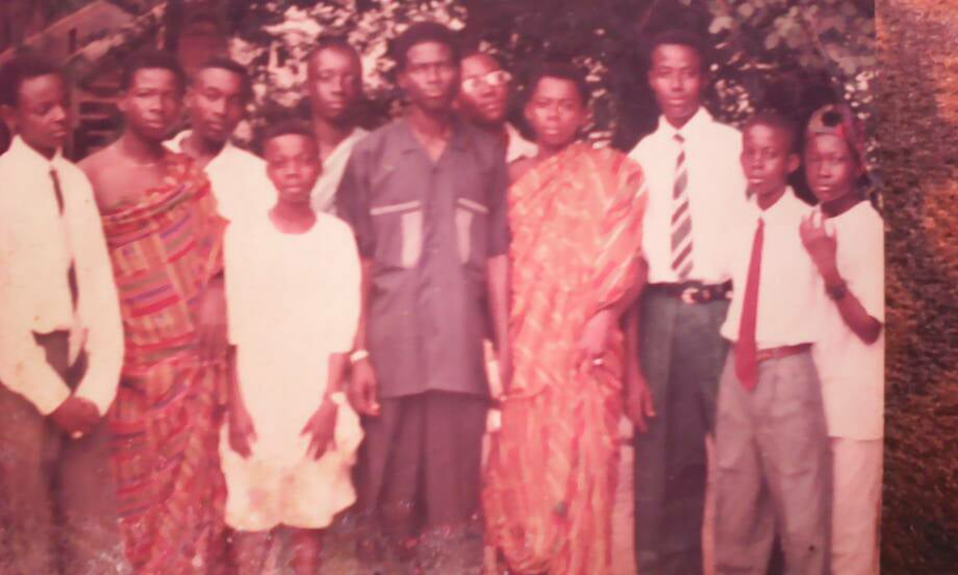
And so I had to become a toilet attendant on the streets of Bantama and also joined one Obaya at PZ to sell second-hand shoes. All this while we didn't know where our father was. He had gone in search of greener pastures. And so I was told he was in Tamale. So I had to go in search of him.
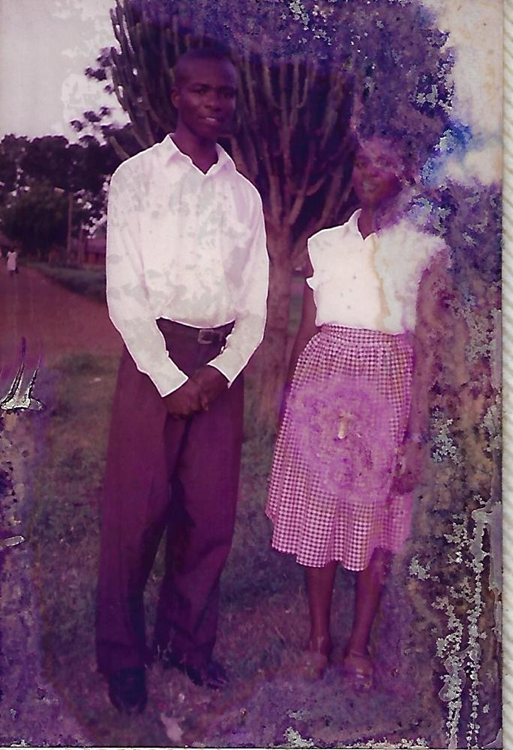
When I met him, he was a lotto agent, and therefore he could not also fend for me and take me to school. His friend paid my school fees for me so I could start my JSS all over again in Tamale, Zogbeli Block A. After Zogbeli, I gained admission to Tamale Secondary School to read Science.
And it was during that moment that I realised that the only option for me was to become a teacher so that I could fend for and take care of my sick mom and my father, who had also become a lotto agent.
INTERVIEWER
How did you come to Tarkwa and how did you come to UMaT?
PROF. KUMI BOATENG
I didn't know Tarkwa even existed as a community; yes, I knew, but the university, no. I had bought KNUST forms, and because I had in mind to teach, I had chosen a raw course. When we mean by raw course, I had chosen Mathematics. The naivety of young people without counselling. So I chose Mathematics at KNUST, waiting to get it so that I could teach.
Then I received my admission letter: Mine Surveying, School of Mines, Tarkwa Campus. That was when I got to know that there is another campus of KNUST at Tarkwa. In fact, I wanted to go back to Tech to change it to Mathematics because I looked at the grades I had; I could read Maths. Then someone advised me at the administration that Surveying is also a good course, and that even if I want to teach, I can still teach. Then I came to Tarkwa to start my journey.
INTERVIEWER
I want you to take yourself back to the first day you came here, as a young person, as a student. Describe to me your first day here.
PROF. KUMI BOATENG
My first day was disappointing, I must say, the entrance, because I had seen KNUST entrance, I had seen University of Ghana, I had also seen UCC. And the moment I entered this place, I'm like, wow, this probably is a glorified secondary school.
I met Professor Mireku-Gyimah very early, year one. He had come to have a program with us, and during that program, he made a comment about responsibility being taken and not given. It stuck with me for a very long time. So I approached him; I went to his office. He was then the Principal. So I went to his office, and I asked that he mentor me, that I wanted to be like him. But he was a mining professor at the time. He laughed, and then he asked me to meet him at the clubhouse. But as a young Christian boy, SU president in Tamale Secondary School, meeting the man at the clubhouse was a difficult one for me. But I mustered the courage, and I met him.
When I met him, he started telling me about his life. He himself was a shoe-shine boy, and he had risen through the ranks to become a professor. And so his story more or less synced with the kind of background that I was coming from. So I took him as a father, and he was gracious enough to take me home. So right from year one, I was with him, going to his house, talking to him every weekend, and making sure I was always around him.
And so that is the kind of environment I found myself in.
Yes, UMaT at the time was very small in terms of population. My class size was 23. We were only 23 strong boys in the class. But today, the same class, they are over 100. So you can look at the contrast. We had only the Chamber of Mines Hall, which we call, we affectionately call Novotel. And so the numbers were quite few. Ladies were scanty. You could handpick the female students that were here.
Most of us even sat on benches at the time. We had some benches in some of the classrooms. We had to queue to have access to the internet.
INTERVIEWER
Tell me about UMAT. Why do you think it’s important for the government to take a keen interest in UMAT?
PROF. KUMI BOATENG
It is so critical because most of the menace that we are seeing- our river bodies that are getting polluted- the knowledge base is here. How to solve that problem is here. Our current Vice Chancellor has thrown the challenge to the state. I don't know what the state is doing about it then, but if the government focuses on the university, takes politics out of everything, and allows the technocrats in this university, all the problems within the mining fraternity can be solved.
We've done it before. Every mine you have in Ghana here now is being managed by products of this university. No one else, no one else. If you go to Obuasi, Prestea, it's from here. You go to Iduapriem Mine, AngloGold; Daniel is from here. You go to Gold Fields now, Dr Kupo, a lady from UMaT. You go to Asanko Gold, from UMaT. Every single mine you have in Ghana here is being mined by our people, including even the surveyors; a lot of the electrical people are all coming from here.
INTERVIEWER
When you look back, did you think a day like this was possible? Did you see a day like this?
PROF. KUMI BOATENG
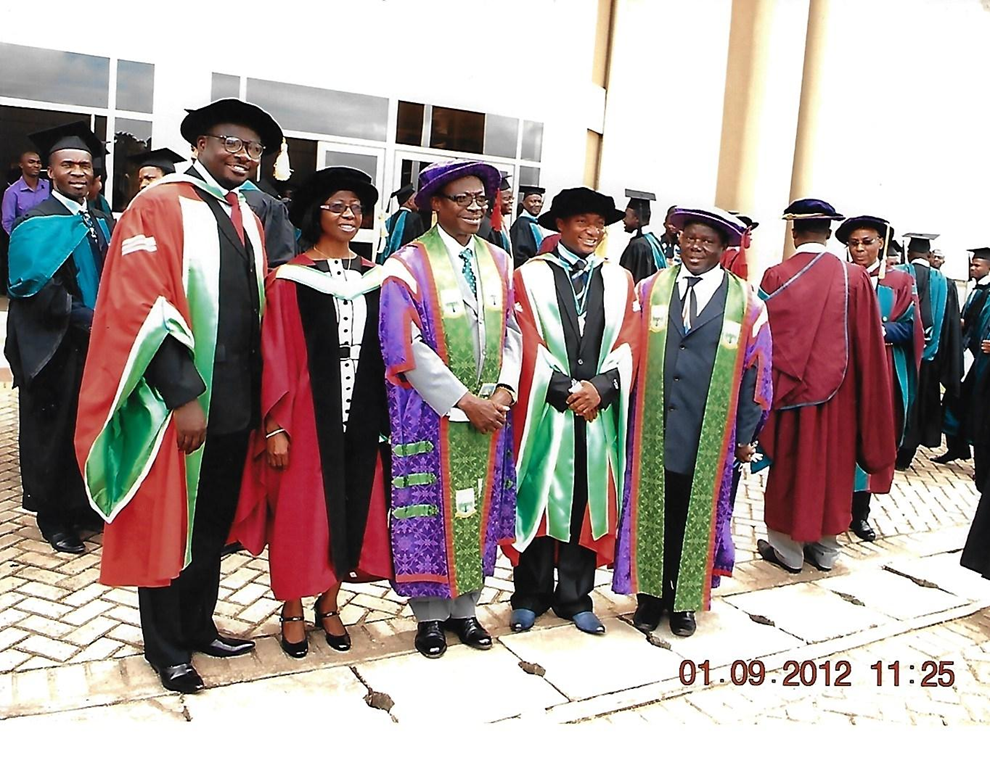
Yes. So I was really fortunate. Everything about my life is written down. Professor Mireku-Gyimah, 26 years ago, he saw today, and he groomed me for today. So throughout my life on campus, I knew a day like this would come. With date, with time. It's all written. I have it in—in a little red book. He sat me down, and he gave me the trajectory. And we plan and work fervently by the grace of God. By his plan, this was supposed to happen at the age of 52, but by God's own design, it has happened at the age of 48.
INTERVIEWER
And how does it feel?
PROF. KUMI BOATENG
Fulfilled. Sometimes it comes with a lot of nostalgic moments. Even though I knew a day like this would come, I did not expect the pain that would come along with it. But I am really, really excited about it. I am happy. It has proven to me one more time that God exists. There is no way—there is no imaginable principle that can explain a toilet attendant who had done JSS twice, who even failed in some university courses, that even today my SSCE results cannot gain me admission into the same program that I am a professor. It is divinely orchestrated.
INTERVIEWER
So now you are here. 26 years of work, and several more years ahead of you in the role that you really want to be in, in a university that, as you say, you deeply love. What's your plan?
PROF. KUMI BOATENG
Yeah, the plan—the university—the plan, the university has a strategic plan up to 2034. The first plan is that you must aggressively implement that plan. And by 2034, we should hit a 30,000 population. Currently, we are about 17,000, a little over 17,000.
The current Vice Chancellor took it from about 3,000 and has grown it to this level. Infrastructure-wise, he has also added on. But we need to move beyond that so that students will feel comfortable. So the next four years' mandate that we have is to implement every single element in the strategic plan. That's the first priority.
The next one is to ensure that the rules of this university are applied. We will work by the rules. We will work according to the records that we have, and ensure that quality is top-notch in everything that we are going to do. And therefore, we are going to ensure that our laboratories are well-equipped.
The numbers have increased all right. We need a lot of resources to ensure that our laboratories are well-equipped. We need to ensure that we do what we do best: research. We need to solve the problems of this nation as far as the mining industry is concerned.
And therefore, I'm going to put my mind on the young professors that we have, train them, give them the best training that they can ever have. We intend to spend some resources on them, sharpening the tools for them. If there is a need for them to—for us to take them outside this nation for them to be able to get certain skills so that we will return and then we solve the problems of this nation, we will. So there will be cutting-edge research that we are going to undertake.
We have a land, about 26 square kilometres. The university must move to that place. That is the only place we can expand to about 60,000 capacity. And so if you are an investor out there, we are calling on you, come and build a student village of about 60,000 student capacity, give us some level of infrastructure for faculty, and then you can get your money from the 60—can you imagine you have a village of 60,000 students all accommodated, and then you will be able to also get your money out of that?
So for the next four years, this is how we want to build and to brand the university for the world to know that we are world-class, and to rub shoulders with every other university.
INTERVIEWER
So, I want you in 30 seconds... give me a pitch about what the Professor Bernard Kumi Boateng VC-ship will look like.
PROF. KUMI BOATENG
My VC-ship will be welfare of the students, welfare of the human resources that are training the students. I want to lead a group of people where there is mutual respect for every staff member, especially the junior staff. I want the cleaner to come to work and, when you ask, "What do you do at UMaT?", he should be bold to say, "I am part of the group of experts training the engineers for the extractive industry."
Latest Stories
-
Walter Mosley visits W.E.B. Du Bois Centre in Accra: A New York Secretary’s homecoming story on where Du Bois spent his final years.
15 minutes -
MTN set to deploy 5G services after winning spectrum licenses worth US$202m
3 hours -
NPP national elections: 3,000–4,000 police to handle security, traffic in Kumasi – Karbo
5 hours -
Atta Akyea fumes as Manhyia MP is to spend another night in EOCO custody
5 hours -
SSNIT says La Beach clearance was to protect hotel investments, beaches to remain public
6 hours -
APSU congratulates St Augustine’s College after back-to-back National Investment Quiz wins
6 hours -
Renewed flood intervention at Mallam Junction raises hopes among residents, businesses
7 hours -
St Augustine’s College retain National Investment Quiz title after nail-biting grand finale
7 hours -
Education infrastructure investment will drive Banda’s development – Ahmed Ibrahim
7 hours -
Teacher unions strike: Gov’t presents fresh proposals as talks end inconclusively
8 hours -
51,000 teachers’ promotion arrears to be validated for October payment – Education Minister
8 hours -
Kwabena Boamah appointed Board Chair for Impact Investing Ghana
8 hours -
Striking teacher unions to meet Fair Wages and Salaries Commission on October 6
9 hours -
EOCO working with AG to arraign Nana Baffour Awuah before weekend court
9 hours -
Duraplast reassures customers after fire, announces October 5 reopening
9 hours