

Audio By Carbonatix
The Acting Executive Director of the Complementary Education Agency (CEA), Daniel Kwesi Ashiamah, says inadequate funding and staffing remain the biggest obstacles to reducing illiteracy in Ghana.
He revealed that about 7.9 million Ghanaians between the ages of 6 and 15 remain illiterate, with females accounting for 4.6 million compared to 3.3 million males. He described this gender gap as a serious challenge to the country’s socio-economic development.
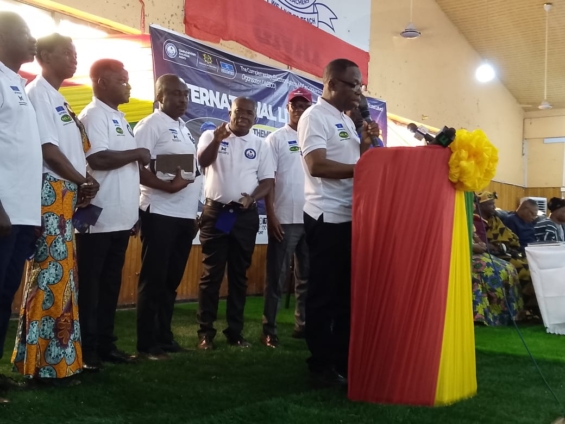
Mr. Ashiamah made these remarks at the 58th International Literacy Day celebration in Tamale, which was held under the theme “Promoting Literacy in the Digital Era.”
The event was organised by the Complementary Education Agency (CEA) of the Ministry of Education, in collaboration with the United Nations Educational, Scientific and Cultural Organization (UNESCO), and sponsored by the National Lottery Authority and the Bulk Oil Storage and Transportation Company Limited (BOST).
Citing Africa Education Watch, he said an estimated 1.2 million children were out of school in Ghana.
He explained that while at least 250,000 enrollments were needed annually to address the situation, CEA was currently enrolling only about 10,000 due to resource constraints, far below its annual target of 30,000.
He said that although the Agency required about 6,000 staff nationwide, it had only a little over 1,700, with limited vehicles and logistics to carry out its mandate.
“The lack of gadgets is one issue, and the ability to utilise them for full benefit is another,” he stressed, underscoring the need for digital literacy skills to be integrated into basic education.
The Northern Regional Minister, Ali Adolf John, said literacy remained the foundation for participation in the digital era and pledged the government’s support to expand literacy programmes.
He appealed to stakeholders to help address widespread drug abuse among youth in the Region.

Nana Boadi Amponim Obodade III, Board Chair of CEA, called for a multifaceted approach to tackling illiteracy, stressing that achieving the Sustainable Development Goal on inclusive and equitable education required ensuring no one was left behind.
He reaffirmed CEA’s commitment to complementing the government’s efforts to reduce illiteracy and improve lifelong learning opportunities across the country.
Latest Stories
-
Ghana to host high-level conference on scaling education initiatives in emergencies
7 minutes -
Democracy must not be for sale: Who pays for Ghana’s politics, and how do we confront money, influence and accountability?
22 minutes -
Aburi Amanfrom landowners appeal for government support for Atwapim development project
26 minutes -
Cargill Ghana and International Cocoa Initiative celebrate 111 young graduates building skills for the future
49 minutes -
Video: Madina MP Francis-Xavier Sosu collapses while addressing students at GIMPA
51 minutes -
Hunnyboy reveals how social media landed him Shatta Wale feature
56 minutes -
I am a perfectionist – Actor William Lamptey
1 hour -
No room for another false start as Ghana begin AFCON qualifying campaign
1 hour -
“We are grateful for what you have achieved” – AGI President tells Finance Minister
1 hour -
“No Nation is Inferior”: Mahama champions human dignity and security council reform at the UN
2 hours -
Manhyia South residents, NPP executives fume over botched EOCO arrest of MP
2 hours -
Mahama unveils new deal with global philanthropy
2 hours -
Daily Insight for CEOs: Building customer-centric leadership
2 hours -
Democracy must deliver food, jobs and healthcare, not just elections – Mahama
2 hours -
Capacity constraints must never be a barrier to restitution – Mahama
2 hours