

Audio By Carbonatix
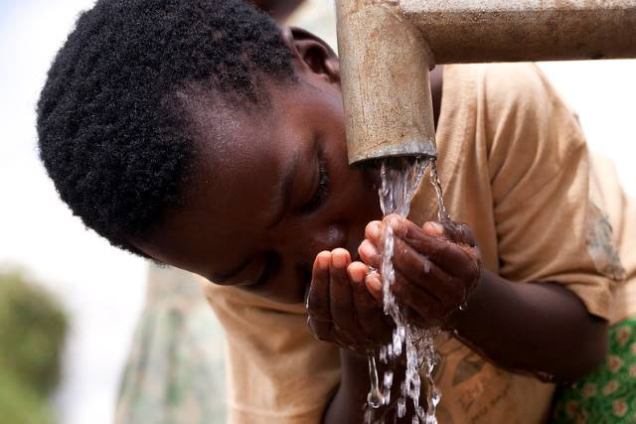
Many middle-class Ghanaians on the 24th of January, 2023, woke up to an alarming statement, released by the Ghana Water Company Limited (GWCL) announcing water rationing in the Greater Accra, Ashanti, Central, Western and Northern Regions of Ghana.
The reasons the GWCL gave for the rationing was the indiscriminate cutting of trees that give our water bodies cover, pollution of water bodies and high evaporation as a result of rising temperatures. Even more distressing, the company was unable to determine the duration of the water rationing.
“For now, because of the climatic changes as we know, it is a bit difficult to determine whether it will end in a month or two” the statement read.
Among others, the GWCL entreated its customers to take conservation measures, including ceasing the use of treated water to wash cars and water lawns. Customers are also urged to shut all taps when not in use, repair leakages at home, like overflowing reservoirs and dripping taps and to report all burst pipes and leakages to GWCL district offices.
The admonition to customers to control the urge to sustain their lush lawns, is somewhat ironic, considering the fact that millions of Ghanaians do not have access to potable water.
Society’s elite have grown accustomed to buying their way out of problems that affect the average Ghanaian. Horror stories of kids learning under trees or pregnant women dying needlessly for lack of timely medical care, barely raise eyebrows in affluent circles. Those that can afford it, simply check out of public services that don’t work, so the response to unsatisfactory government education or healthcare is simply to resort to more responsive private solutions.
The effects of climate change are however less easy to circumvent as the water rationing announcement demonstrates. The World Bank Group’s Country Climate and Development Report (CCDR) for Ghana (2022) estimates that at least one million more people could fall into poverty due to climate shocks if urgent climate actions are not taken. The same report notes that flooding due to eroded coastlines and sea-level rise directly impacts about 45,000 people every year.
Other effects of climate change in Ghana, include harvest failures due to erratic rainfall patterns, heat waves and the spread of communicable diseases.
The water insecurity we are currently experiencing is a stark reminder that the impact of climate change can be swift and far-reaching. It is a problem that needs national consensus and the commitment of significant resources if we are to avert a disaster in the near future. Contrary to popular opinion, this is not a problem to be fixed by future generations, long after we have been buried.
Some have argued that climate considerations can be put aside for now, while we attempt to build a developed economy, especially because as a country our greenhouse gas emissions are among the lowest in the world. However, if the speed with which we have polluted water bodies and decimated forests and farmlands through small-scale gold mining, is anything to go by, then it is clear that our present path is not one of sustainable development. Building resilience to climate change and the economic growth of the country, need not be a zero-sum game.
As a country, we need to halt and reverse the damage being done to the environment and adopt more responsible ways of exploiting our natural resources.
Climate issues must be taught at all levels of education, since it is the defining concern of our time. The media also has the responsibility to build their capacity and stay abreast of climate issues. Most importantly, they must find compelling ways of reporting the issues for the education of their audiences. Finally, citizens must compel politicians to put climate resilience firmly on the national agenda. It is a sacred responsibility we have to ours and generations yet unborn.
Unlike other national problems that elites can insulate themselves from, by outspending the average man, the impact of climate change is more equitably distributed. It is for this reason that we need all hands on deck to fashion out a climate resilient development plan for Ghana and by Ghana.
The author George Ferguson Laing can be reached at glaing6@gmail.com
Latest Stories
-
Padel for Parkinson’s cycling event promotes awareness at University of Ghana
1 minute -
GPL 2025/26:Samuel Tetteh brace fires Nations FC past Basake Holy Stars
9 minutes -
Ghana’s oil trade position close to net neutral in near term – Fitch
31 minutes -
IMANI Africa President urges greater awareness and support for Parkinson’s Disease patients
42 minutes -
T-bills: Government records 29% undersubscription; interest rates continue to surge
44 minutes -
Perceptions of Judicial partisanship ‘unfortunate’ – Justice Adjei-Frimpong urges greater public engagement to build trust
47 minutes -
Ghana to honour Christina Hammock Koch for historic Artemis II mission
2 hours -
Supreme Court appointments require more than 15 years’ experience – Justice Adjei-Frimpong
2 hours -
Fire destroys 3-bedroom house at Bogyawe
2 hours -
Why the Supreme Court is a “policy court” – Justice Richard Adjei-Frimpong breaks it down
2 hours -
Playback: The Law discussed Supreme Court @150
4 hours -
MTN Momo staff walk to promote wellness and fitness
4 hours -
Assafuah: Sedina Attionu’s return from Nevada will test government’s commitment to accountability
4 hours -
How GRA’s Modified Taxation Scheme is boosting revenue compliance & SMEs competitiveness
4 hours -
Stonebwoy Can Do It: A call to unite behind 2026 BHIM Fest
5 hours