

Audio By Carbonatix
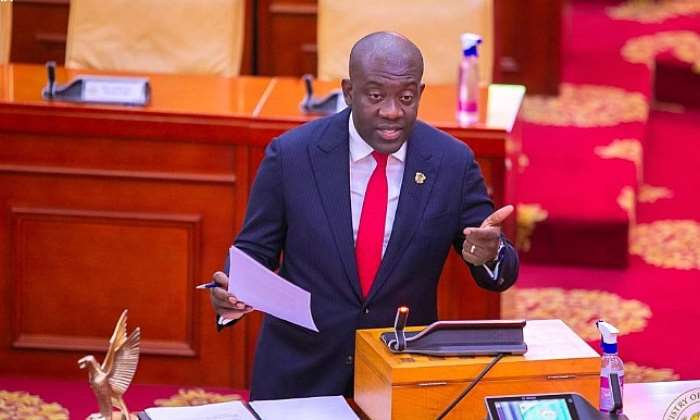
Member of Parliament for Ofoase Ayirebi, Kojo Oppong Nkrumah, says the recent surge in Ghana’s public debt by more than GH¢70 billion in just three months is evidence that the country’s economic fundamentals remain weak, despite earlier claims of improvement.
Speaking on Newsnite on Joy FM, the Ranking Member on Parliament's Economy and Development Committee cautioned against what he described as the government’s earlier celebration of temporary declines in headline debt figures.
He argued that those movements were driven largely by exchange rate effects and debt restructuring rather than meaningful fiscal or monetary reforms.
“You recall that we cautioned the government against celebrating temporary movements in headline numbers while ignoring the structural weaknesses that are still underneath the economy,” he said on Monday.
According to the former minister, the earlier slowdown in debt accumulation was not the result of changes in government spending patterns or revenue mobilisation, but rather two short-term factors, a sharp appreciation of the cedi and the impact of the domestic debt exchange programme.
“But nothing significantly had changed both on the fiscal or on the monetary side,” he stressed.
Mr Oppong Nkrumah argued that the recent 20 per cent depreciation of the cedi over the past three months has quickly reversed those gains, pushing the debt stock up by about GH¢70 billion.
He explained that about GH¢50 billion of the increase could be attributed mainly to exchange rate movements, which inflate the cedi value of Ghana’s foreign-denominated debt without any new borrowing.
“Just a small depreciation in three months and the debt stock has gone back up by about GH¢70 billion because the structure and the fundamentals have not changed,” he said.
Beyond currency effects, Mr Oppong Nkrumah pointed to additional factors contributing to the debt increase, including a US$360 million facility from the World Bank, which he said government attempted to present as a financing arrangement rather than a loan when it was brought before Parliament.
He also noted that about US$1 billion worth of restructured debt is now being capitalised and treated as new disbursements in the government’s accounting, even though no fresh funds have entered the economy.
“Even if you account for those two, you still have about a GH¢50 billion change in our debt stock, which is mostly because of the currency,” he added.
Latest Stories
-
Anti-LGBTQ Bill: Forget the rumour mongers, I’m a man of action, and will pass the bill – Speaker
21 minutes -
Women and children among those killed in Sudanese army shelling of wedding celebration
25 minutes -
President Mahama is not sincere with Ghanaians on LGBTQ bill matter – Hassan Tampuli
43 minutes -
Gov’t to establish Prison Industrial Hub to equip inmates with income-generating skills – Prison Service boss
1 hour -
Alhassan Tampuli donates cement, roofing sheets to support storm victims in Gushegu
1 hour -
Alhassan Tampuli appeals for urgent support for storm victims in Gushegu
1 hour -
The hypocrisy must stop; pass Anti-LGBTQ+ Bill now – Alhassan Tampuli to Mahama
1 hour -
Imprisonment should be rehabilitative, not punitive – Ghana Prisons boss at UNGA
2 hours -
Ga Adangbe traditional priests petition Mahama over McDan aviation licence revocation
2 hours -
Anti-LGBTQ Bill: NDC’s arrogance is worrying – Hassan Tampuli
2 hours -
Let’s give OSP time to mature, not to scrap it – Hassan Tampuli
2 hours -
Nigeria convicts 386 Islamist militants in mass trials
2 hours -
Djibouti president wins election with 97.8% of vote, state media says
2 hours -
We don’t have mandate to deduct tax from rent allowance of security services personnel – Interior Ministry clarifies
2 hours -
Ablakwa receives Presidential Special Envoy on Reparations to advance global agenda
3 hours