


Audio By Carbonatix
Government is putting in a lot of measures to stimulate job creation in an integrated and inclusive manner throughout the entire gold mining value chain, Vice President Dr. Mahamudu Bawumia has indicated.
This integrated, inclusive chain will bring together large scale, small scale, sustainable community miners as well as other stakeholders such as refiners, purchasers and sellers of jewellery in an effort aimed at increasing the value Ghana derives from her raw materials and also bring clarity on the volumes and value of extracted materials.
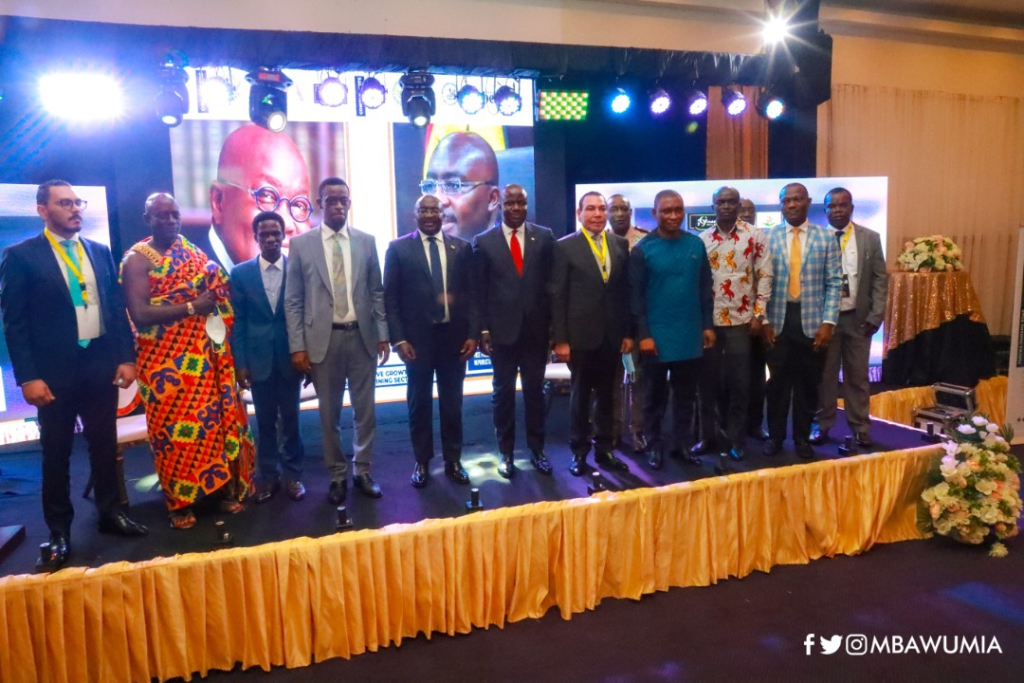
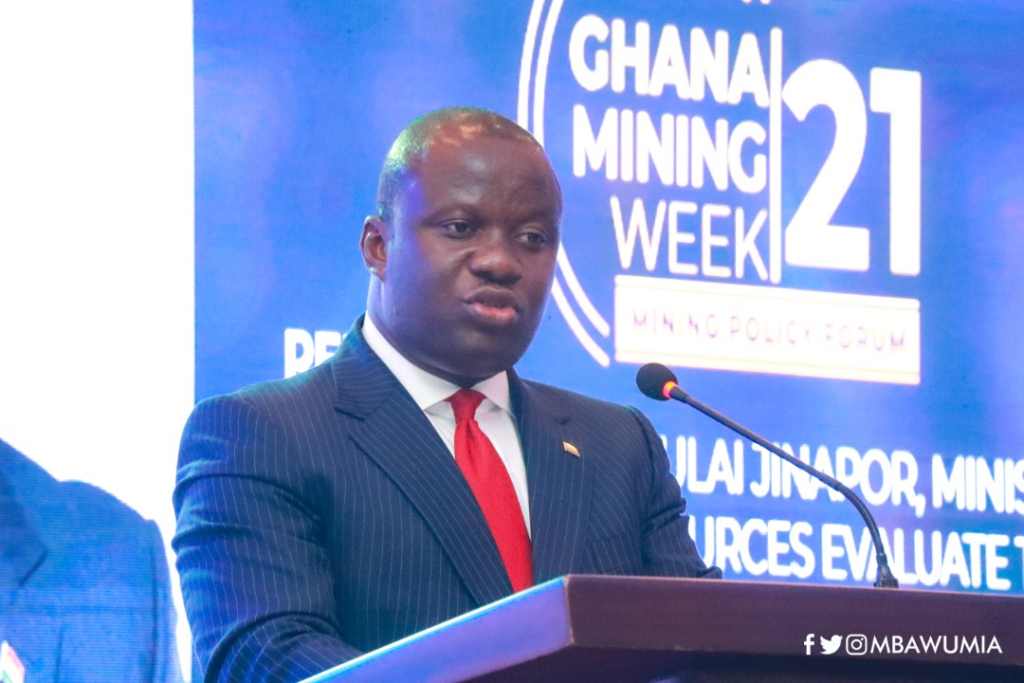
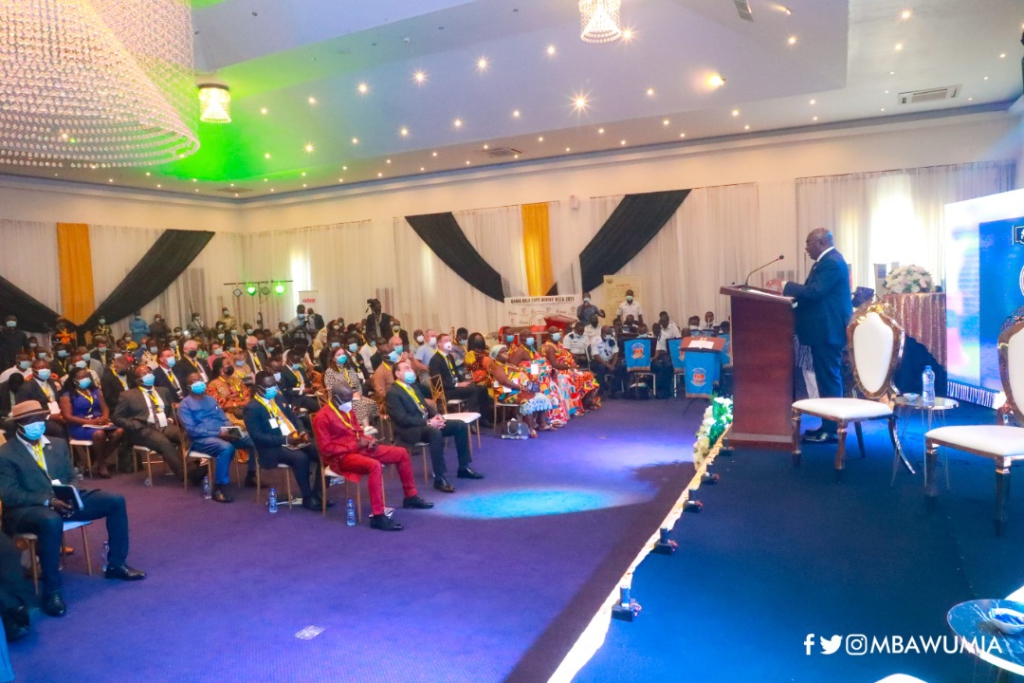
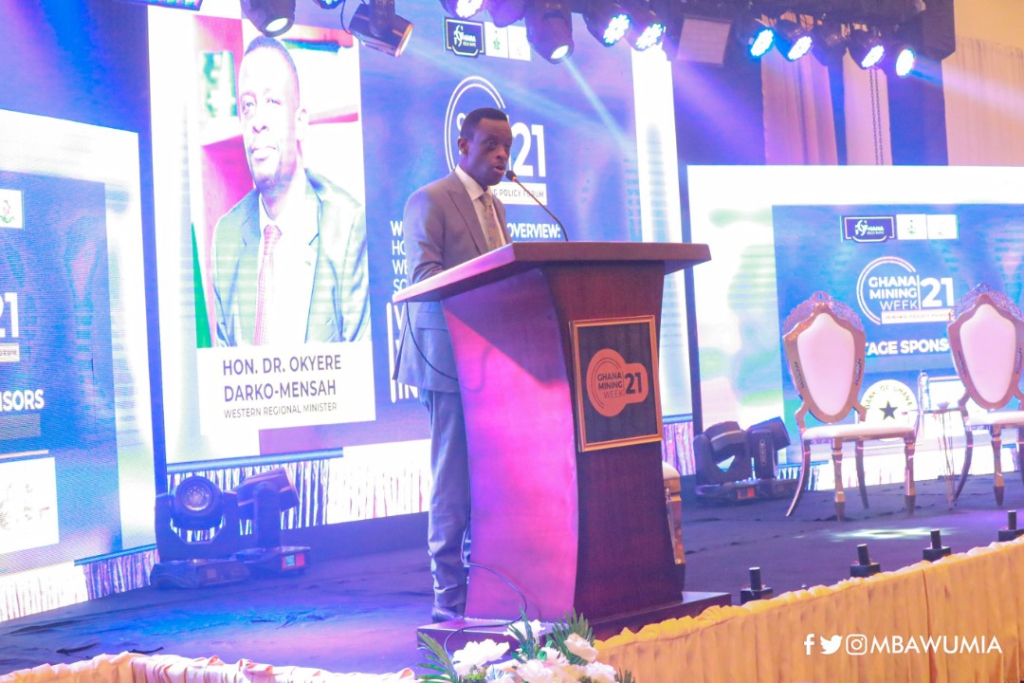
The Vice President shed more light on government’s plans when he gave the keynote address at the opening ceremony of the Ghana Gold Expo 2021 (Ghana Mining Week ’21), a mining policy forum, in Takoradi on Thursday, July 1, 2021.
The two-day forum brings together key stakeholders including the Minister for Lands and Natural Resources, Samuel Abdulai Jinapor; members of the Parliamentary Select Committee on Mining, large and small scale miners, traditional rulers, and members of the Diplomatic Corps to deliberate and chart a sustainable path for Ghana’s gold industry.
Speaking on the challenges in the mining sector and measures being put in place to address them, Vice President Bawumia stated that “it is well-known that the rise in illegal mining has, no doubt, been fueled not only by unemployment but also by the desire of the average community members to have a feel of the minerals.
“In this regard, government is putting in a lot of measures to stimulate job creation in an integrated and inclusive manner throughout the entire gold mining value chain.
“I am reliably informed by the Minister for Lands and Natural Resources that 20 Community Mining Schemes have begun, each employing about three thousand (3,000) persons. We expect to have a hundred of such schemes by the end of the year, and with each employing 3,000 it will make a significant impact in addressing unemployment in mining communities.
“Government is providing them with equipment and new technology that requires very little water, sometimes just a barrel, to extract the gold from the ore without using zero mercury or cyanide. This is sustainable mining that addresses the issue of galamsey, and with ready buyers such as the Bank of Ghana and the local refineries that are being set-up, we can confidently say we are building an integrated, inclusive gold industry,” he explained.
Disclosing that artisanal small scale mining accounts for 50% of Ghana’s gold production, Vice President Dr. Bawumia said the Bank of Ghana, through the newly introduced Gold Purchase Programme, will focus its purchasing attention on this sector as it works to strengthen future macroeconomic management and shore up the Cedi with real gold backing.
“Ghana is Africa’s largest gold producer, having overtaken South Africa in 2019. But the Bank of Ghana holds just 8.7 tonnes of physical gold in its reserves. For nearly three decades, almost 60 years, we have not added an ounce of gold to our reserve holdings. In comparison, Ghana’s gold reserves are equivalent to only 6.9 percent of South Africa’s gold reserve holdings of about 125.3 tonnes.
“Thus, the decision by the Bank of Ghana in June 2021 to implement a Gold Purchase Programme is very welcomed. The benefits are enormous, and we can only hope and encourage the Bank to continue with this initiative.”
The setting up of local refineries, such as one by the Precious Minerals Marketing Company (PMMC) and Gold Coast Refinery, would further broaden the market for sustainably mined gold, fill in a missing part of Ghana’s extractive sector while seeing to the growth of local refining, Dr Bawumia stated.
Expenditure Leakages
The private sector is also being supported to build their capacity and reverse the significant expenditure leaks from the domestic economy through the importation of several tools and equipment, which Ghana has the capacity to produce, he emphasised.
“We are equipping the private sector in ways to fill these leakages and build capacity for such production locally. We are doing this by working closely with industry and academia, like the University of Mines, to equip young professionals with the skills required to operate competitively in the sector and perform innovative researches.”
With all of these measures falling into place, the future of Ghana’s gold mining sector is bright, Dr Bawumia declared.
“I believe with our structured efforts of integrating the mining industry to propel local industries, the entire mining value chain would be ready to create jobs, and we intend to tap into it to develop our economy. Going forward, Ghana cannot, and would not continue to be merely exporters of just minerals and other raw materials to other countries.”
Latest Stories
-
US seeks changes to rejected $109m health compact with Ghana – Mahama
3 minutes -
Nine dead in mass shooting at Pennsylvania home
20 minutes -
‘Time for Ukraine to get new president,’ says Trump after Zelensky condemns diesel deal
23 minutes -
Hincapie injury adds to Arsenal issues after Guimaraes rescue act
31 minutes -
Henderson scores twice as Chelsea thumb Bournemouth
41 minutes -
Photos: Mentapulse Africa convenes health and labour summit to address talent retention
53 minutes -
Mahama inspects Nkokɔ Nketenkete plant, eyes Bechem as chicken capital
59 minutes -
Ghana not seeking full BRICS membership, applying as Partner Country – Ablakwa
1 hour -
Woman injures three people in third Poland school knife attack in a week
1 hour -
Ghana should join BRICS as partner, not member – NPP Bono East Regional Secretary
1 hour -
Ghana High Commission warns nationals in South Africa over protests in Johannesburg, Durban
1 hour -
Mahama praises Roads Minister for keeping Big Push contractors on their toes
1 hour -
World Cup Visa Scandal: ‘My client has not collected money for visas’ – Ampofo Ankrah’s lawyer
1 hour -
US immigration officials defend ICE agents who shot man in same car as child
1 hour -
Commentator Katie Zacharia picked as new White House press secretary
2 hours