

Audio By Carbonatix
Ghana is seeking deeper mining partnerships with China, with the government urging Chinese investors to move beyond the extraction and export of raw minerals and invest in processing, technology transfer, skills development and local supply chains.
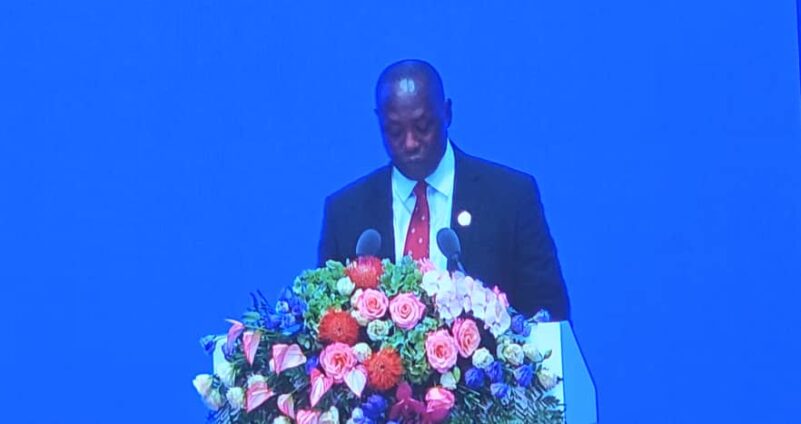
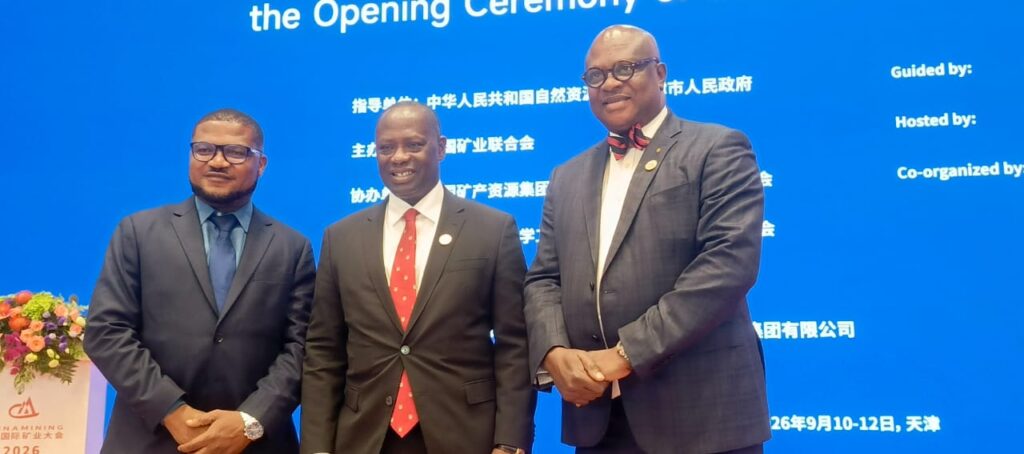
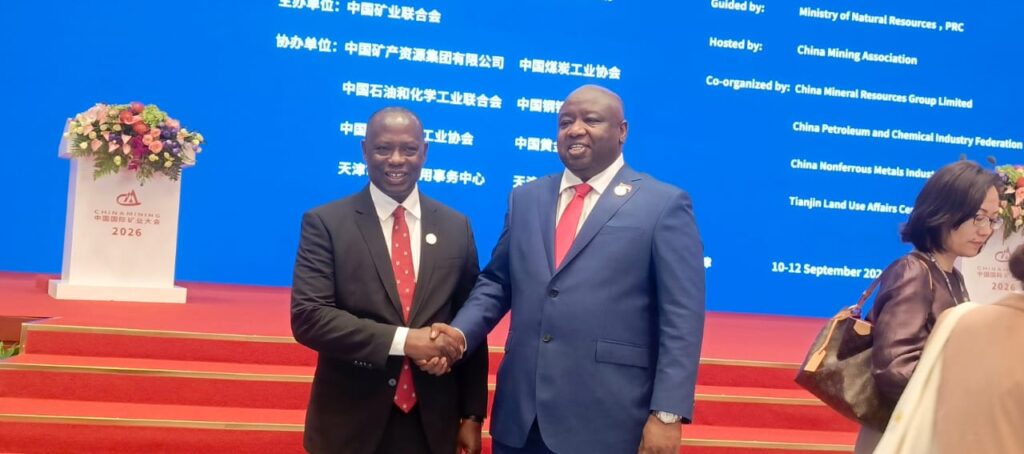
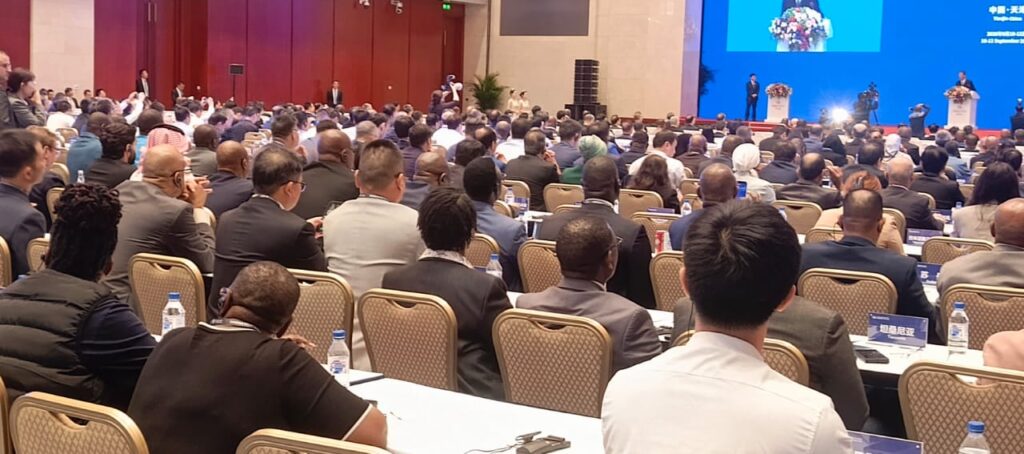
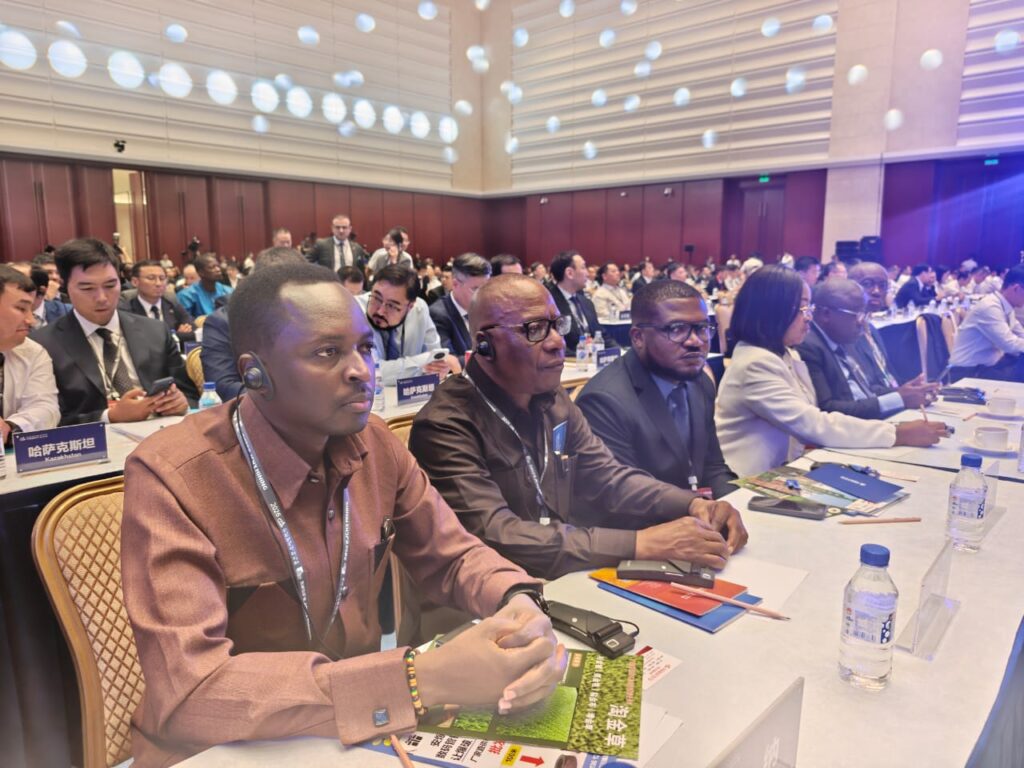
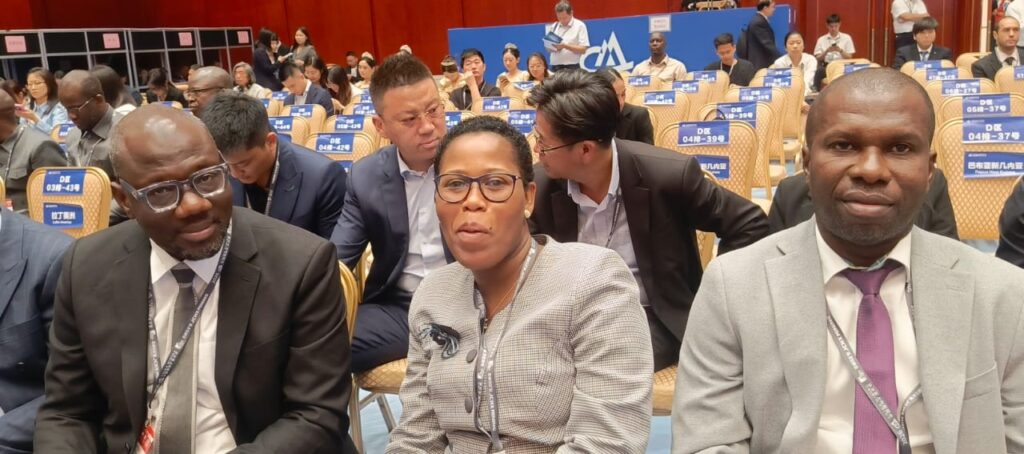
The Minister for Lands and Natural Resources, Emmanuel Armah-Kofi Buah, made the call when he addressed the Ministerial Forum on International Mining Cooperation and the opening of the 28th China Mining Conference and Exhibition (CHINA MINING 2026) in Tianjin, China.
Representing President John Dramani Mahama and the Ghanaian government, Mr Buah said Ghana was seeking a new generation of mining partnerships that would ensure greater value was retained in the country while providing investors with a stable and commercially viable operating environment.
He said Ghana's mineral resources must be used to drive industrialisation, create jobs and build local expertise rather than continue to be exported largely as raw materials.
“The next chapter of mining must be measured not simply by what we take from the ground, but by what we leave above it: industries, skills, technology, restored land, stronger communities and a more prosperous nation,” he said.
Ghana seeks value addition
Mr Buah said Ghana was determined to move away from a model in which resource-rich countries exported raw materials while most processing and value creation occurred elsewhere.
He said the government wanted future mining partnerships to support domestic processing, industrial development, job creation and skills development.
“For the young Ghanaian looking for work, value addition is not an economic theory. It is a job. It is a skill. It is a career. It is the possibility of building a life at home,” he said.
The Minister said Ghana was reviewing its mining regulatory framework, formalising artisanal and small-scale mining and strengthening transparency and responsible oversight across the gold value chain.
He also cited the presence of major Chinese mining companies, including Chifeng Gold Group, Shandong Gold and Zijin Mining, in Ghana as evidence of the potential for deeper cooperation.
“We want the next generation of partnerships to go further into processing, technology, skills development, infrastructure and local supply chains,” Mr Buah said.
He said China's experience in linking natural resources to processing, manufacturing, infrastructure and technology offered opportunities for Ghana.
“The question is no longer only, ‘Who will buy our resources?’ The more consequential question is: ‘What can we build together from them?’” he asked.
Green and intelligent mining
Mr Buah also called for greater Ghana-China cooperation in environmental management and the adoption of modern technologies in mining.
He cited the establishment of the National Anti-Illegal Mining Operations Secretariat (NAIMOS) and the advancement of the Responsible Cooperative Mining and Skills Development Programme (rCOMSDEP) as part of the government’s efforts to strengthen responsible and formalised small-scale mining.
He said environmental protection must remain central to Ghana's mining agenda, particularly in addressing the effects of illegal and irresponsible mining.
“A river is not simply an environmental statistic. It is drinking water. It is farming. It is the livelihood of a community. It is an inheritance held in trust for a child not yet born,” he said.
The Minister called for cooperation in areas including mine reclamation, tailings management and land restoration, drawing on China's technological experience.
He also said Ghana was modernising its national geological database, improving geological survey and mapping capabilities and strengthening digital traceability across the gold supply chain.
According to him, better geological data would reduce exploration risks, improve government decision-making and help investors make informed decisions.
He identified China's expertise in automation, geological science, mineral processing, data systems, engineering and infrastructure as areas that could support Ghana's transition towards more intelligent mining.
Mr Buah stressed, however, that technology partnerships must also build local capacity.
“We want structured technical exchanges and mining-specific training opportunities for Ghanaian engineers, geologists and regulators, so that cooperation leaves behind stronger Ghanaian expertise and institutions,” he said.
Ghana showcases investment opportunities
Ghana's participation in CHINA MINING 2026 is also being used to showcase investment opportunities in the country's mineral sector through Ghana Mining Day.
The programme, themed “Building Ghana’s Next Frontier: Geology, Value Addition and Investment Partnership,” is expected to highlight opportunities for international investors.
Mr Buah identified gold refining, an integrated aluminium industry, iron ore development and critical minerals as key areas for Ghana's next phase of mineral development.
He said Ghana wanted to develop its iron ore resources to support domestic steel production and position its critical minerals sector to contribute to emerging industries and technologies.
Deepening Ghana-China mining ties
Mr Buah described Ghana and China as longstanding partners, noting that bilateral relations had expanded over more than six decades from diplomacy into trade, education, infrastructure and other areas of cooperation.
He urged Chinese investors and international mining companies to view Ghana as a strategic destination for long-term investment.
“We have the resources. China has deep experience in capital, technology, processing, infrastructure and industrial development. Between us lies an opportunity to build commercially sound partnerships in which Ghana creates more value at home, investors succeed, communities share in prosperity, and both countries emerge stronger,” he said.
The Minister said Ghana's objective was to ensure that mining generated lasting benefits beyond the lifespan of individual mines.
“Our responsibility is to ensure that long after the mines have closed, the prosperity they created is still alive,” he said.
Latest Stories
-
2026/2027 GPL: Kelvin Nkrumah strike sends Medeama top of league table
1 minute -
Emmanuel City crowned champions of maiden Global Game Scouting Tournament
10 minutes -
Thomas Partey loses father Jacob Teye Partey
23 minutes -
Martin Kpebu explains when EOCO can arrest Manhyia South MP after securing court warrant
41 minutes -
EOCO’s reasons for seeking Manhyia South MP arrest warrant not justified – Kpebu
44 minutes -
MTN Ghana warns SMEs against sharing PINs amid digital fraud risks
46 minutes -
Yendi nursing students warn restricted access to skills lab could affect their training
46 minutes -
Minority awaits formal notice of arrest warrant for Manhyia South MP – Annoh-Dompreh
49 minutes -
LTIF announces 2026 Pan-African edition in Accra from October 6-7
49 minutes -
Mfantsipim needs broader funding partnerships to bridge infrastructure gap – Prof Baiden
50 minutes -
MP status must not shield anyone from law enforcement – Kwakye Ofosu
59 minutes -
EOCO had tactical team ready to arrest Baffour Awuah – Felix Kwakye Ofosu
1 hour -
Afoko can unite NPP’s factions, says Charles Owusu Juanah
2 hours -
Guardiola backing Man City after guilty verdicts
2 hours -
Annoh-Dompreh questions EOCO’s claim that Manhyia South MP was unavailable for questioning
2 hours