

Audio By Carbonatix
The Ghana Climate Compatible Growth (CCG) Network is uniting stakeholders across sectors to champion sustainable energy and transportation solutions in Ghana.
In August 2024, the CCG launched Special Interest Groups (SIGs) to focus on the country’s energy transition and climate-resilient development. The five SIGs address key areas—New Energy Vehicles, Green Hydrogen, Financing the Energy Transition, Inclusive Net-Zero Emissions Future, and Clean Cooking—each with a thematic focus to promote the adoption of CCG research and knowledge. These groups will support capacity-building initiatives and generate new insights to shape Ghana’s sustainable future.
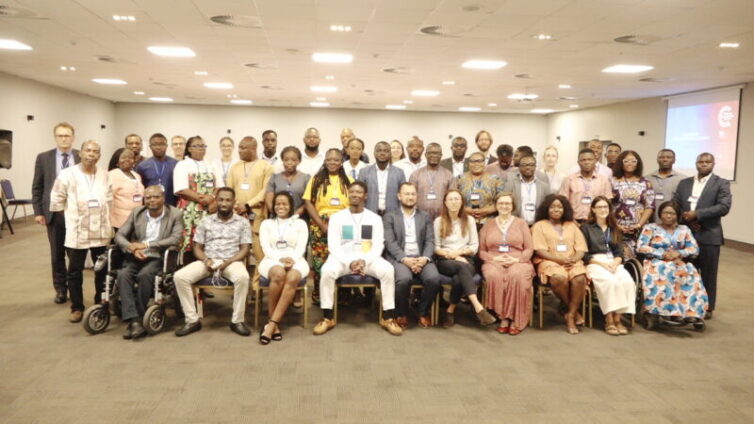
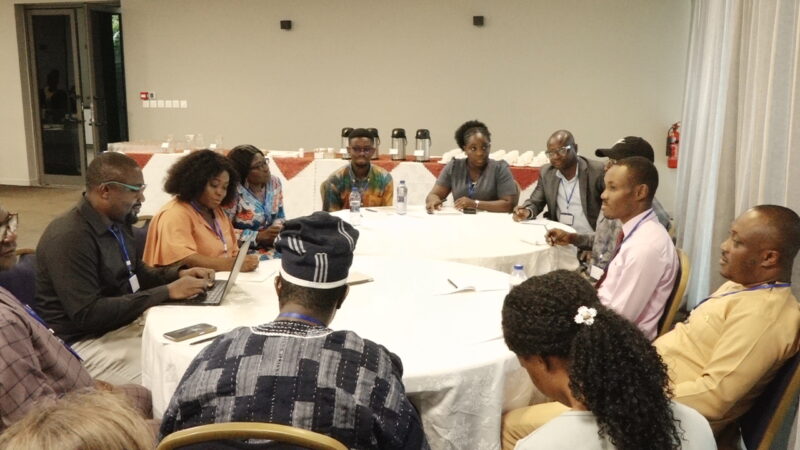
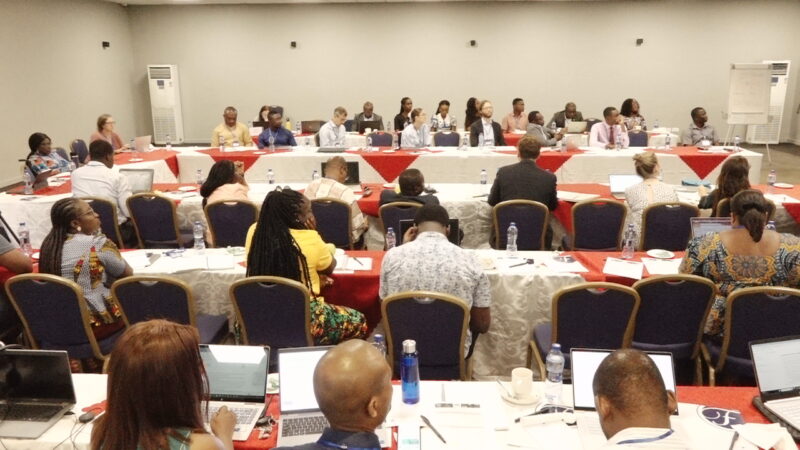
During the Network’s annual workshop in Accra, 68 experts from academia, industry, government, and civil society gathered to discuss strategies related to infrastructure, energy, and transportation transitions.
The workshop encouraged dialogue on transforming these ideas into impactful projects that address decarbonization goals in the energy and transport sectors through research, investment, and analysis.
Achieving net-zero emissions by 2060 will require emissions to peak by the mid-2030s, followed by a rapid decline. Meeting this goal presents considerable financing challenges, with Ghana’s National Energy Transition Framework estimating that a cumulative capital investment of about $550 billion will be required.
The power and transportation sectors alone represent around 90% of this figure, with 69% allocated to transportation, 21% to power and hydrogen, 7% to industry, and 2% to cooking and building.
Funding is expected from diverse sources, including the Government of Ghana (GoG), Multilateral Development Banks (MDBs), Development Partners (DPs), and Private Financiers and Beneficiaries (PF&B).
Financing for the power generation plan, for example, is projected to include contributions of 12% from GoG, 43% from MDBs, 11% from DPs, and 35% from PF&B. Specific financing structures are in place for each decade, starting with $8.3 billion by 2023, $15.2 billion for 2030-2040, $16.7 billion for 2040-2050, $76.3 billion for 2050-2060, and $149.5 billion for 2060-2070.
Coordinator of CCG activities in Ghana, Prof Francis Kemausuor, emphasized the collaborative nature of the SIGs, which bring together individuals to conduct research, share ideas, and conduct analysis in key areas supporting Ghana’s sustainable energy and transportation goals.
“What we want is to move towards sustainable energy and transportation in Ghana,” he noted.
Deputy Director of Climate Compatible Growth Programme (CCG), Prof Jairo Quiros-Tortos expressed enthusiasm for CCG’s contributions to Ghana’s transition from fossil fuels to clean energy by 2050.
Reflecting on the productivity of the two-day workshop, he said, “This work will give us the foundation to conduct in-depth analysis using freely available CCG quantitative and qualitative tools to support the implementation of Ghana’s transition plans.”
Country Programme Manager for Centre for Global Equality, Dr Elizabeth Tennyson, highlighted the importance of co-creative research and capacity-building initiatives that align with Ghana's sustainable development objectives.
“This is our second annual workshop in Ghana, building on last year’s inception workshop, where we identified Ghana’s priority areas. This year, it’s exciting to see the diverse groups and focal areas, particularly around a just energy transition and climate infrastructure resilience. I’m looking forward to next year’s developments,” she said.
Adding to the dialogue, Senior Policy Analyst and Monitoring, Evaluation and Learning Manager at Africa Center for Energy Policy, Maybel Acquaye emphasized the importance of renewable energy and clean cooking solutions, especially as Ghana’s reliance on biomass fuels poses significant challenges for achieving clean cooking targets.
“To ensure that no one is left behind, clean cooking has become imperative,” she stated.
The Ghana CCG Network, through its SIGs and collaborative partnerships, remains committed to creating sustainable pathways for energy and transportation transitions, setting a strong foundation for a resilient and climate-compatible future for Ghana.
Latest Stories
-
Anti-LGBTQ Bill: NDC’s arrogance is worrying – Hassan Tampuli
8 minutes -
Let’s give OSP time to mature, not to scrap it – Hassan Tampuli
12 minutes -
Nigeria convicts 386 Islamist militants in mass trials
17 minutes -
Djibouti president wins election with 97.8% of vote, state media says
21 minutes -
We don’t have mandate to deduct tax from rent allowance of security services personnel – Interior Ministry clarifies
35 minutes -
Ablakwa receives Presidential Special Envoy on Reparations to advance global agenda
53 minutes -
Christina Koch becomes first woman to travel around the moon on Artemis II
1 hour -
Epstein survivors’ calls to meet King Charles and Queen harder to ignore as US visit approaches
1 hour -
UN Secretary-General names Ghana’s Anita Kiki Gbeho as South Sudan envoy
1 hour -
Mali withdraws recognition of Sahrawi Republic, backs Morocco’s autonomy plan
1 hour -
Gov’t distributes over 8,500 laptops to One Million Coders project
1 hour -
Julius Debrah, ‘man to beat’ as NDC’s James Agbey dismisses Musah Dankwah’s polls
1 hour -
GPRTU in Savannah Region to protest alleged eviction in Damongo
2 hours -
Re: Reinsurance does not replace process — A response to the SIGA–SIC defence
2 hours -
Gender Ministry supports Harriet Amuzu in ongoing abuse case
2 hours