

Audio By Carbonatix
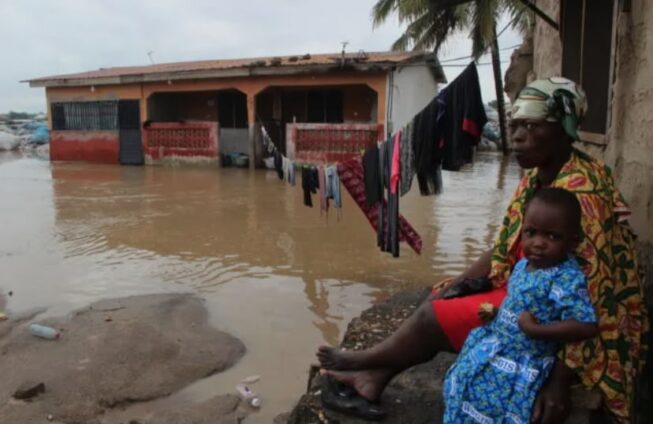
Ghana does not lack information about flooding, but the country’s biggest challenge is turning existing knowledge into effective action, a Public Health Researcher, Judith William, has said.
Judith William of Ensign Global University said researchers already have enough evidence on flood-prone communities, vulnerable populations and the health risks associated with flooding, but weak implementation continues to undermine preparedness efforts.
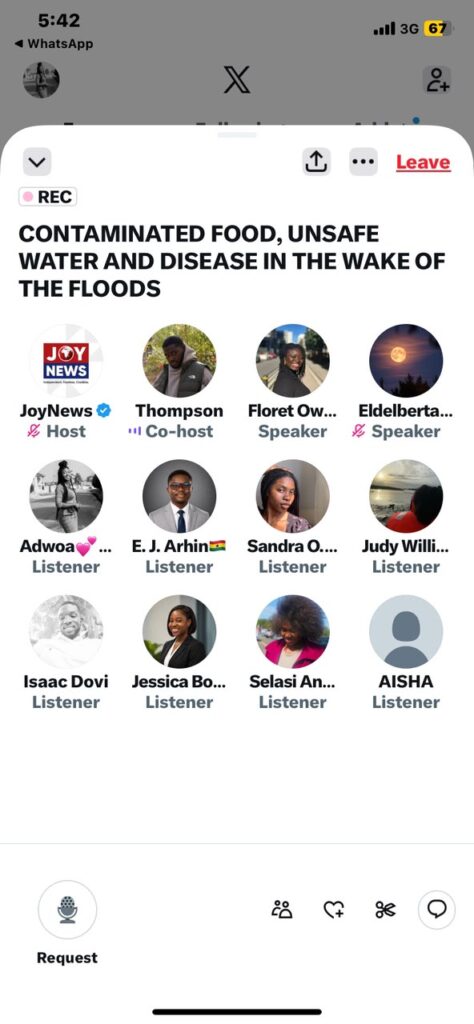
Speaking during the seventh edition of the Loud and Green XSpaces conversation hosted by JoyNews, she challenged the view that inadequate data is the main reason flooding continues to trigger public health emergencies.
“We know which neighbourhoods flood. We know which populations lose access to essential services every single time,” she said.
“We know what to do. What we need is the systems and the will to act.”
According to Ms William, years of research have produced recommendations on improving flood preparedness, disease prevention and emergency response, but many of these proposals have not been translated into practical interventions.
She said continued research alone would not solve Ghana’s flood challenges without commitment from institutions responsible for implementing solutions.
“We can research and research and provide all the solutions we need, but if there is no willingness to implement the recommendations, then the research becomes pointless,” she stated.
The Public Health Researcher also urged the public to rely on credible sources, including the Ghana Health Service, scientific publications and verified media platforms, for accurate information on flood-related health risks.
The discussion, which focused on “Contaminated Food, Safe Water and Disease in the Wake of Floods,” highlighted the need for stronger coordination between researchers, policymakers and communities.
Participants stressed that reducing the health impact of flooding requires more than collecting data, but sustained political commitment, investment in prevention and the effective application of evidence already available.
She maintained that Ghana’s ability to manage future flood emergencies will depend largely on whether existing knowledge is matched with decisive action.
Latest Stories
-
Ghana’s BRICS move requires clear strategy to manage risks – Godfred Bokpin
1 minute -
Pay teachers realistic income – Duncan Amoah to gov’t
17 minutes -
Bechem to become chicken capital of Ghana – Mahama projects
19 minutes -
Gov’t targets recruitment of 16,500 health professionals in 2026
40 minutes -
Two-week strike will not derail academic calendar – GNAT President
55 minutes -
Headmaster detained after BBC investigation into alleged sexual abuse of students
1 hour -
GNAT pushes for clear implementation procedures of teachers’ conditions of service
1 hour -
Recurrent strikes threaten quality of education and academic calendars – Prof Bokpin
1 hour -
‘Cockroach’ group leaders among hundreds detained in Delhi protest
2 hours -
Don’t let speed of information become your judgement – CJ tells new lawyers
2 hours -
World Cup visa scandal: People have leveraged public office to facilitate fraud – Senyo Hosi
2 hours -
Glut! Farmers count losses as prices crash, customers happy
3 hours -
GSA postpones auction of unserviceable vehicles
3 hours -
Man charged with attempted murder after stabbing
3 hours -
World Cup visa scandal: Senyo Hosi says issue goes beyond calls for Sports Minister’s resignation
3 hours