

Audio By Carbonatix
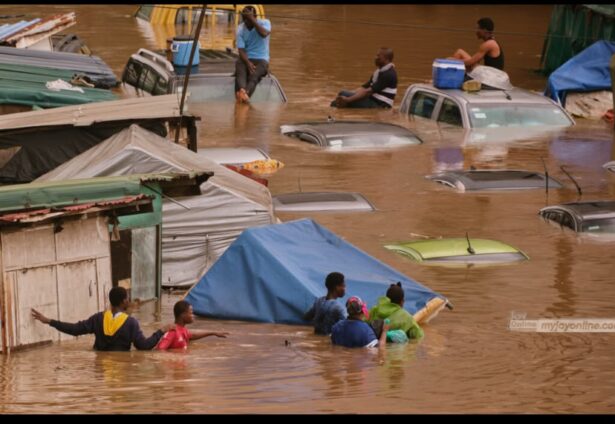
Medical Doctor, Dr Floret Maame Owusu, has called for a shift in Ghana’s approach to flood management, arguing that many health challenges associated with flooding can be prevented before disaster strikes.
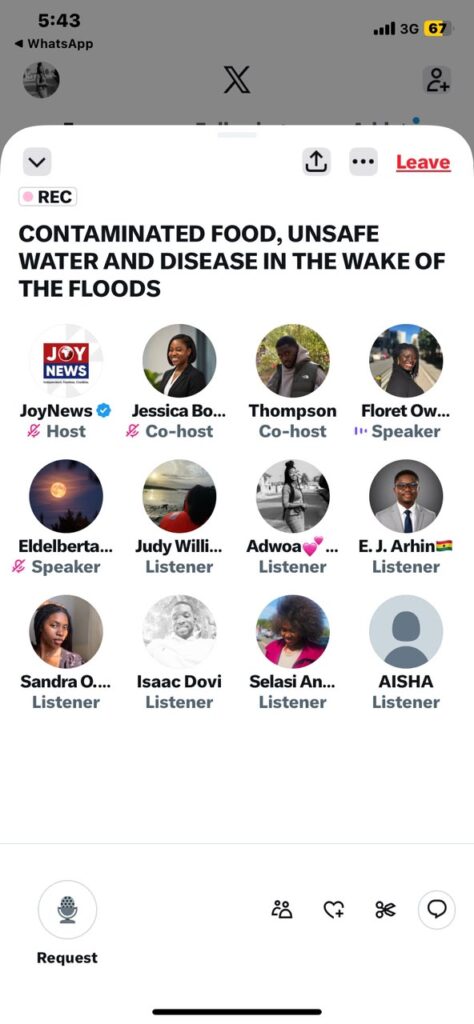
Speaking during the seventh edition of the Loud and Green XSpaces hosted by JoyNews on the theme “Contaminated Food, Safe Water and Disease in the Wake of Floods,” Dr Owusu said Ghana’s flood response remains largely reactive, with interventions often coming after communities have already suffered severe impacts.
She stressed that effective disaster management should focus more on prevention and preparedness rather than emergency response.
“I believe the success of any disaster management is in how many people we did not need to save compared to how many people we now have to save after the disaster,” she said.
Dr Owusu identified public education as one of the major gaps in Ghana’s flood preparedness efforts.
She said communities should be equipped with knowledge on water purification, safe food handling practices and early recognition of symptoms linked to diseases such as cholera, malaria and diarrhoeal infections before the rainy season begins.
“We don’t need to wait for floods before we are running around trying to deal with diarrhoeal diseases and malaria. A lot of these can be avoided if people knew what to do even before the floods occur,” she stated.
The medical doctor explained that early education and preventive measures could significantly reduce pressure on health facilities during flood emergencies.
She also called for increased investment in research to better understand the long-term health consequences of flooding and improve Ghana’s ability to predict and respond to disease outbreaks.
According to her, reliable health data would enable authorities to prepare hospitals, deploy resources effectively and protect vulnerable communities ahead of disasters.
Dr Owusu argued that prevention remains more cost-effective than responding to widespread disease outbreaks after floods occur.
She therefore urged policymakers to make public education and community preparedness central components of Ghana’s disaster management strategy as the country continues to grapple with recurring floods and their health implications.
Latest Stories
-
Absa Bank Ghana names Stephen Ato Frimpong as Board Chair
7 minutes -
Pickford ‘almost caused crash’ with careless driving
9 minutes -
Author and former politician Jeffrey Archer dies aged 86
20 minutes -
No education reform can succeed without teachers – Education Ministry
29 minutes -
Gauff condemns racist abuse after China Open win
45 minutes -
Medvedev disqualified for hitting spectator with ball
54 minutes -
Oliseh scores twice in late comeback win for France
1 hour -
Pentagon stops using Anthropic AI tools after blacklisting company, BBC told
1 hour -
From despair to dance: Family of nurse Salomey Baffoe rejoices after GH¢100k bail granted
2 hours -
Kejetia Phase III pricing talks loom as government moves to restart stalled works
2 hours -
Nchiraa Yam festival: Two killed, 14 injured as police restore calm
2 hours -
I draw inspiration for my songs from Reggae music – Lyrical Joe
2 hours -
AI must not replace human judgment in public spending – BoG Governor
3 hours -
Ghana should withdraw from 2027 AFCON – Kojo Addae Mensah
3 hours -
Team Ghana departs Accra for Angola ahead of Karting Africa Trophy
3 hours