

Audio By Carbonatix
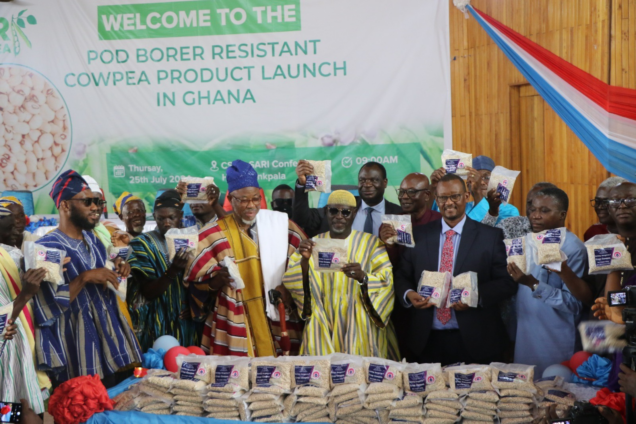
The Council for Scientific and Industrial Research-Savanna Agricultural Research Institute has released the pod borer-resistant (PBR) cowpea, the first genetically modified crop (GMO) to be developed in the country, for commercial cultivation.
This cowpea variety is resistant to diseases and pests, particularly the pod borer, matures early, is highly nutritious, and produces higher yields.

With support of partners such as the United States Agency for International Development, and the African Agriculture Technology Trust Foundation (AATF), it took CSIR-SARI over a decade of research to get this PBR cowpea variety, as well as secure the necessary regulatory approval for its commercialisation in the country.
Professor Paul Bosu, Director-General of CSIR, speaking during the launch of the PBR cowpea at Nyankpala in the Northern Region on Thursday, said the release of the variety was in line with efforts towards food security in the country.
Cowpea is a vital crop for many smallholder farmers in the country, and it is a major source of protein and other nutrients for households, and its cultivation supports the livelihoods of many farmers.
However, the productivity of cowpea has been severely hampered by devastating impact of the pod borer pest; this pest can cause yield losses of up to 80 per cent leading to food insecurity and economic hardship for farmers hence the PBR cowpea.
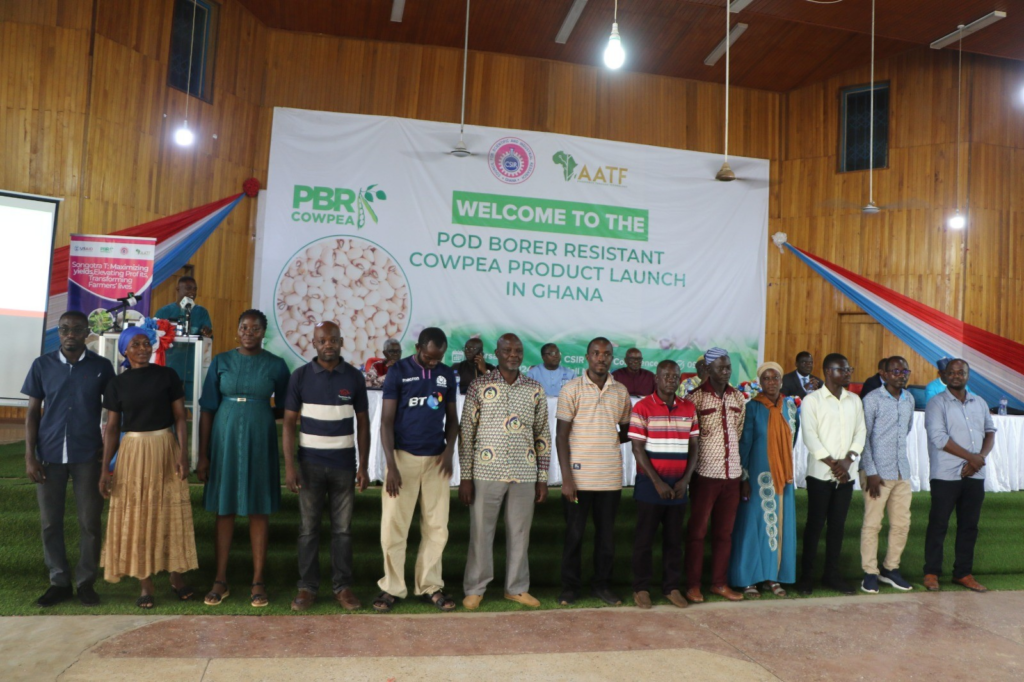
Professor Bosu noted that the release of the variety was a special day for the country, saying CSIR was committed to cutting edge science to address national challenges.
The Northern Regional Minister, Alhaji Shani Alhassan Saibu, whose speech was read on his behalf, said the release of the variety was testament to government's commitment to advancing agriculture through technology.
He added that by releasing the variety, "We are taking bold steps towards food security and improving the livelihoods of the people."
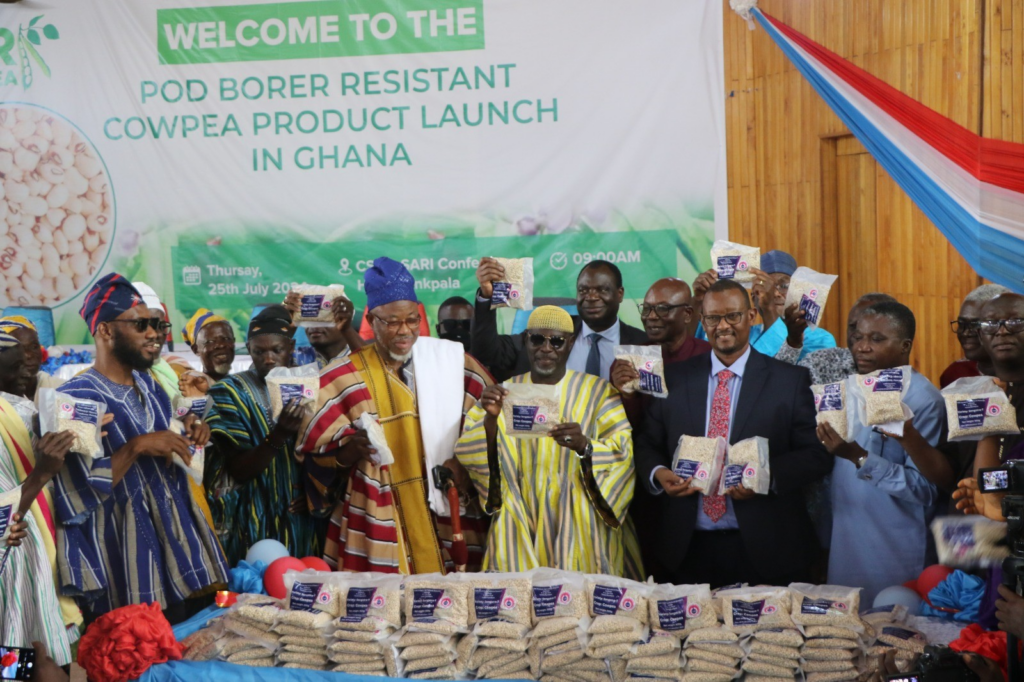
Chairman of the board of Trustees of AATF Professor Aggrey Ambali,said, "By adopting the PBR cowpea, farmers can look forward to improved productivity, increased incomes, and enhanced food security. The benefits of this innovation will go a long way in contributing to poverty reduction and better livelihoods of farming communities."
Various stakeholders, including farmers and seed producers, in solidarity messages, expressed gratitude to partners for releasing the variety to boost productivity and incomes.
Latest Stories
-
Power restoration fault suspected in Kumasi Central Market fire
1 hour -
The 7-foot giant of Ngleshie Amanfro: Seven-foot Ghanaian Ephraim Saawa dreams of joining the national basketball team
2 hours -
Government promises support for Kumasi Central Market fire victims
2 hours -
Vibes The Movie: Big Ghun’s Ghanaian film earns five nominations at 2026 REFFA
3 hours -
MamaCare CEO warns unresolved conflicts among health workers could undermine maternal and neonatal care
3 hours -
Health professionals urged to translate medical knowledge into practice to save mothers
3 hours -
Conflicts among care providers linked to maternal, neonatal deaths – Expert
5 hours -
GIS marks 10th TIME conference, champions improved teaching practices
5 hours -
BRICS Or Balance? What Ghana’s bid really means
5 hours -
GPRTU wants full TRAFFITECH-GH implementation to start in 2027
6 hours -
Mahama announces plans to import electric wheelchairs for PWDs
6 hours -
KGL U17 Colts 2026: Western beat Prempeh Elite Academy to set up final final with Greater Accra Region
6 hours -
Late Solanke strike salvages 10-man Spurs draw at Man United
6 hours -
Gender Ministry to monitor welfare of Nana Akua Addo’s children amid domestic violence case
6 hours -
Benedict Okyere Yeboah: Ghana’s football problem goes beyond sacking a coach
6 hours