

Audio By Carbonatix
The Council for Scientific and Industrial Research -Savannah Agricultural Research Institute CSIR-SARI) has encouraged farmers, particularly those in Northern Ghana, to embrace its newly developed climate-smart and high-yielding Cowpea variety to help maximize profit and increase production, among others.
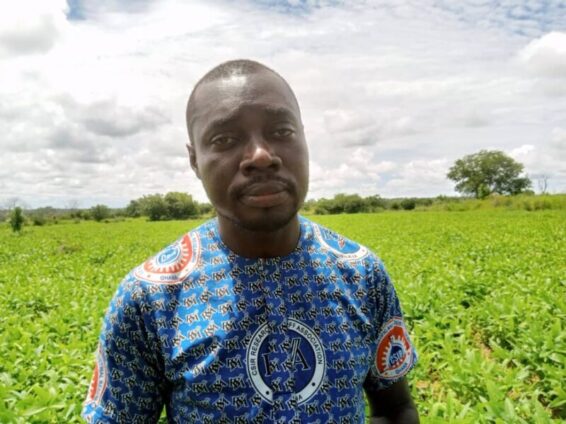
"I will encourage farmers in the Savannah Region and Northern Ghana and Ghana at large to go in for this variety. The variety has several production potentials, and it will be made available for cultivation by a large group of farmers in the 2025/26 farming season", Dr Theophilus Tengey, Cowpea Breeder, indicated.
In an interview with Myjoyonline, the Research Scientist said the variety comes with high nutritional values including its natural ingredients of protein.
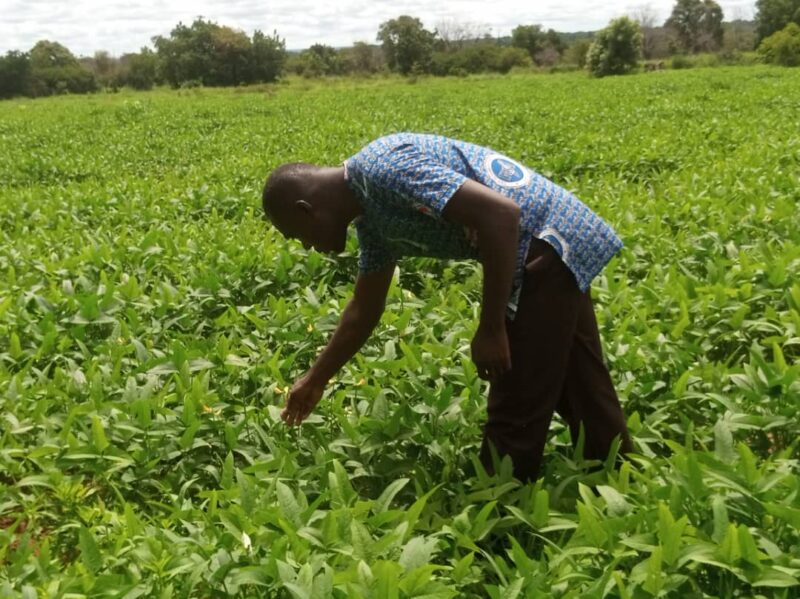
He said the variety also has an additional value of high iron and zinc content, which is recommended for pregnant women and children.
He explained that the tender green leaves of the cowpea make it suitable for soup and stews.
According to the Cowpea Breeder, a lot of considerations, including climate change, yields, and family health, triggered the development of the variety.
He said the Council for Scientific and Industrial Research -Savannah Agricultural Research Institute (CSIR-SARI) in partnership with the International Institute for Tropical Agriculture (IITA), under the Accelerated Varietal Improvement and Seed Delivery of Legumes and Dryland Cereals in Africa (AVISA) project, developed the improved Cowpea variety for farmers in Ghana.
Dr Tengey stated that the new variety was accepted for release in September 2022 by the National Varietal Release Committee of Ghana and given approval for production by the National Seed Council of Ghana in July 2024. Now, through the Dryland Crops Project under the kind courtesy of IITA and the International Maize and Wheat Improvement Center (CIMMYT), is increasing the quantities of seeds of this variety for uptake by seed companies and farmers in Ghana.
"We observed that the variety of Cowpeas that farmers grow in their fields are not giving the expected yields, and we have seen that those materials (varieties) are not what the market women and consumers need. Some of these varieties take a long time to cook resulting in the use of a significant amount of energy. Consumers want to save on energy use and therefore prefer cowpea varieties which cook fast", he indicated.
He further indicated that some market women go in for cowpea from Niger because of their seed size and short cooking time a development he said is not helping the Country and its citizens.
Dr Theophilus Tengey explained that to help mitigate these challenges, his outfit, CSIR-SARI, as part of its breeding objectives, seeks to develop cowpea varieties that fit the various market segments and this led to the development and release of SARI-tuya.
This variety has a, “yield potential of 2200 Kg/ha. It has a large seed size with its characteristic white seed coat with brown eyes. Other characteristics include resistance to striga and diseases, tolerance to drought, short cooking time, and high iron and zinc content".
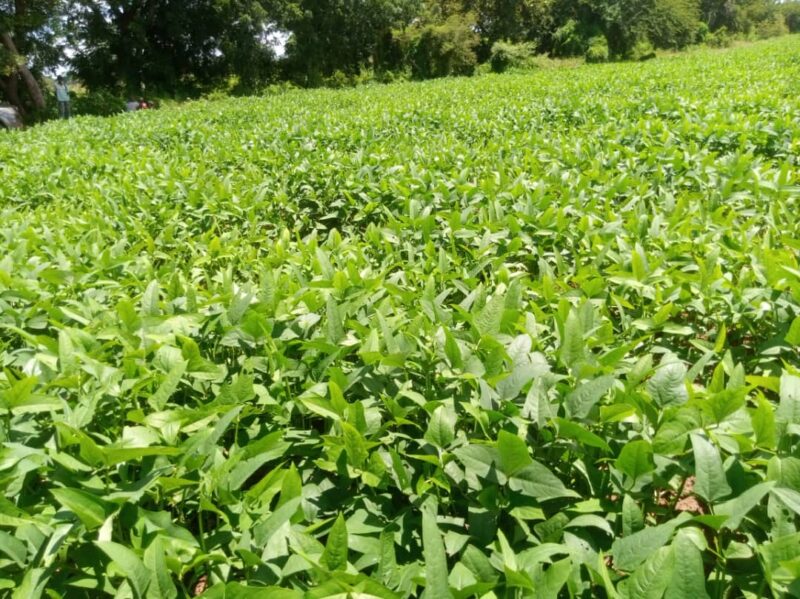
"As you can see for yourself, SARI-tuya is drought tolerant and as you know, this year, the Country experienced drought and most farmers are looking for materials (varieties) that are drought tolerant I'm very happy that the National Seed Council (NSCG), approved this variety for production", he stressed.
The Research Scientist said the Council undertook the project with funding from the Bills and Melinda Gates Foundation through the International Institute of Tropical Agriculture and after several years of testing, they got the approval in 2022 from the National Seed Council.
He said he is optimistic this variety is going to improve the livelihood of farmers with its high-yielding and appealing characteristics.
He said the variety takes only seventy-one (71) days to reach its full maturity, and farmers can get at least 15 bags of 100kg sacks per hectare, " it has an erect growth habit".
"As we can see, we are yet to see flowers coming out, and within three weeks, this material will be ready for harvesting," he stated.
Dr Tengey said he is hopeful that the open market will embrace the variety because it is going to improve food security in Northern Ghana, adding, "Before we released this material, we engaged our consumers in the selection process, and we also made participatory Varietal selection where the farmers selected the materials they want, and we've gotten the approval from our studies," Dr Theophilus Tengey.
He says a lot of farmers are already demanding the variety, adding that with the hikes in prices of Cowpeas in the market, he is convinced that farmers who cultivate SARI-tuya will get good money to address their needs.
Latest Stories
-
Power restoration fault suspected in Kumasi Central Market fire
42 minutes -
The 7-foot giant of Ngleshie Amanfro: Seven-foot Ghanaian Ephraim Saawa dreams of joining the national basketball team
1 hour -
Government promises support for Kumasi Central Market fire victims
1 hour -
Vibes The Movie: Big Ghun’s Ghanaian film earns five nominations at 2026 REFFA
2 hours -
MamaCare CEO warns unresolved conflicts among health workers could undermine maternal and neonatal care
2 hours -
Health professionals urged to translate medical knowledge into practice to save mothers
2 hours -
Conflicts among care providers linked to maternal, neonatal deaths – Expert
4 hours -
GIS marks 10th TIME conference, champions improved teaching practices
4 hours -
BRICS Or Balance? What Ghana’s bid really means
5 hours -
GPRTU wants full TRAFFITECH-GH implementation to start in 2027
5 hours -
Mahama announces plans to import electric wheelchairs for PWDs
5 hours -
KGL U17 Colts 2026: Western beat Prempeh Elite Academy to set up final final with Greater Accra Region
5 hours -
Late Solanke strike salvages 10-man Spurs draw at Man United
5 hours -
Gender Ministry to monitor welfare of Nana Akua Addo’s children amid domestic violence case
6 hours -
Benedict Okyere Yeboah: Ghana’s football problem goes beyond sacking a coach
6 hours