

Audio By Carbonatix
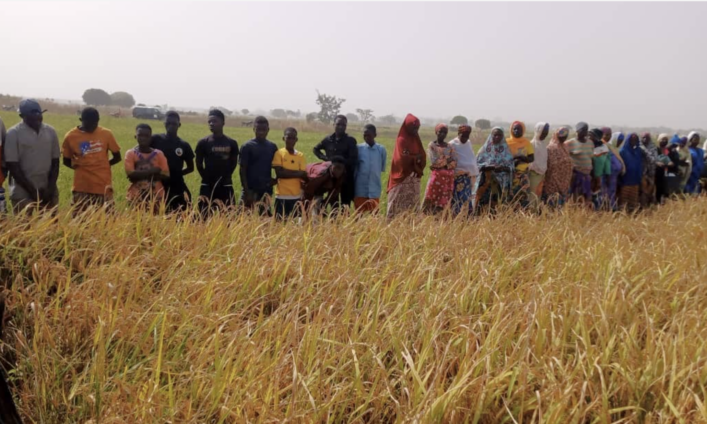
Farmers and other actors in the agricultural sector at the Botanga Irrigation Scheme in the Kumbungu District of the Northern Region have been introduced to some improved rice varieties as part of efforts to enhance sustainable agricultural practices.
They were introduced to the field performance of six different drought-tolerant rice varieties, five other hybrid rice varieties amongst others.
This formed part of a collaboration between the Council for Scientific and Industrial Research-Savanna Agricultural Research Institute (CSIR-SARI) and AfricaRice Centre under the phase two of the Technologies for African Agricultural Transformation Project (TAAT ll).
Mr Alex Yeboah, Focal Person for TAAT ll and Acting Head of the Rice Improvement Programme at CSIR-SARI, speaking during the event, said the project established the field not only at the Botanga Irrigation Scheme but also at the Tono Irrigation Scheme in the Upper East Region.
He said “Today, we are here to demonstrate the potential of climate resilient rice varieties as a way of showcasing improved technologies to farmers.”
He said, “These hybrids have not been released yet but in an effort to get them released and registered, they will have to be evaluated in different agroecological zones in the country hence farmers, agricultural extension agents and processors have been invited to the field to appreciate their performance and also help in their selection.”
He said it was also to highlight the yield potential and growth duration of the varieties while allowing farmers to observe and make informed choices to improve their fortunes in the agricultural sector.
Mr Fuseini Shahadu, an Agricultural Extension Agent in the Kumbungu District, who supported the field establishment, explained that the fields were established when the season was over, but they took a smaller number of days to mature compared to most varieties cultivated at the scheme.
Madam Fatimatu Imoro, a farmer, who participated in the transplanting and field activities, said “l have noticed that these varieties are different from what I cultivated over the years; the yield is good compared to the ones I have in my farm. This is what I will be cultivating in the future.”
Latest Stories
-
Power restoration fault suspected in Kumasi Central Market fire
1 hour -
The 7-foot giant of Ngleshie Amanfro: Seven-foot Ghanaian Ephraim Saawa dreams of joining the national basketball team
2 hours -
Government promises support for Kumasi Central Market fire victims
2 hours -
Vibes The Movie: Big Ghun’s Ghanaian film earns five nominations at 2026 REFFA
3 hours -
MamaCare CEO warns unresolved conflicts among health workers could undermine maternal and neonatal care
3 hours -
Health professionals urged to translate medical knowledge into practice to save mothers
3 hours -
Conflicts among care providers linked to maternal, neonatal deaths – Expert
5 hours -
GIS marks 10th TIME conference, champions improved teaching practices
5 hours -
BRICS Or Balance? What Ghana’s bid really means
5 hours -
GPRTU wants full TRAFFITECH-GH implementation to start in 2027
6 hours -
Mahama announces plans to import electric wheelchairs for PWDs
6 hours -
KGL U17 Colts 2026: Western beat Prempeh Elite Academy to set up final final with Greater Accra Region
6 hours -
Late Solanke strike salvages 10-man Spurs draw at Man United
6 hours -
Gender Ministry to monitor welfare of Nana Akua Addo’s children amid domestic violence case
6 hours -
Benedict Okyere Yeboah: Ghana’s football problem goes beyond sacking a coach
7 hours