

Audio By Carbonatix
Let me begin with a question that may make some people uncomfortable: when the best students in Ghana finish school, where do we expect them to go? Medicine? Engineering? Computer science? Banking? Law? And what happens to those who do not get the grades? Too often, agriculture becomes one of the answers.
That mindset should concern us. If agriculture is presented as the option for students who could not gain admission to more prestigious programmes, we risk discouraging our brightest young people from entering one of the sectors most critical to the country's survival.
Agriculture as a "Consolation Prize"
In Ghana, when a child says, "I want to become a doctor," parents are usually pleased. Engineering brings excitement, and computer science is increasingly seen as a pathway to the future. But when the same child says, "I want to study agriculture," the reaction can be different. Someone may ask: "Agriculture? Is that because your grades were not good enough?"
That question captures a troubling perception: agriculture has become something students pursue when they cannot get into other programmes.
Yet every Ghanaian depends on it. We can postpone employing another banker or building another office, but we cannot go long without food. A sector essential to our survival is treated as less important than the professions that depend on it.
The Warning Signs
According to the Ministry of Food and Agriculture, the average age of a Ghanaian farmer is about 55 years. The people who have spent decades producing our food are getting older. Who will take over from them?
The answer should be the younger generation. This is not simply an agricultural issue; it is a national one.
Ghana Statistical Service data shows that agriculture employed about five million people during the first three quarters of 2025. This is not a marginal sector.
So why do we not talk about agricultural careers with the same enthusiasm we bring to medicine, engineering and technology? Why do our brightest students not aspire to become agricultural scientists, food scientists, agricultural economists or biotechnology specialists?
Agriculture Is Changing
The agriculture of our grandparents is not the agriculture Ghana needs tomorrow.
The farmer of the future will need more than a cutlass and experience. Weather data can help determine when to plant. Sensors can monitor soil and drones can monitor farms. Artificial intelligence can help predict diseases and crop yields. Engineers can design irrigation systems, and scientists can develop crops capable of surviving changing weather conditions.
Someone has to build and improve these systems. That means agriculture will require people with skills in mathematics, science, technology, business and innovation.
Which brings us to the central question: we say we want modern agriculture, but do we want our brightest young people to build it?
It Is Not About "Good" or "Bad" Students
A student who does not achieve excellent grades is not a bad student. Academic performance does not measure every form of ability, creativity or potential.
The real problem is the message we send. If we tell young people that the highest achievers should pursue medicine, engineering and technology while agriculture is reserved for those who fall short, we should not be surprised when talented young people stay away.
The engineers who will design better irrigation systems, the scientists who will develop climate-resilient crops and the entrepreneurs who will connect farmers to markets may already be sitting in our classrooms. The question is whether we are encouraging them to see agriculture as a sector worthy of their ambition.
Imagine If We Changed the Conversation
Imagine a secondary school student telling his or her parents, "I want to become an agricultural engineer." Instead of "But you got good grades. Why agriculture?" imagine the parents responding: "Excellent. What problem are you going to solve?"
That is the Ghana we should be building. A country where our brightest students develop affordable irrigation technologies, young mathematicians model crop yields, computer science graduates connect farmers to markets, engineers design affordable machinery, and scientists develop crops suited to our changing climate.
That is agriculture and not the agriculture of the past, but the agriculture of the future.
What Kind of Country Are We Preparing?
Ghana spends considerable energy discussing school placement, grades, and the programmes students qualify for. But perhaps we need a bigger question: what kind of country are we preparing these young people to build?
We cannot talk about food security while treating agricultural careers as second-class options. We cannot complain about food imports while failing to make agriculture attractive to talented young people. And we cannot wait for a crisis before asking where our agricultural scientists, engineers and researchers are.
By then, it may be too late.
Ghana Needs a New Agricultural Dream
We need to change the story.
A young Ghanaian should be able to say, "I want to be a farmer," and people should hear entrepreneur. "I want to study agriculture," and people should hear scientist. "I want to build an agritech company," and people should hear future CEO.
That is how we change agriculture not only with tractors, fertiliser or government programmes, but by changing our perception of who belongs in it.
Today, we are deciding which students are "good enough" for certain careers. Tomorrow, those students will become the professionals who shape Ghana. But who will transform our food system? Who will solve irrigation, storage and post-harvest losses?
Ghana cannot afford to make agriculture the place where young people end up because they could not get into something else. It is not the leftover career. It is not the consolation prize. Agriculture is where our food comes from.
If we are serious about the Ghana we want to build, some of our most talented and ambitious young people must choose to build it.
Because one day, sooner than we think, the question may be much simpler: who will feed Ghana?
*******
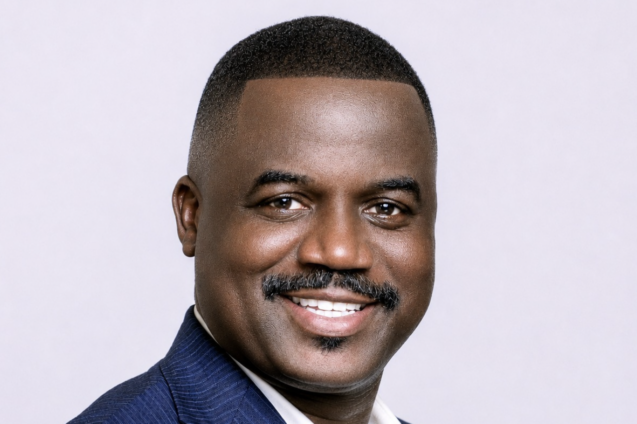
By Dr Raymond Dumeh, Acting Dean of Business and Communications Arts
Latest Stories
-
Business dies when luxury takes over leadership
5 minutes -
No family should lose everything to save a loved one – GMTF administrator
7 minutes -
Bawumia has the dignity to lead and the vision Ghana needs – Gabby
22 minutes -
GOC, GFA chart Olympic qualification roadmap for Black Queens, Black Meteors
23 minutes -
Absa InspireMe 2026 highlights opportunities for women-led business growth
24 minutes -
The only thing that flows regularly is THE BILL
29 minutes -
KGL U17 Colts 2026: Prempeh Elite Academy lead Group A as Western Region secures top spot in Group B
32 minutes -
‘You’ve never been touched by any scandal’ – Gabby celebrates Bawumia on his 63rd birthday
33 minutes -
WPL 2026/27: GFA unveils dates for start of new season as Ampem Darkoa Ladies begin title defence
42 minutes -
Ghana Embassy in Washington pays tribute to late academic Dr Kofi Akamani
42 minutes -
Ibrahim Mahama urges Ghanaians to overcome fear and venture into business
55 minutes -
2026 U-17 WWC: Black Maidens lose to China in pre-tournament friendly
58 minutes -
Who gave Gbande the EOCO remote control?
1 hour -
Ghana begins review of 1999 National Land Policy, targets new framework by 2027
2 hours -
Tiptoe Lane’s tech takeover: The story behind Ghana’s booming informal phone market
3 hours