

Audio By Carbonatix
At the end of a long school day, a child sits at the dining table, staring at a page filled with numbers. Beside the child, an equally frustrated parent tries to explain the same mathematics problem for what feels like the fourth time. The child remains confused. The parent grows impatient. Eventually, someone says, “My child is just not a math person.”
It sounds harmless enough. But said often enough, it can harden into a damaging label, one that follows a child for years.
Children struggle with mathematics for many reasons, such as gaps in prior knowledge, teaching approaches, language barriers, anxiety, limited practice, or simply because some ideas are genuinely difficult. But struggling with mathematics should never be mistaken for a lack of ability.
Perhaps we should ask a different question: What if some children are struggling not with mathematics itself, but with the language through which mathematics is being communicated?
When Mathematics Feel Like a Foreign Language
Picture a child asked to perform a play in a foreign language before being taught the individual words. He may memorise enough lines to pass, but the moment the script changes, the memorisation collapses.
Something similar happens when children encounter mathematical symbols before understanding what they represent.
We may introduce symbols such as x + y = z before children fully understand what the letters and symbols represent. We may teach 3 + 5 as a calculation exercise without first helping the child understand what the numbers represent in a real-world context.
When calculation comes before meaning, mathematics can become mechanical and fragile.
Mathematics Is a Language, not just a Subject
Mathematics has vocabulary, symbols, conventions, structures and rules for communicating ideas.
Consider words such as denominator, numerator, factor, multiple, probability and perimeter. These technical terms must be explicitly taught.
But some everyday words also acquire specialised mathematical meanings: greater, difference, average, product, root, power and similar.
Mathematics also has its own syntax. Compare: [ 3+5(2) =13] with [ (3+5)2 =16]
The numbers are the same, but the structure changes the meaning.
Children therefore need to learn not only mathematical procedures but how to read, interpret and communicate mathematical ideas.
From Everyday Experience to Symbols
Consider division. Rather than beginning with an abstract equation, a teacher could ask: “If we have 12 plantains and want to share them equally among three friends, how many will each person receive?”
The child can visualise the situation, use actual objects or drawings, and explain the answer. Only after this experience should the teacher introduce the mathematical representation:
12 ÷ 3 = 4
The equation then becomes more than a collection of numbers and symbols. It represents something the child already understands.
This suggests a useful progression: experience → language → meaning → representation → symbol → reasoning.
In other words, meaning should come before manipulation.
Ghanaian Children Already Do Mathematics
Mathematics does not begin when a child opens a textbook.
When a child goes to the market, they encounter prices, quantities, comparisons, money, and change. In the kitchen, there is measurement, fractions and sharing. On a journey, there is distance, time and speed. On a football field, there are scores, averages, time and probability.
Mathematics is already woven into children’s daily lives. The task before parents and teachers is simply to help them recognise it.
This is where parents and teachers can build bridges between everyday experience and formal mathematics.
“Fair sharing” can become a division.
“How much more?” can become subtraction and difference.
“What part of the whole?” can become fractions.
“How likely is it?” can become a probability.
“Same value” can become equality.
The objective is not to replace formal mathematics with everyday language, but to build a bridge toward it.
The Role of Parents
Parents can play an important role in changing children's attitudes towards mathematics. One simple approach is to encourage children to speak about a problem before attempting to solve it. Asking, “What is the question asking you to find?” can be more useful than immediately showing the child how to calculate.
Everyday activities can also become learning opportunities. Fractions can be introduced through food, percentages through shopping discounts, measurement through cooking and geometry through buildings, rooms and football fields.
Perhaps most importantly, parents should ask, “How do you know?” rather than focusing only on whether the final answer is correct. This encourages children to explain their reasoning and allows adults to identify where their thinking may have gone wrong.
Language Matters
The question becomes even more important in Ghana's multilingual environment.
A child may understand a mathematical concept in their home language but struggle to express it in the English used in the classroom. In such cases, the difficulty may not necessarily be with mathematics itself. It may be with the language through which mathematics is being taught.
This distinction matters.
We should therefore consider how indigenous Ghanaian languages can serve as bridges to mathematical understanding rather than treating them only as languages used outside the classroom.
A child could move from a familiar home-language explanation to an everyday experience to mathematical meaning and, eventually, to formal mathematical English and symbols.
The objective is not to weaken English-language mathematics. It is to make the language of mathematics more accessible.
Breaking the Cycle of Fear
Mathematics does not need to be made artificially easy. Children still need challenge, discipline, practice and persistence.
What they need is the confidence to distinguish between “This is difficult” and “I cannot do this.”
That distinction can shape how a child approaches learning. A difficult problem becomes something to work through rather than evidence of an inability to learn.
Confidence, therefore, should not be built on empty praise. It should grow from understanding, practice and the experience of solving problems.
Mathematics Does Not Need to Become Easier
Perhaps, then, we have been asking the wrong question.
Instead of asking why some children are “bad at mathematics”, perhaps we should ask what experiences we are giving them that make them believe they are.
Mathematics is more than a collection of numbers waiting to be memorised. It is a language for describing quantity, patterns, space, change, uncertainty, relationships and structure.
Children encounter these ideas every day. Our responsibility is to help them see them, name them, understand them and use them.
Mathematics may not need to become easier. Our children may simply need better access to their language.
*********
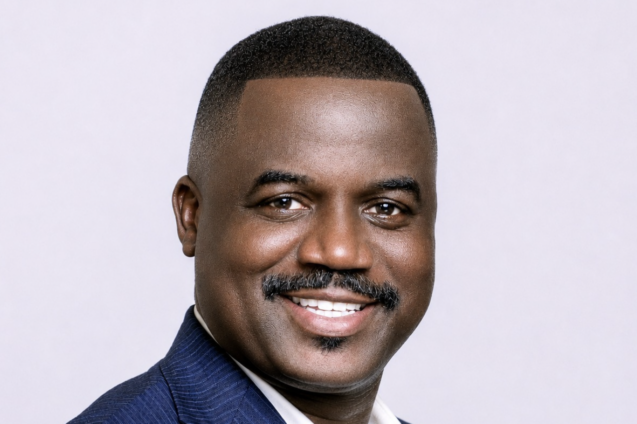
The writer, Dr Raymond Dumeh, Ag. Dean, Faculty of Business Administration & Communication Art, Academic City University
Latest Stories
-
Mahama’s proposed airline looks to South America, Caribbean as Ghana confronts mounting drug trafficking cases
3 minutes -
5% progress on Suame Interchange Phase One inadequate – Roads Minister tasks contractor to speed up work
6 minutes -
Photos: Vice President joins GAAS Awards to celebrate outstanding women leaders
7 minutes -
OSP vs Ken Ofori-Atta, SML and others: Court gives OSP four more weeks to serve Ofori-Atta with summons
9 minutes -
High Commission sends caution to Ghanaians in South Africa ahead of planned protests
12 minutes -
Okai Mintah outlines vision for NDC Youth Wing as he engages MMDCEs
17 minutes -
Mahama Ayariga leads renewed push for stronger local governance through partnerships
21 minutes -
NDC youth organiser aspirant Okai Mintah consults MMDCEs ahead of elections
22 minutes -
PHOTOS: Ayikuma Methodist Basic School wins National Juniors Challenge
24 minutes -
Silence has entered our homes : Salomey Awiti Bafoh and the chilling effect of free expression in Ghana
25 minutes -
UG Pro-VC calls for stronger research funding to curb brain drain
27 minutes -
Woman in critical condition after shooting at funeral grounds in Yeji
29 minutes -
Breast Cancer awareness must lead to action – Deputy Health Minister
32 minutes -
UK identified as leading destination for Ghana’s illicit cannabis exports – Report
33 minutes -
Drug money allegedly finances Ghana’s political parties and real estate – Global Organised Crime Index
38 minutes