

Audio By Carbonatix
President John Dramani Mahama has placed science, technology, and innovation at the centre of Ghana’s development, urging scholars at home and abroad to prioritise research, enterprise, and intellectual leadership.
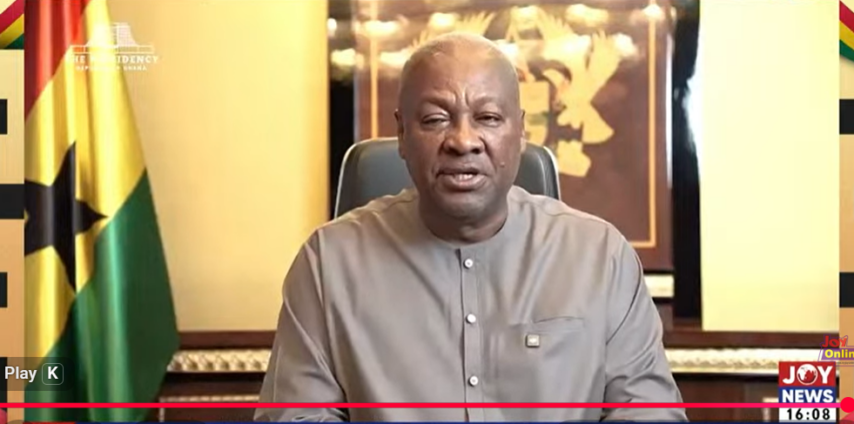
Speaking via webinar on Friday, March 6, at a Ghana Studies Association event themed Ghana in Uncertain Times, Mahama said the country’s competitiveness this century hinges on transforming ideas into businesses and research into revenue.
“Ghana's competitiveness this century hinges on turning ideas into enterprise, research into revenue, and innovation,” he said.
“Let us build a Ghana where our universities are centres of innovation, not just instruction.”
The President outlined a sweeping agenda to boost investment in STEM education, technical universities, and industry-academia partnerships, building on measures he announced in his 2026 State of the Nation Address to Parliament on February 27.
During that address, Mahama unveiled plans to establish three new technical universities to bridge skills gaps, tackle youth unemployment, and serve as hubs for innovation and industrial collaboration.
According to Africa Education Watch, only 2% of deprived basic schools in Ghana have functioning ICT labs, compared with 8% in better-endowed schools — a gap that limits access to STEM pathways for children in rural and underserved communities.
On the funding side, the government has already allocated resources to digital and technological initiatives.
Ghana’s 2026 National Budget provided GH¢70 million for Digital Youth Hubs and GH¢100 million for the One Million CODERS initiative, reflecting a deliberate effort to build a future-ready workforce capable of competing in global digital markets.
The Ghana STEM Network, a coalition of over 200 stakeholders, has long advocated for a national STEM Education Strategy with long-term goals spanning 5 to 20 years.
The network has also called for the creation of science museums, education parks, and maker spaces across all 16 regions of Ghana, developed in partnership with the private sector.
He urged scholars to commit to “intellectual sovereignty”, where Ghana not only consumes knowledge but produces it, leads research, and shapes global thought.
“Let us commit to intellectual sovereignty, in which Ghana produces knowledge, leads research, and shapes global thought,” he added, signalling a push to redefine the country’s intellectual identity as part of its broader development agenda.
Latest Stories
-
Petrol, LPG prices set to go up, but diesel to decline from June 1
23 minutes -
Hitz FM’s ‘Rep Ur Jersey’ underway at Aviation Social Centre
28 minutes -
Xenophobia: Minority commends government on Ghanaian evacuation from South Africa
50 minutes -
Gov’t reaffirms commitment to expanding shelter services for domestic violence survivors – Gender Minister
52 minutes -
Fisheries Ministry intensify efforts to protect premix fuel subsidy
54 minutes -
Liverpool sack head coach Slot
57 minutes -
Xenophobia: Disregard Malema’s comments on Ghana’s evacuation – Minority urges gov’t
58 minutes -
Inyabon MedSync Project strengthens medicine supply in Northern Ghana
60 minutes -
Four more men freed from flooded Laos cave after 10 days
1 hour -
Millions of breast cancer patients could safely avoid chemotherapy, study suggests
1 hour -
Liverpool sack head coach Slot
1 hour -
600 more Ghanaians register for evacuation from South Africa – Ablakwa
2 hours -
First Lady joins mourners at funeral of Sammy Gyamfi’s father-in-law
2 hours -
Xenophobic attacks: Abu Jinapor warns against retaliatory attacks on South Africans
2 hours -
Abu Jinapor urges African Union action over xenophobic attacks in South Africa
2 hours